


The idea that Frontier AI cancer research could accelerate a cure is moving from science fiction toward serious scientific investigation. During the 2026 United Nations General Assembly, artificial intelligence has emerged as a major topic in discussions about health, development and global cooperation. The UN says AI is reshaping human development while raising important questions about safeguards, accountability and human dignity. The UN Office for Partnerships has made AI and human development a central theme of its UNGA programming.
What Can Frontier AI Actually Do for Cancer?
AI is already being used across cancer research. The National Cancer Institute says machine-learning systems can analyze imaging, genomic information and clinical data to identify patterns that may be difficult for humans to detect.
The National Cancer Institute’s AI and Cancer program covers applications ranging from cancer biology and screening to drug discovery and precision treatment.
Drug Discovery Could Be a Major Breakthrough
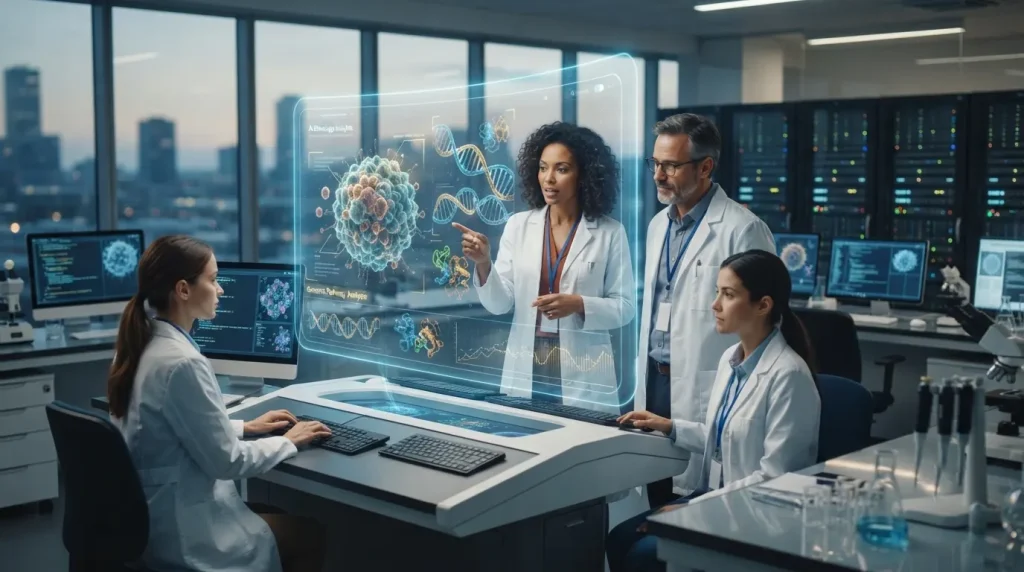
One of the most promising applications is finding new cancer medicines. AI can examine enormous biological datasets, predict molecular interactions and help researchers narrow down potential drug candidates.
NCI-supported researchers have already used AI and high-performance computing to accelerate the development of a candidate targeting KRAS-related cancers. The NCI reports that computational methods reduced the number of molecules requiring synthesis and helped speed the drug-development process.
AI Could Also Improve Diagnosis and Treatment
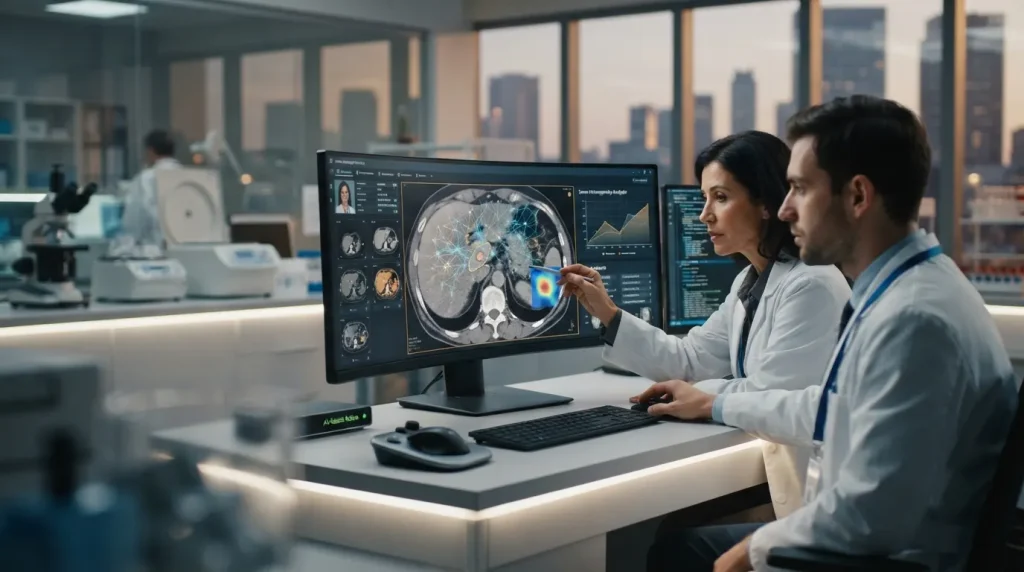
AI’s role is not limited to discovering drugs. Researchers are developing systems that can support diagnosis and treatment planning by combining medical images, pathology, genomic information and patient records.
In September 2026, the International Agency for Research on Cancer announced the EUcanAI project, a four-year initiative designed to develop AI systems supporting brain-tumor diagnosis and therapy planning.
But AI Cannot Simply “Cure Cancer”
This is where the boldest claims require caution. Cancer is not one disease. It includes hundreds of biologically different diseases, and treatments can work differently across patients.
The World Health Organization emphasizes evidence-based treatment, early detection and multidisciplinary care. AI may strengthen those systems, but it does not replace clinical validation or proven therapies.
NCI experts also warn that generative AI can produce incorrect or fabricated information. NCI’s 2026 guidance stresses that human supervision remains essential when AI is used in biomedical research.
The Missing Step: Clinical Proof
A promising AI prediction is not the same as a successful cancer treatment. Researchers must establish whether an AI-designed drug or diagnostic improves outcomes in real patients through rigorous testing.
The NCI notes that additional randomized clinical trials are needed to validate many AI applications before widespread clinical adoption. Its cancer AI research overview also highlights concerns involving bias, reproducibility and explainability.
What the UNGA Conversation Really Signals
The UNGA discussion is less about announcing an instant cancer cure and more about recognizing AI’s potential to transform biomedical research. UN Secretary-General António Guterres has simultaneously called for stronger international cooperation and safeguards around AI, including a warning that life-and-death decisions should not simply be handed to machines. The UN’s September 22 address places AI among the major global challenges facing governments.
The evidence suggests that Frontier AI cancer research could accelerate discovery, improve diagnostics and help personalize treatment. But “AI will cure cancer” remains a much larger claim than current evidence supports. The real breakthrough may come from combining increasingly capable AI with high-quality biological data, clinical expertise and rigorous human-led trials.
#FrontierAI #AI #CancerResearch #CancerTreatment #ArtificialIntelligence #Oncology #DrugDiscovery #PrecisionMedicine #UNGA2026 #HealthTech #MedicalAI #FutureOfMedicine