


As geopolitical tensions increasingly intersect with digital infrastructure, cybersecurity experts are raising concerns about the resilience of cloud computing services operating near conflict zones. While cloud platforms are designed with redundancy and geographic distribution, attacks targeting offshore energy facilities, communications hubs, or nearby infrastructure can create indirect risks for global digital services.
Many modern cloud providers rely on interconnected critical infrastructure, including power grids, internet exchange points, and submarine fiber-optic cables that enable data to move across continents. Although major cloud providers maintain multiple backup systems, disruptions to these supporting assets can affect network performance and business continuity.
Why Offshore Infrastructure Matters
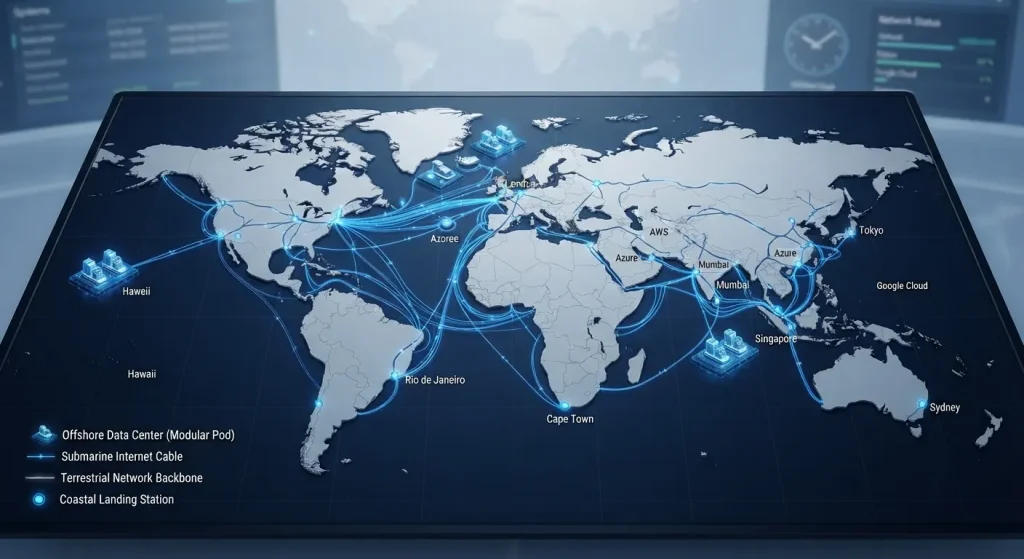
Global cloud services depend on thousands of kilometers of subsea communication cables, coastal landing stations, and regional data centers. According to the Submarine Cable Map, more than 95% of international internet traffic travels through underwater fiber-optic cables rather than satellites.
While offshore data centers themselves are uncommon, nearby communications and energy infrastructure play a critical role in maintaining cloud availability and low-latency connectivity.
Growing Security Concerns
Drone attacks against energy facilities or transport hubs may not directly target cloud providers. But they can disrupt electricity supplies, telecommunications networks, or logistics supporting digital infrastructure. Security analysts increasingly recommend adopting a “zero trust” architecture alongside geographically distributed cloud deployments.
The NIST Cybersecurity Framework emphasizes resilience, continuous monitoring, and incident response planning as essential components of protecting mission-critical digital assets.
How Cloud Providers Prepare
Major cloud vendors invest billions in redundancy, disaster recovery, distributed storage, and automated failover systems. Organizations are also adopting multi-region and multi-cloud strategies to reduce dependency on a single geographic location.
Guidance from the Cybersecurity and Infrastructure Security Agency (CISA) recommends regular risk assessments, business continuity planning, and infrastructure monitoring to minimize operational disruption during crises.

What Businesses Should Do
Organizations should evaluate where their workloads are hosted. They should also implement encrypted backups, test disaster recovery procedures regularly, and diversify cloud deployments across multiple regions. Companies operating internationally should also monitor geopolitical developments that could influence digital infrastructure reliability.
Cloud infrastructure has become one of the world’s most valuable strategic assets. While modern cloud platforms remain highly resilient, evolving geopolitical risks highlight the importance of redundancy, cybersecurity preparedness, and resilient network design. Businesses that proactively strengthen cloud security today will be better positioned to withstand tomorrow’s uncertainties.
#CloudSecurity #CyberSecurity #CloudComputing #DigitalInfrastructure #CriticalInfrastructure #DataCenters #BusinessContinuity #CyberResilience #TechnologyNews