


The future of international football could be heading toward one of its biggest governance battles in decades. As FIFA continues exploring expanded tournaments, revised competition calendars, and broader commercial opportunities, several football confederations—particularly in Europe and North America—have voiced growing concerns over the long-term impact on players, domestic leagues, and international competitions.
What’s Fueling the Disagreement?
FIFA has steadily expanded its flagship tournament, increasing the number of participating nations while introducing new global competitions. Supporters argue these changes create greater opportunities for emerging football nations and increase worldwide fan engagement.
However, organizations such as FIFA, UEFA, and CONCACAF continue debating how these changes affect scheduling, commercial rights, and player workloads.
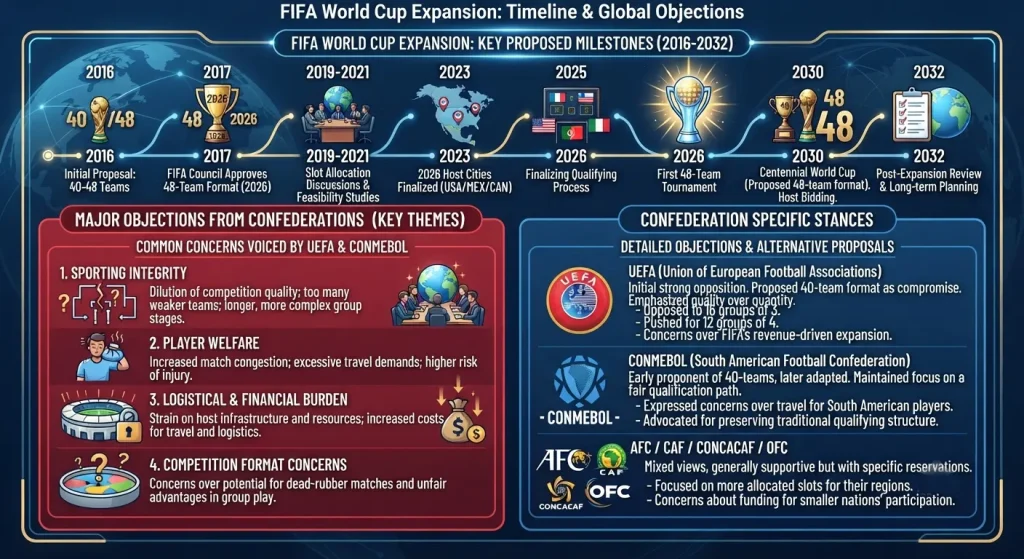
Why European and North American Confederations Are Concerned
Several football leaders have expressed concerns that an increasingly crowded international calendar leaves less room for domestic leagues, continental championships, and player recovery. Clubs investing heavily in elite players also worry about injuries resulting from an expanded tournament schedule.
Stakeholders argue that balancing commercial growth with athlete welfare has become one of football’s biggest governance challenges.
The Financial Stakes
The FIFA World Cup generates billions of dollars through broadcasting rights, sponsorships, tourism, and merchandising. Expanding competitions may increase global revenue, but regional confederations fear it could reduce the value of their own tournaments and media rights.
Economic analysts have frequently noted that football’s financial ecosystem depends on cooperation between governing bodies, broadcasters, leagues, clubs, and commercial partners.
Could This Change the Future of Football?
- Potential revisions to the international match calendar.
- Greater negotiations between FIFA and continental confederations.
- Renewed discussions about player welfare and scheduling.
- Changes to broadcasting and commercial agreements.
Industry organizations such as the International Football Association Board (IFAB) and the FIFPRO continue contributing to discussions surrounding player welfare, governance, and the evolution of the global game.
Whether FIFA proceeds with additional expansion or adjusts its long-term strategy will depend on negotiations with continental confederations, clubs, broadcasters, and player representatives. The coming years may shape not only future World Cups but also the broader structure of international football.
For supporters around the world, the debate highlights the difficult balance between growing the sport globally while preserving competitive quality and protecting players.
For additional information about international football governance and competition regulations, readers can refer to official resources from FIFA, UEFA, CONCACAF, FIFPRO, IFAB, and the International Olympic Committee.
#FIFA #WorldCup #UEFA #CONCACAF #FootballNews #Soccer #SportsBusiness #FootballGovernance #GlobalFootball