

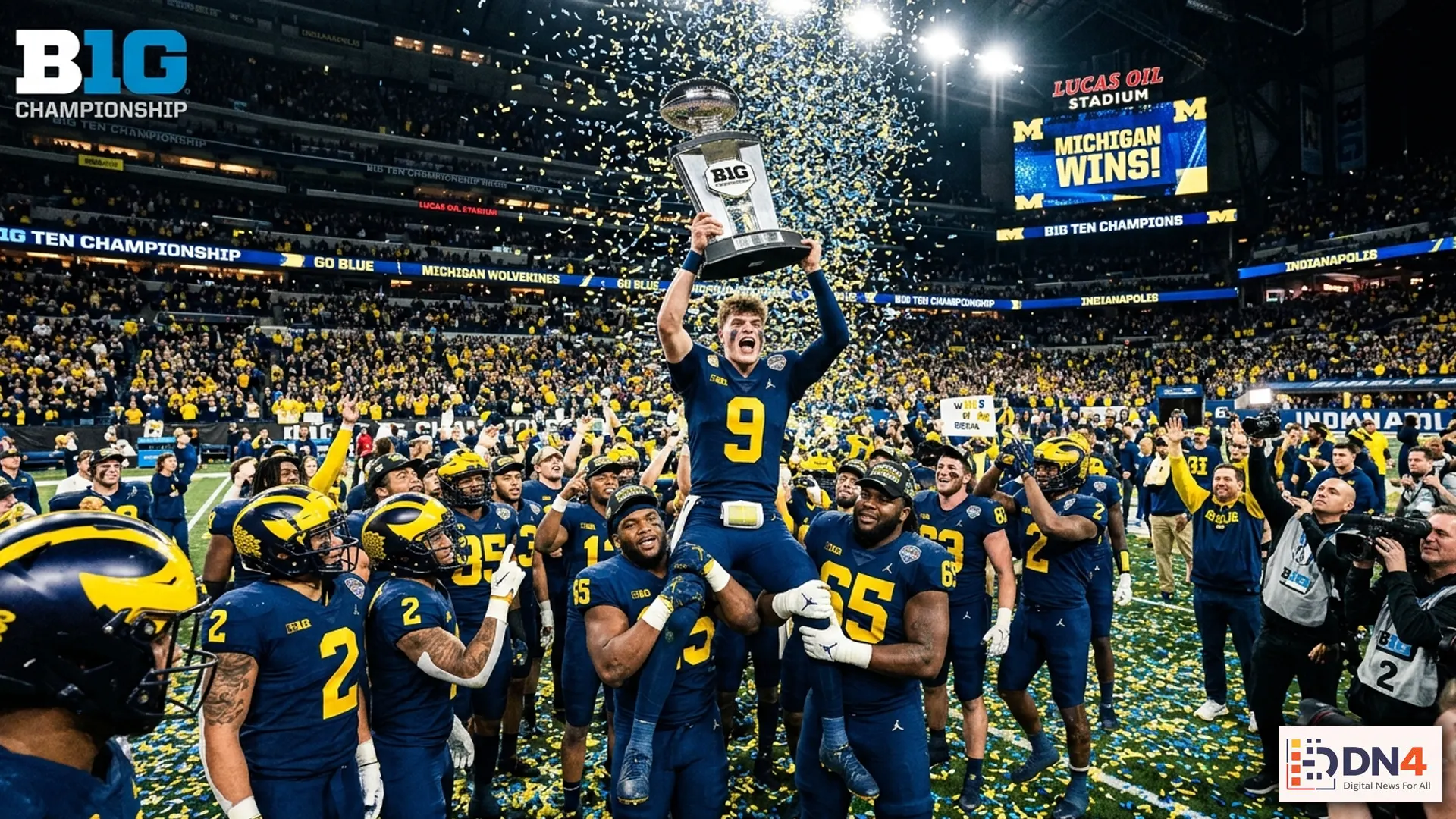
For nearly three decades, the Big Ten Conference carried one of college football’s most frustrating narratives: a proud league with tradition, fan power, and blue-blood programs — but no national title since the late 1990s. That finally changed when Michigan stormed through the postseason and captured the national championship, delivering the conference’s long-awaited return to the summit of the sport.
The Wolverines’ triumph was more than a trophy. It was a statement about resilience, identity, and the evolution of modern college football. And fittingly, the road to glory carried symbolic weight through Indianapolis, a city that has become deeply tied to Big Ten football tradition.
Why Michigan’s Championship Meant More Than Just One Season
Michigan’s title run represented the end of a 26-year drought for the Big Ten in football’s ultimate race, a drought that had lingered over the conference since the late 1990s. While the league consistently produced elite teams, playoff appearances, and top NFL talent, it often fell short against SEC powers or stumbled in defining postseason moments.
By winning it all, Michigan didn’t just silence critics — it restored national credibility to one of the sport’s most historic conferences. The Wolverines had already proven themselves by dominating the regular season and surviving the gauntlet of elite opponents. But finishing the job on the biggest stage transformed a great season into a historic one.

The Formula: Defense, Discipline, and a Relentless Identity
What made Michigan different from so many talented teams that came before? The answer lies in clarity of identity.
Under a hard-nosed system built on physicality, Michigan played championship football the old-fashioned way while still adapting to the modern era. The Wolverines leaned on:
- An elite defensive front that controlled the line of scrimmage
- A balanced offensive attack that avoided unnecessary risks
- Strong quarterback decision-making in high-pressure moments
- A culture built on toughness and accountability
That formula allowed Michigan to win not just with talent, but with consistency. In an era where transfer portals and explosive offenses dominate headlines, the Wolverines proved that structure and discipline still win championships.
Indianapolis: The Symbolic Heart of Big Ten Power
It’s impossible to separate this story from Indianapolis. The city has long served as the home of the Big Ten Football Championship Game, making it a familiar proving ground for conference heavyweights. Michigan’s journey through that atmosphere felt like the perfect bridge between conference dominance and national validation.
Indianapolis has become more than just a host city — it’s where Big Ten teams define their championship identity. For Michigan, winning on a path so closely tied to the conference’s power structure added another layer of symbolism to an already historic season.
Jim Harbaugh’s Redemption Arc
No conversation about this championship is complete without mentioning Jim Harbaugh. For years, Harbaugh faced criticism for not turning Michigan’s promise into playoff-level dominance. He was judged not by wins, but by what hadn’t been won.
That changed in dramatic fashion.
Harbaugh’s program matured into one of the most complete machines in college football. Recruiting, development, coaching continuity, and mental toughness all aligned at the right moment. This championship was not a fluke run — it was the culmination of years of rebuilding Michigan into a national power.
What This Means for the Big Ten Moving Forward
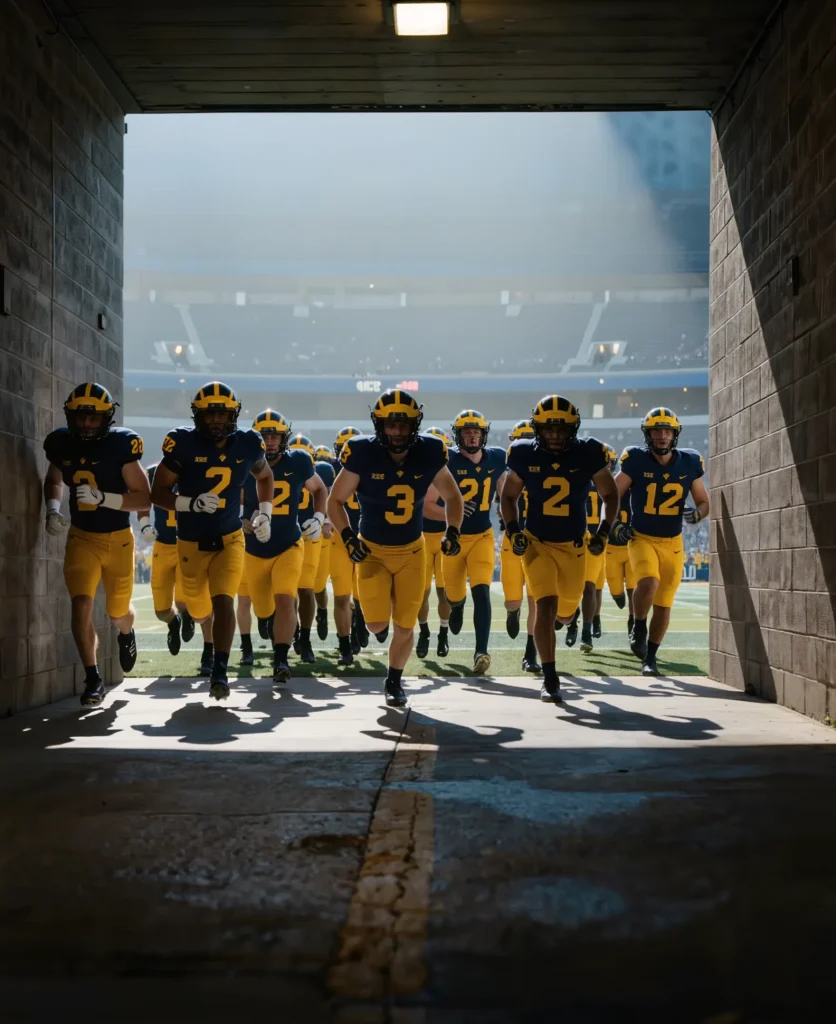
Michigan’s breakthrough could have ripple effects far beyond one championship banner. In the era of expanded playoffs, conference realignment, and increased national competition, the Big Ten now has fresh momentum.
This title sends a message to recruits, media, and rival conferences: the Big Ten is not just relevant — it is championship relevant.
Programs like Ohio State, Penn State, Oregon, and others entering or strengthening the conference landscape now operate in a league that has reclaimed its championship edge. Michigan didn’t just win for itself. It reopened the door for the entire conference.
Legacy Beyond the Scoreboard
Championships are remembered for scores and highlights, but legacies are built on what they change. Michigan’s national title changed the perception of the Big Ten, ended years of frustration, and gave one of college football’s most iconic brands a defining modern moment.
For Michigan fans, it was the payoff. For the Big Ten, it was vindication. And for college football, it was a reminder that history still matters — especially when it is rewritten in the biggest moments.
Michigan didn’t just win a championship in Indianapolis. It brought an entire conference back to glory.
#MichiganWolverines #BigTen #CollegeFootball #CFP #MichiganFootball #Indianapolis #NCAAFootball #SportsHistory #NationalChampionship