


A fierce legal battle over Washington, D.C.’s public green space has escalated into a federal court showdown. On October 13, 2026, U.S. District Judge Ana Reyes ordered the Trump administration to stop further tree removal at historic East Potomac Golf Links through October 26. The dispute raises questions about environmental review, historic preservation and the government’s authority to reshape public recreational land.
Why Hundreds of Trees Became a Legal Flashpoint
The National Park Service began removing trees at East Potomac Golf Links, a century-old public golf course along the Potomac River. Officials said the work addressed maintenance and restoration needs and followed recommendations from a 2019 cultural-landscape report.
However, the project triggered a lawsuit from the DC Preservation League and two local golfers. They argue that the tree removal is connected to President Donald Trump’s proposed redevelopment of the course into a venue capable of hosting major tournaments.
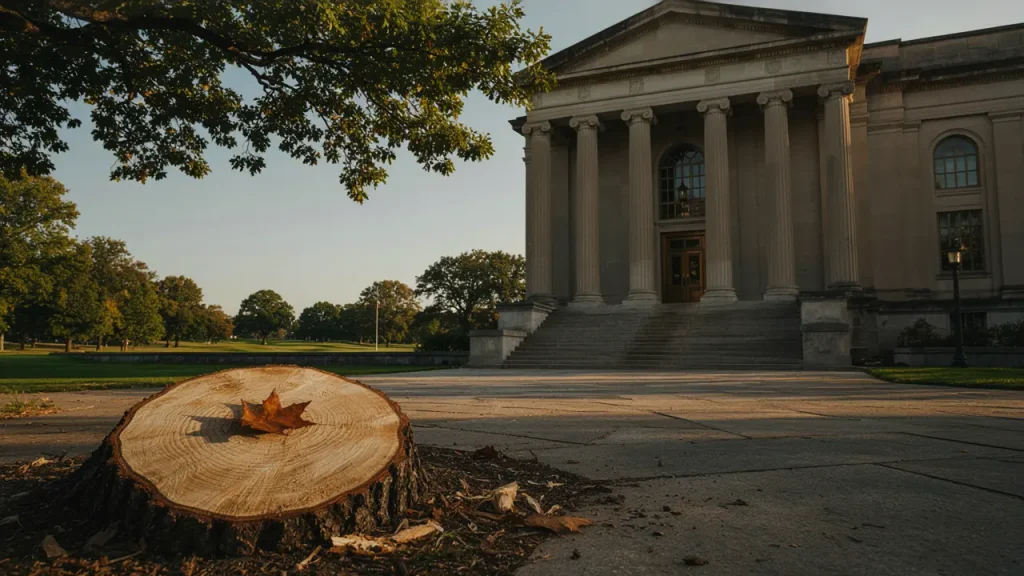
According to The Washington Post, approximately 430 healthy trees had been removed over a weekend, with nearly 300 more reportedly still targeted. The administration maintains that the tree-management work is separate from any future golf-course redesign.
What the Federal Court Ordered
Judge Reyes’s October 13 ruling formalized a temporary restraining order blocking additional tree removal through October 26. The administration must also provide three business days’ advance notice before making irreversible changes to permanent features of the course.
The judge found that the plaintiffs were likely to succeed on their claim that the Park Service had not adequately reviewed the environmental consequences under the National Environmental Policy Act, or NEPA. The ruling allows the lawsuit to proceed; it is not a final judgment on every issue in the case.
Associated Press coverage describes the court’s intervention after a contentious hearing. Reuters also reported the judge’s criticism of how the government handled notice to the court and the plaintiffs.
Preservation Versus Redevelopment
The dispute highlights competing arguments about how public land should be managed. The administration says the current work addresses maintenance and historic landscaping, not a finalized redevelopment plan. Plaintiffs argue that extensive tree removal could cause lasting harm before the broader proposal receives adequate scrutiny.
The DC Preservation League and its legal representatives at Democracy Forward say the temporary order protects a historic public resource while the litigation continues.
Environmental review does not automatically prohibit development. Instead, it helps determine whether agencies have properly assessed a project’s consequences and followed the law.

What Happens Next?
The court has ordered senior Interior Department and National Park Service officials to explain how the tree-removal plan was developed and why work proceeded so quickly. Further proceedings will determine whether longer-lasting restrictions are warranted.
For Washington residents, the outcome could affect the future character of a popular public landscape. More broadly, the case tests how federal agencies balance maintenance, redevelopment ambitions and legal obligations.
The immediate halt is temporary, but the larger question remains: how much scrutiny should precede irreversible changes to public land? The answer could shape the future of East Potomac Golf Links and influence other disputes over historic federal spaces.
#WashingtonDC #NationalParks #EnvironmentalLaw #TreeCutting #HistoricPreservation #FederalCourt