

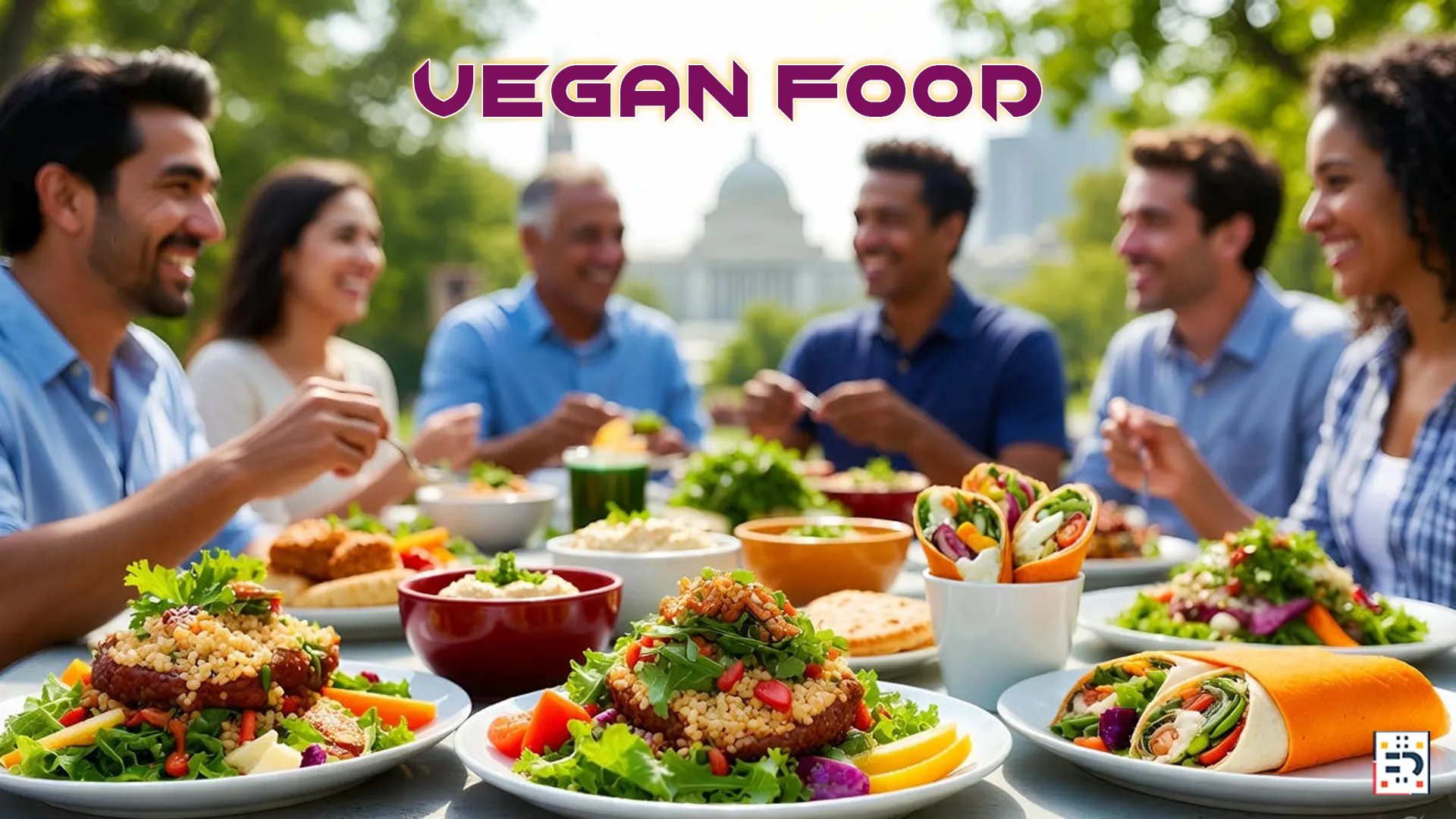
Walk into any major grocery store today, and you’ll find shelves brimming with plant-based alternatives that rival their animal-based counterparts in both taste and variety. From oat milk lattes at Starbucks to vegan hot dogs at baseball games, vegan food has firmly moved from the margins to the mainstream, reshaping how millions of Americans eat.
What Is Vegan Food?
Vegan food excludes all animal products—no meat, dairy, eggs, or honey. A plant-based diet focuses on foods primarily from plants, including vegetables, fruits, nuts, seeds, whole grains, legumes, and beans. According to Harvard Health, this doesn’t necessarily mean you never eat meat or dairy, but rather that you’re proportionately choosing more foods from plant sources.
The Market Is Booming
Nearly half of Americans surveyed in late 2024 plan to eat more plant-based foods in 2025, and 34% are actively looking to reduce their meat intake. U.S. retail sales of plant-based foods surged 66% from approximately $4.8 billion in 2018 to $8 billion in 2022. The U.S. vegan food market is expected to grow from $6.20 billion in 2024 to $17.35 billion by 2034.
Most telling: Household penetration remains stable at 59%, with a 79% repeat purchase rate—once Americans try vegan food, they keep coming back.
Health Benefits Backed by Science
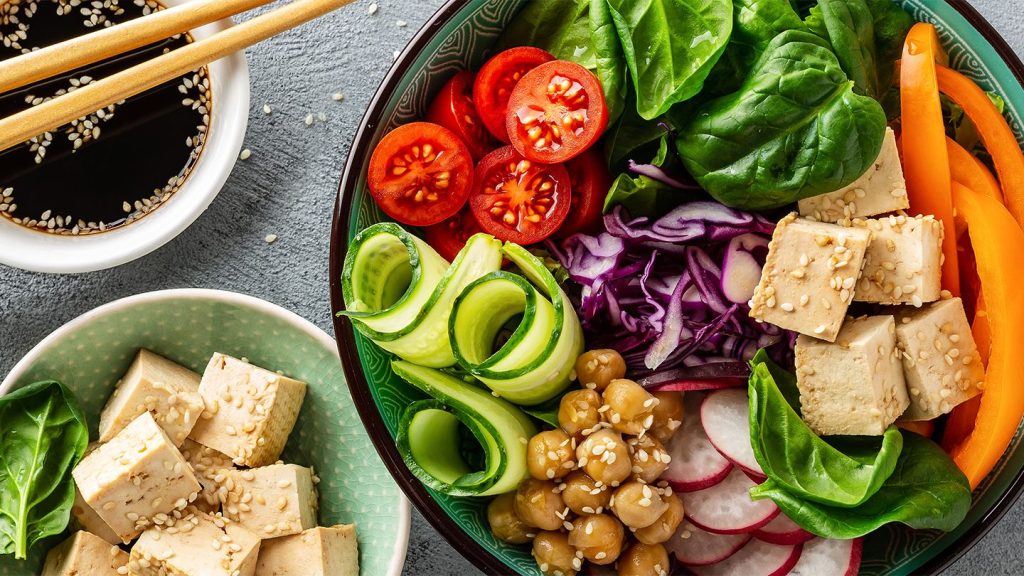
Research from leading medical institutions confirms substantial health benefits of plant-based eating. According to MD Anderson Cancer Center, plants contain fiber, vitamins, minerals, phytochemicals and antioxidants that support your immune system, reduce inflammation, promote healthy weight and help your body fight diseases including cancer.
The National Institutes of Health reports that plant-based diets may lower body mass index, blood pressure, cholesterol levels, and reduce risk of heart disease and type 2 diabetes.
Vegan diet benefits include:
- Lower risk of heart disease and cancer
- Better weight management
- Improved digestion and energy levels
- Reduced cholesterol and blood pressure
- Lower carbon footprint
What Vegans Actually Eat
Forget the “salad only” myth. Modern vegans fuel their bodies with hearty legumes, whole grains, colorful produce, and expanding plant-based proteins. Legumes and pulses serve as the protein cornerstone in 94% of vegan households.
Popular vegan protein sources: lentils, chickpeas, black beans, tofu, tempeh, quinoa, edamame, hemp seeds, nutritional yeast, and pea protein products.
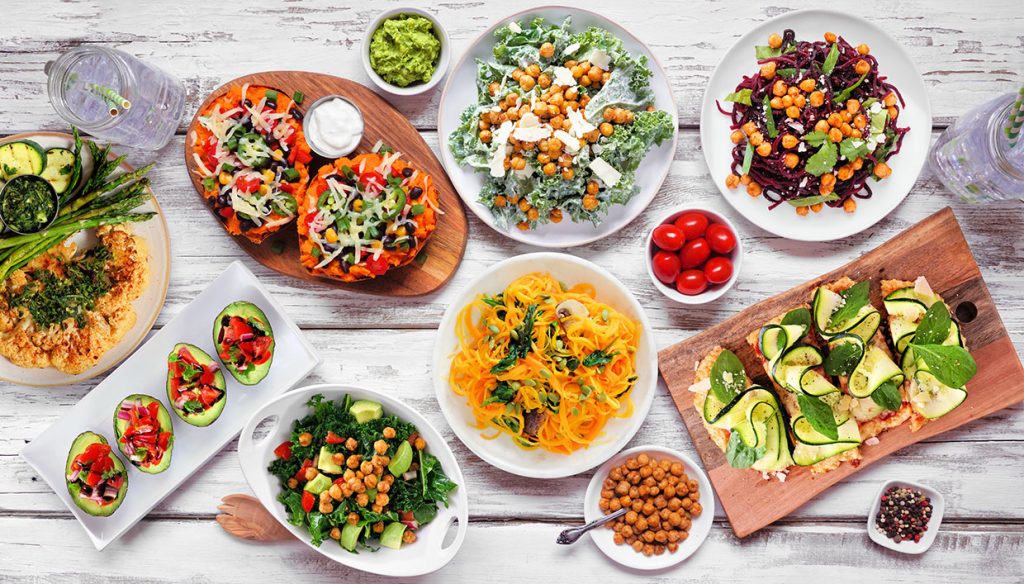
From West African fonio grits to Ethiopian lentil stews, Mexican jackfruit tacos to Mediterranean mezze platters, vegan cuisine celebrates global flavors.
What’s Trending in Vegan Food for 2025
Whole Food Focus
Consumers are pivoting toward simpler ingredients. Mushrooms, walnuts, tempeh, and legumes take center stage as people seek more natural alternatives. Mushroom-based proteins are having a major moment.
Plant-Based Seafood
While vegan burgers dominated recent years, plant-based seafood is the next frontier. New products made from soy, wheat, pea protein, and konjac are appearing in supermarkets. Vegan fish alternatives offer sustainable solutions to overfished oceans.
High-Protein Everything
From high-protein bagels to Greek-style vegan yogurt, manufacturers integrate plant proteins into everyday favorites without powder supplements.
Premium Quality Products
Health-conscious consumers pay more for artisanal vegan cheese, clean ingredient lists, and transparent sourcing.
Breaking News in the Vegan World
Vegan Food Is More Affordable
Game-changing research published in JAMA Network Open in November 2024 found that vegan food is 19% cheaper than standard American food, debunking the “expensive” myth.
Major Brands Go Plant-Based
Oscar Mayer launched vegan hot dogs in 2024—when a 130-year-old meat company embraces vegan products, the cultural tide has turned. Kraft Heinz introduced plant-based mac and cheese on mainstream grocery shelves.
Veganuary’s Growing Impact
The annual January challenge celebrated its tenth anniversary in 2024 with record participation. 76.9% of participants continue eating vegan food afterward, with 63.1% making the change permanent.
Where to Find Vegan Food
The vegan restaurant scene has exploded. Searching “vegan restaurants near me” or “vegan food near me” yields more results than ever. Chipotle, Sweetgreen, and Burger King now offer robust vegan options. Major cities boast dozens of dedicated vegan eateries.
For “vegan meal delivery,” companies like Purple Carrot, Veestro, and Mosaic Foods provide convenient options shipped to your door.
Essential Vegan Products
Dairy Alternatives
- Vegan milk: Oat, almond, soy, coconut, macadamia
- Vegan cheese: Miyoko’s, Violife, Kite Hill
- Vegan butter and vegan yogurt
Meat Alternatives
Vegan chicken, vegan beef, and vegan pork from Beyond Meat, Impossible Foods, Gardein, and Tofurky work perfectly in tacos, stir-fries, and sandwiches.
Egg Replacements
JUST Egg leads the market, while aquafaba, flax eggs, and commercial replacers work beautifully in baking.
Vegan Nutrition Essentials
When properly planned, vegan diets provide all necessary nutrients. Key considerations:
- Vitamin B12: Take supplements or eat fortified foods
- Protein: Abundant in legumes, tofu, tempeh, quinoa, nuts
- Iron: Lentils, spinach, chickpeas (pair with vitamin C)
- Calcium: Fortified plant milks, tofu, leafy greens
- Omega-3: Flaxseeds, chia seeds, walnuts, algae supplements
The Academy of Nutrition and Dietetics confirms well-planned vegan diets are appropriate for all life stages.
Easy Vegan Meal Ideas
Breakfast: Overnight oats, tofu scramble, smoothie bowls, avocado toast
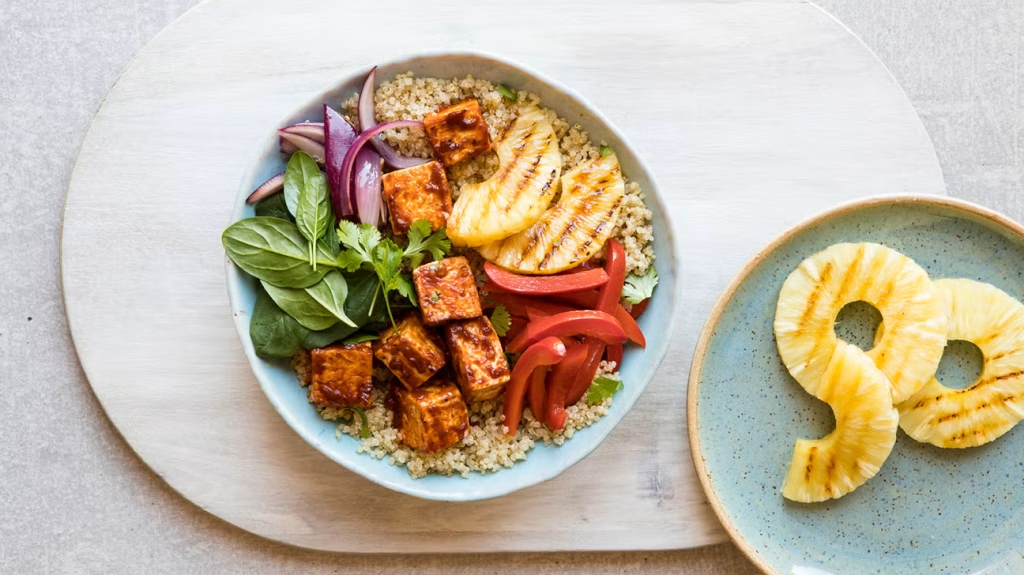
Lunch: Buddha bowls, lentil soup, chickpea salad sandwiches, black bean tacos
Dinner: Pasta with cashew cream, tofu stir-fry, veggie burgers, mushroom shepherd’s pie
Snacks: Hummus with veggies, trail mix, apple with peanut butter, roasted chickpeas
Building Your Vegan Pantry
Essential items:
- Grains: Brown rice, quinoa, oats, whole wheat pasta
- Legumes: Lentils, chickpeas, black beans, kidney beans
- Nuts/Seeds: Almonds, walnuts, cashews, chia, flax, hemp
- Condiments: Nutritional yeast, tahini, soy sauce
Shop at Whole Foods, Trader Joe’s, Walmart, or online at Thrive Market for extensive vegan options.
What’s Driving the Shift?
Health First
Nearly half of shoppers cite health as their main reason for increasing plant-based purchases. Many report increased energy, improved digestion, clearer skin, and better sleep.
Environmental Consciousness
With livestock producing significant greenhouse gas emissions, consumers recognize dietary choices impact the planet. Searching “sustainable food choices” increasingly leads to plant-based options.
Better Taste Than Ever
Taste perception improved from 23% to 36% year-over-year. Advances in food technology replicate meat and dairy flavors with remarkable accuracy.
The Future Is Plant-Based
The trajectory is clear: vegan food is here to stay. With continued double-digit growth, expanding product categories, and mainstream acceptance, plant-based eating has secured its place at the American table.
Upcoming innovations include sophisticated plant-based seafood, advanced cheese alternatives, and AI-developed textures and flavors. Simultaneously, appreciation grows for traditional plant-based cuisines that have sustained populations for centuries.
The vegan food revolution represents evolving American values around health, sustainability, and ethical consumption. Whether motivated by personal health, environmental concerns, animal welfare, or curiosity, millions of Americans discover that plant-based eating offers abundant variety, satisfying flavors, and tangible benefits.
The question isn’t whether vegan food belongs in mainstream American diets—that debate is settled. The question is how quickly the industry will adapt to meet surging demand for delicious, nutritious, affordable, and sustainable plant-based alternatives.
For those who haven’t explored vegan food, there’s never been a better time. The options have never been more diverse, flavors never more compelling, and benefits—for personal health, animal welfare, and planetary sustainability—never clearer.
#VeganFood #PlantBased #VeganRecipes #VeganLife #Vegan #Veganuary2025 #VeganTrends #PlantBasedSeafood #VeganGrocery #SustainableEating #VeganEats #PlantBasedDiet #VeganProtein #VeganFoodShare