

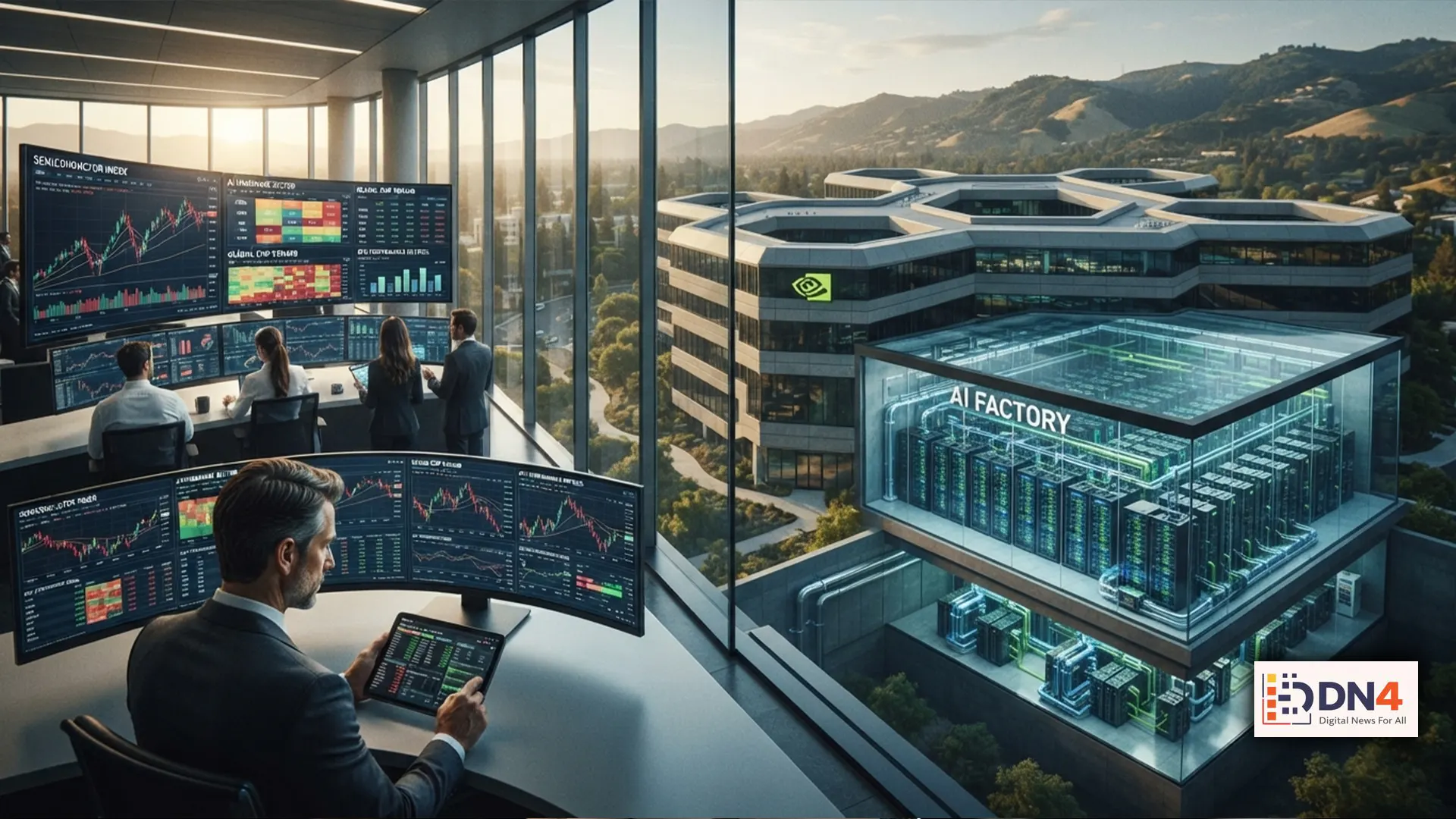
Nvidia’s latest earnings report arrives at a difficult moment for investors: the company continues to post extraordinary growth, but the market has become increasingly demanding. After years of spectacular earnings beats, simply exceeding expectations may no longer be enough to satisfy Wall Street.
Nvidia is scheduled to report its fiscal second-quarter 2027 results on August 26, 2026. Analysts are looking beyond the headline numbers and focusing heavily on the company’s forward guidance, AI infrastructure demand, margins, China exposure, and the transition from Blackwell to Rubin. Reuters describes the report as an important test of continued investor confidence in the AI investment boom.
The Bar Keeps Getting Higher
Nvidia entered the quarter with enormous momentum. In its previous quarter, the company reported record revenue of $81.6 billion, up 85% from a year earlier. Data Center revenue reached $75.2 billion, representing 92% year-over-year growth. Nvidia’s official fiscal 2027 first-quarter results also included guidance for $91 billion in second-quarter revenue, plus or minus 2%.
Wall Street’s expectations have moved higher since then. Recent market estimates put second-quarter revenue around $92 billion to $95 billion, with some analysts looking for an even stronger outlook for the following quarter. Investopedia reports that analysts are particularly focused on whether Nvidia can maintain its extraordinary growth rate.
Guidance May Matter More Than the Beat
The central question is not simply whether Nvidia beats estimates. Investors want evidence that demand will remain strong enough to justify increasingly ambitious forecasts.
That makes the next revenue outlook especially important. According to MarketWatch, some analysts were looking for October-quarter revenue above $104 billion, while more bullish expectations were above $110 billion.
In other words, a strong quarter could still disappoint if the forward guidance does not rise enough.
Blackwell Is Still the Engine
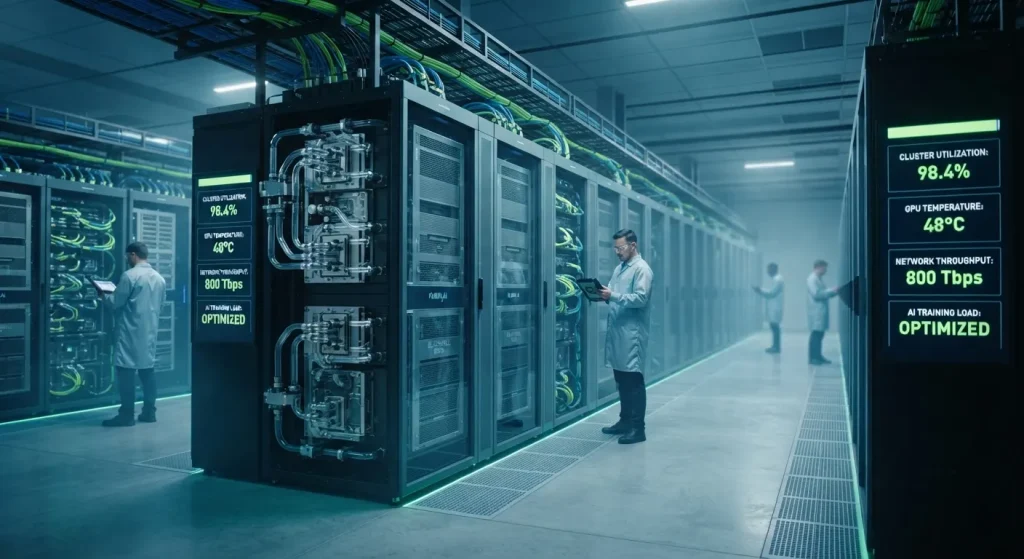
Nvidia’s Data Center business remains the key driver. Its Blackwell platform has become central to the enormous infrastructure buildout by cloud providers and technology companies seeking more AI computing capacity.
The company has also begun preparing the market for its next major architecture. Nvidia introduced its Vera Rubin platform in 2026, positioning it as a next-generation system for agentic AI. The company’s fiscal 2026 results highlighted the expected transition toward Rubin while emphasizing continued Blackwell demand.

Margins and Supply Are Also in Focus
Rapid growth is valuable only if Nvidia can maintain strong profitability. Investors are therefore watching gross margins, component costs, memory availability, and the pace of new-system deployment.
Higher memory prices and supply constraints could put pressure on margins or limit how quickly new platforms reach customers. At the same time, Nvidia must continue spending heavily on research, development, and infrastructure to protect its technological lead.
China Remains a Complicated Variable
China is another major uncertainty. Nvidia’s previous guidance explicitly excluded Data Center compute revenue from China. That means any change in export restrictions or licensing conditions could materially affect future expectations.
For investors, the issue is bigger than one market. China highlights the complicated balance between Nvidia’s global growth opportunities and increasingly important geopolitical and regulatory restrictions.

Why a Strong Report Could Still Produce a Weak Stock Reaction
Nvidia has already trained investors to expect exceptional results. That creates a difficult psychological hurdle. A company can beat estimates and still see its shares fall if investors believe the next quarter is not strong enough.
The Wall Street Journal notes that Nvidia’s stock has recently shown less positive reaction to earnings despite repeated beats, illustrating how expectations have changed.
Nvidia’s latest earnings print is about more than quarterly revenue and earnings per share. The real test is whether management can provide enough forward visibility to convince investors that AI infrastructure spending remains durable.
Strong Blackwell demand, a credible Rubin ramp, resilient margins, and higher forward guidance would give bulls plenty to celebrate. But weaker margins, supply constraints, China uncertainty, or merely adequate guidance could expose how high the market’s expectations have become.
For Nvidia, the challenge is no longer proving that AI demand exists. It is proving that extraordinary growth can continue at a scale large enough to satisfy an increasingly demanding Wall Street.
#Nvidia #NVDA #NvidiaEarnings #AI #Blackwell #Rubin #Semiconductors #WallStreet #TechStocks