

 By Vinod Ram
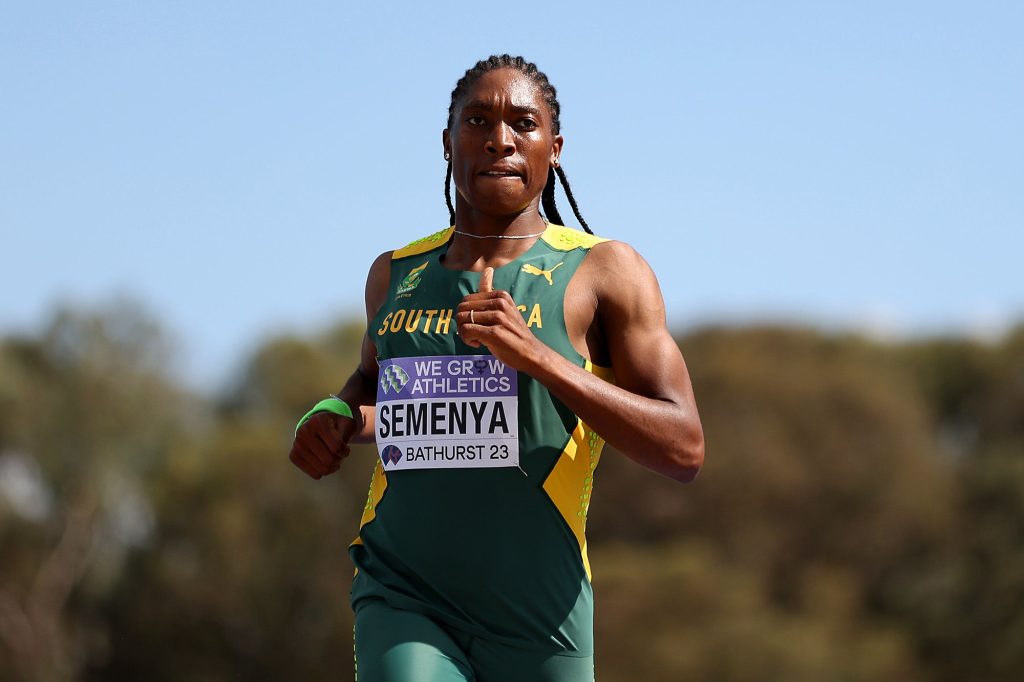
Few athletes have become as symbolically important to the future of elite sport as Caster Semenya. For years, the South African middle-distance champion has stood at the center of one of the most emotionally charged and politically divisive questions in modern athletics: who gets to compete in women’s sport, and on what terms?
Now, that debate has entered a new and more controversial phase. The International Olympic Committee’s newly announced gene-screening policy has reignited a global argument over fairness, biology, privacy, and human dignity — and Semenya is once again at the center of it.
Under the new rule, eligibility for women’s events at future IOC competitions, including LA28, would be determined in part through a one-time screening for the SRY gene, typically via a cheek swab, saliva sample, or blood test. Supporters call it a science-based way to protect fairness in women’s sport. Critics call it a return to sex testing under a more clinical name.
Why This Rule Matters Beyond Sport
This is not just another Olympic policy update. It is a human rights issue disguised as an eligibility framework.
The IOC’s move follows similar changes by governing bodies such as World Athletics, which introduced its own SRY-based eligibility test in 2025 for women’s competition. In practical terms, the new Olympic rule is likely to affect a relatively small number of elite athletes. But culturally and legally, its reach is much bigger.
That’s because it reopens an old and painful question: can women be forced to prove they are “woman enough” to compete?
For Semenya — a two-time Olympic champion who was assigned female at birth, raised as a girl, and has always identified as a woman — that question is not theoretical. It is personal, public, and career-defining.
Why Caster Semenya Has Become the Face of the Debate
Semenya’s case has never fit neatly into the categories that dominate political headlines. She is not a transgender athlete. She is a cisgender woman with a difference of sex development (DSD), a category that includes variations in sex characteristics, hormones, or chromosomes.
That complexity is exactly why her case has become so globally significant. It exposes the limits of simple binary rules in elite sport, especially when those rules collide with lived identity, medical privacy, and racialized assumptions about who “looks female enough” to belong.
In previous legal battles, Semenya challenged rules that required certain athletes to medically reduce their natural testosterone levels in order to remain eligible in women’s middle-distance events. Her challenge reached the European Court of Human Rights, which in 2023 found violations relating to discrimination and private life in an earlier chamber ruling, before a 2025 Grand Chamber judgment narrowed the legal outcome on jurisdiction and fair-hearing grounds.
That legal history matters because it shows this issue is no longer just about race times and medal podiums. It is about whether global sports institutions can regulate bodies without violating basic rights.
The Human Rights Argument Against Gene Screening
Critics of the IOC’s new policy argue that gene screening introduces a dangerous precedent. Human rights advocates warn that mandatory biological verification can stigmatize women with naturally occurring differences, expose private medical information, and reinforce stereotypes about femininity and appearance.
A recent Human Rights Watch analysis referencing UN experts argued that blanket testing does not promote inclusion, but instead places women athletes under suspicion. The concern is not only who these rules exclude — it is also what kind of environment they create for every woman in elite competition.
That concern is especially acute for athletes from the Global South, Black women athletes, and competitors whose bodies do not conform to narrow Western expectations of femininity. Semenya’s supporters argue that her treatment over the years has exposed exactly how unevenly “fairness” can be applied when sport, science, and social bias collide.
The Fairness Argument Supporting the IOC
Supporters of the new rule make a different case: that women’s sport requires clear and enforceable boundaries if it is to remain credible and competitive.
The IOC and aligned federations argue that biological sex development can confer meaningful performance advantages in strength, speed, endurance, and recovery, particularly after male puberty. In that view, the IOC presents the SRY gene test as a more standardized and less invasive eligibility screen than previous sex verification methods. The IOC’s current position, as reported across multiple outlets, is that it intends the policy to protect fairness, safety, and integrity in the female category.
This is why the debate has become so polarizing. Both sides frame their argument as a defense of women. One side emphasizes dignity, identity, and rights. The other emphasizes category protection, consistency, and competitive fairness.
And in the middle are athletes whose lives cannot be reduced to policy language.
Why LA28 Could Become the Flashpoint
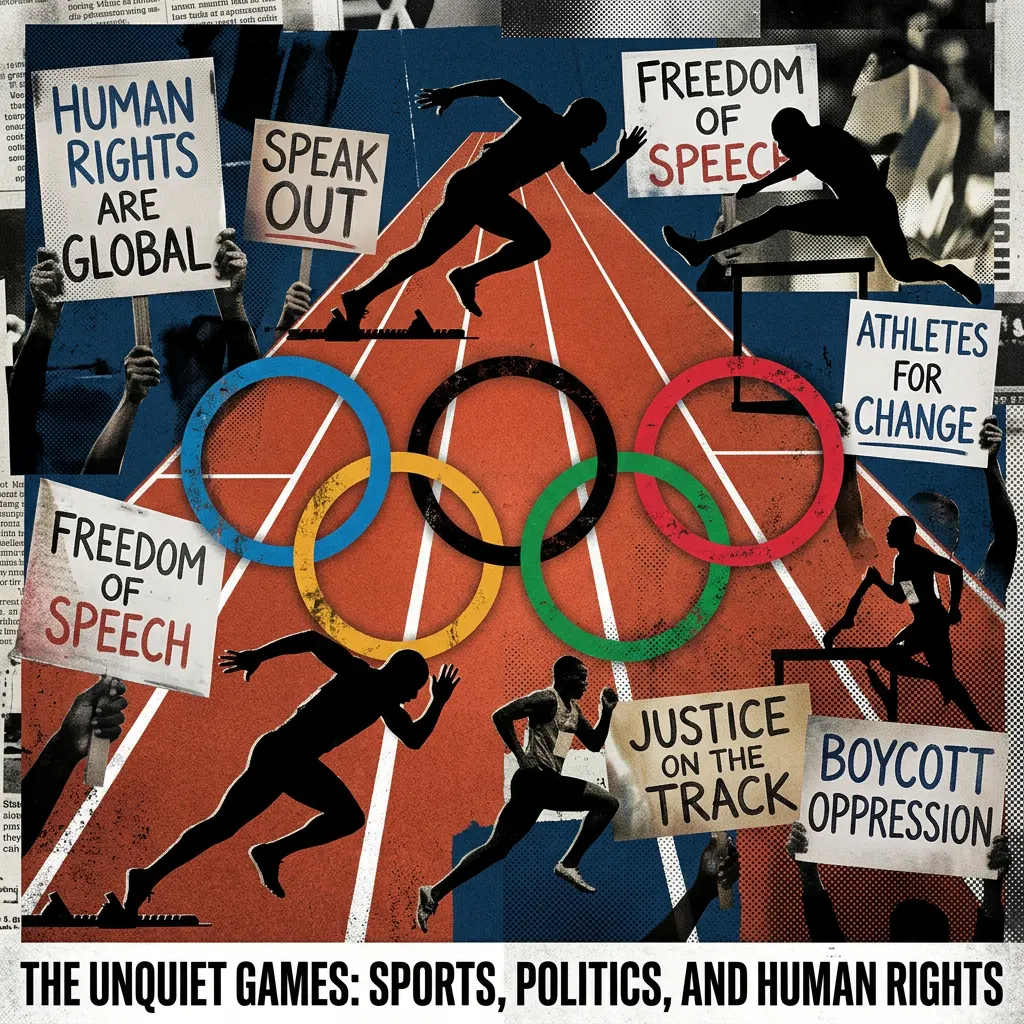
With the policy expected to apply from the Los Angeles 2028 Olympics onward, LA28 is increasingly shaping up as more than a sporting event. It could become the symbolic battleground for one of the defining rights debates in global sport.
If legal challenges intensify, the Olympic movement could face pressure not just from athletes and federations, but from governments, civil liberties groups, and international rights bodies. Reuters reported this week that Semenya has vowed to continue fighting the IOC’s approach, signaling that the next chapter may play out as much in courtrooms and human rights forums as on the track.
That makes this moment bigger than one athlete — but it is still impossible to separate the issue from Semenya herself. Her career has become a case study in how elite sport handles bodies that do not fit simple categories.
What This Debate Is Really About
At its core, this is not just a debate about science or policy. It is a debate about power.
Who gets to define womanhood in elite sport? Who decides what counts as fairness? And how much control should sporting institutions have over the most intimate biological details of an athlete’s life?
These are not easy questions. And there may never be a solution that satisfies everyone. But the danger lies in pretending the answer is simple when the human cost is not.
Caster Semenya’s final stand is not just about preserving her legacy. It is about forcing the world to confront the ethical limits of modern sport — and whether the Olympic movement can defend fairness without compromising dignity.
The IOC may have designed its new gene-screening rule as a policy fix. Instead, it has become a moral and political flashpoint.
For some, it represents overdue clarity in women’s sport. For others, it marks a return to surveillance, exclusion, and scientific gatekeeping over women’s bodies.
And for Caster Semenya, it is one more battle in a career that has come to represent far more than medals.
Whether history remembers this as a fairness reform or a human rights failure may depend on what happens next.
#CasterSemenya #IOC #Olympics #HumanRights #WomensSports #SportsLaw #LA28 #AthleteRights