

 By Vinod Ram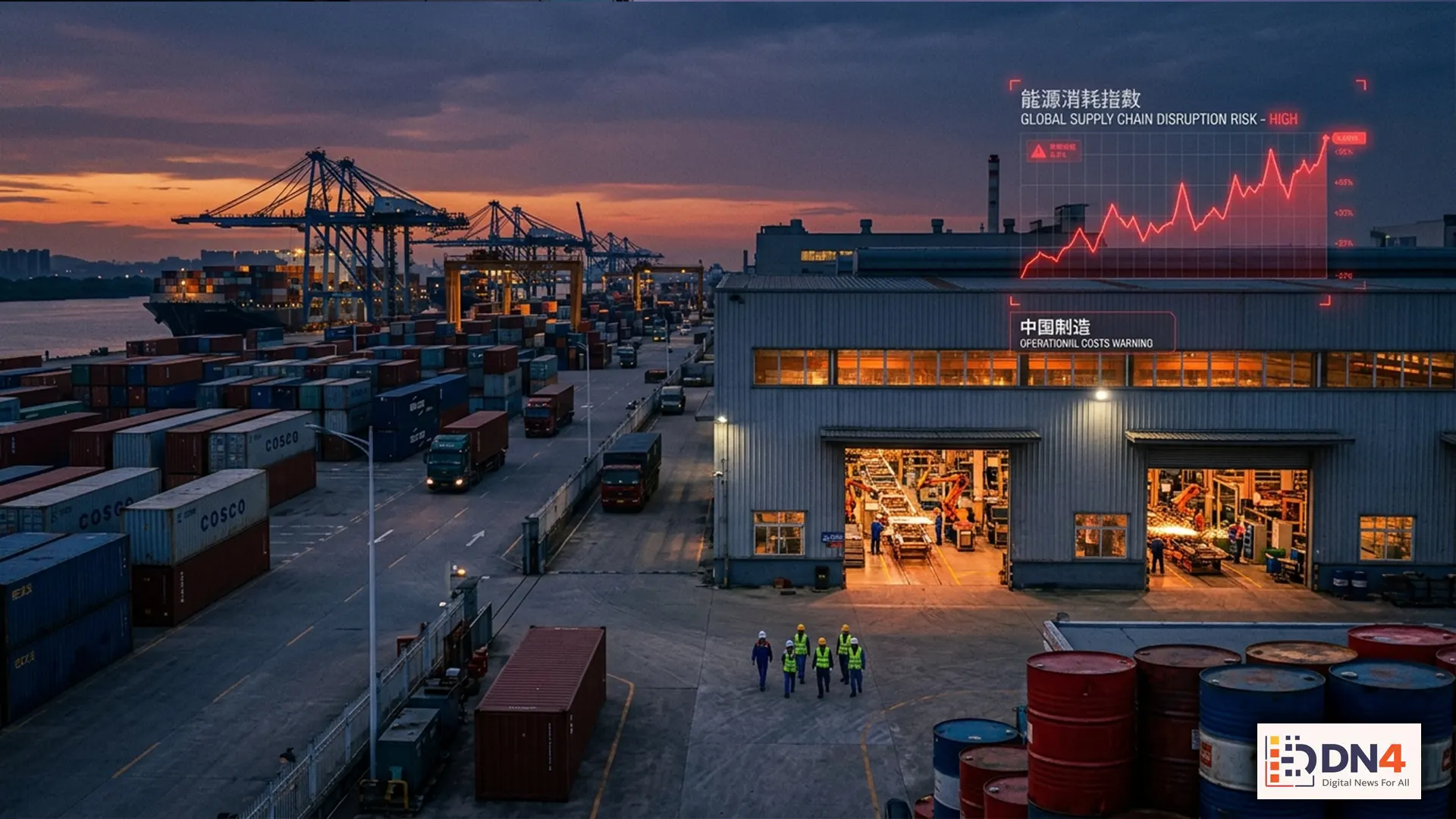
China’s manufacturing sector has shown signs of life just as the global economy desperately needs a stabilizing force. But there’s a problem: the rebound is arriving at exactly the wrong geopolitical moment.
As tensions across the Middle East continue to rattle energy markets and shipping routes, China’s industrial recovery is facing a fresh external stress test. The question now is no longer whether Chinese factories can produce more. It is whether they can stay profitable, competitive, and globally reliable if the energy shock deepens.
That makes this one of the most important business stories in the world right now — because if China’s manufacturing engine stumbles again, the effects will ripple far beyond Beijing.
Why China’s Manufacturing Recovery Matters So Much
China remains the backbone of global industrial production. Even after years of diversification talk, “China plus one” strategies, and shifting trade patterns, the country still sits at the center of many global supply chains — from electronics and machinery to chemicals, consumer goods, and industrial components.
That means when China’s factories accelerate, global trade tends to breathe easier. When they slow, costs rise and uncertainty spreads.
Recent signs of improvement in factory sentiment and PMI data have raised cautious optimism that China may finally be regaining some industrial momentum after a difficult stretch marked by weak domestic demand, property stress, and soft export conditions. But that optimism is fragile, and energy is one of the biggest reasons why.
Why the Middle East Energy Crisis Changes Everything
The Middle East remains one of the most strategically important energy regions on Earth. When tensions rise there, the consequences are not confined to oil-producing states. They quickly show up in global shipping insurance, freight costs, fuel prices, industrial margins, and inflation expectations.
For China, this matters acutely. The country is one of the world’s largest energy importers and remains deeply exposed to global oil and gas volatility. Any sustained disruption in energy flows or spike in crude oil prices can feed directly into the cost base of Chinese manufacturing.
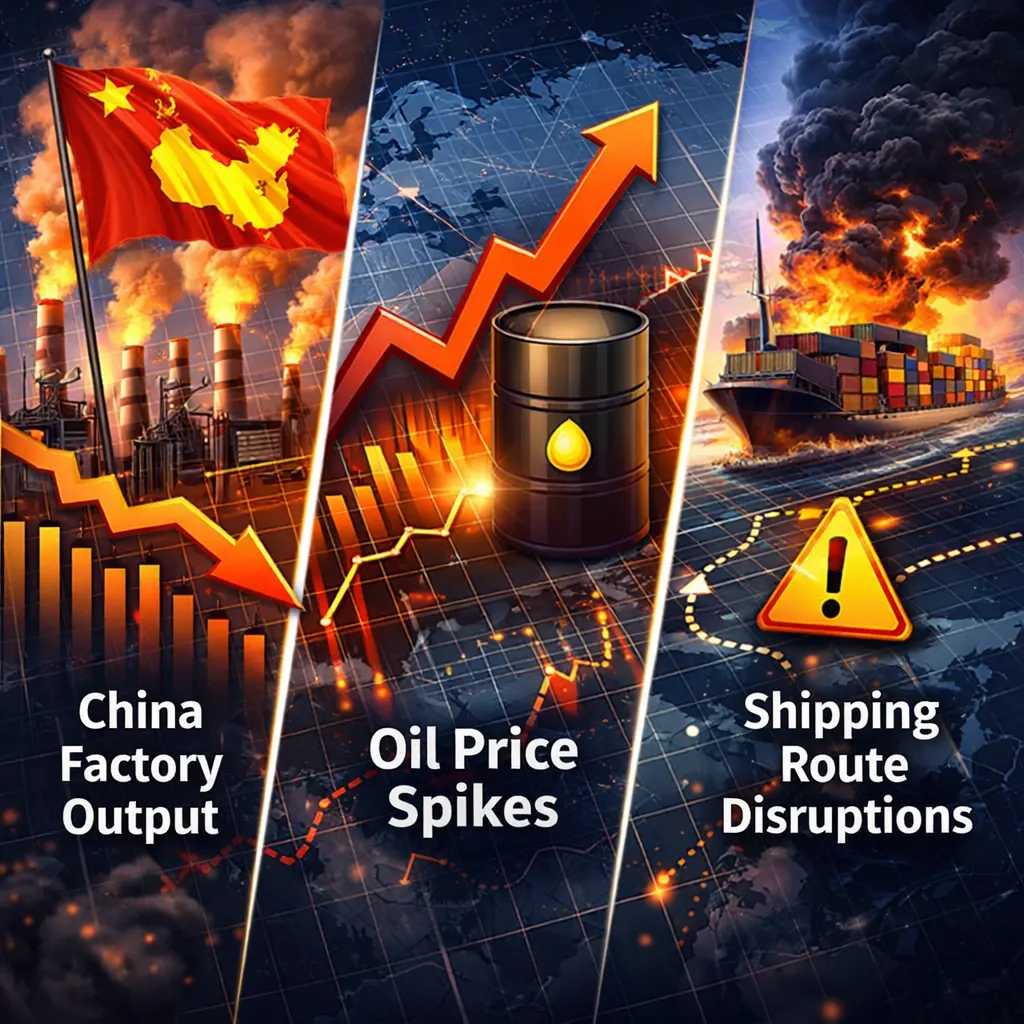
That creates a dangerous squeeze:
- Higher fuel and logistics costs make exports less competitive
- Rising input prices pressure factory margins
- Shipping disruptions increase delivery risk and uncertainty
- Global demand softening reduces room to pass costs on to buyers
In short, even if Chinese factories are producing more, they may be earning less.
The Real Risk Is Margin Compression, Not Just Output
One of the most misunderstood aspects of manufacturing recovery is that output alone does not equal health. Factories can increase production while still struggling financially if energy, transport, and financing costs rise faster than demand.
That is the real danger facing China now.
Many exporters are already operating in a highly competitive environment where buyers in Europe and North America are pushing for lower prices, faster delivery, and more resilience. If geopolitical instability in the Middle East pushes energy-linked costs higher for a prolonged period, Chinese manufacturers may find themselves absorbing more pain just to stay in the game.
This matters especially in lower-margin sectors such as consumer goods, textiles, machinery components, and mass manufacturing, where even a modest cost shock can erode profitability quickly.
Can Beijing Shield the Rebound?
The Chinese government is not blind to the risk. Beijing has multiple tools it can use to soften the impact of an energy-driven external shock, including targeted industrial support, infrastructure acceleration, credit easing, and strategic energy planning.
China also has one important advantage: scale. Its industrial ecosystem is still unmatched in terms of vertical integration, supplier density, and export infrastructure. That gives it more resilience than many rivals when global volatility rises.
Recent analysis from the World Bank and global economists continues to show that while China’s growth model is under pressure, its manufacturing base remains one of the most structurally important in the world economy.
But resilience is not immunity.
If oil prices stay elevated or shipping lanes remain unstable, policy support may help cushion the slowdown without fully offsetting it. In that case, the rebound may survive — but in a weaker, more uneven form than markets hope.
Why Shipping and Logistics Could Be the Hidden Wild Card
Energy headlines often focus on oil prices, but the logistics side of the equation may be just as important.
Middle East instability can quickly affect maritime trade routes, insurance premiums, rerouting decisions, and freight pricing — especially when key corridors such as the Red Sea corridor and nearby transit lanes become riskier or more expensive to navigate. For a manufacturing superpower like China, that is a serious strategic vulnerability.
Modern manufacturing is not just about making goods. It is about moving them reliably and affordably. If logistics friction rises, lead times stretch, and confidence among overseas buyers weakens, the damage can go beyond immediate costs. It can reshape sourcing decisions.
That is exactly the kind of pressure that competing manufacturing hubs in Southeast Asia, India, and Mexico are hoping to capitalize on.

Why Global Markets Are Watching Closely
China’s factory rebound is not only a domestic economic story. It is a global inflation, trade, and investment story.
If China manages to sustain manufacturing growth despite energy turbulence, it would send an important signal that global supply chains are more durable than feared. But if the rebound loses momentum, investors and policymakers may read it as evidence that the world economy remains more fragile than headline data suggests.
That matters for central banks, commodity markets, industrial stocks, and multinational companies trying to forecast demand in an increasingly unstable geopolitical environment.
In many ways, China’s factories have become a real-time stress indicator for the health of globalization itself.
What Happens Next?
The next phase of this story will likely be decided by three things:
- How long Middle East tensions remain elevated
- Whether energy and freight costs continue rising
- How effectively Beijing supports domestic industrial momentum
If the crisis remains contained, China’s rebound may continue — slower and more expensive, but intact. If the shock escalates, however, manufacturing could once again become a frontline casualty of geopolitical instability.
And because China still matters so much to global production, that would not stay a local problem for long.
China’s manufacturing recovery is real, but so is the threat hanging over it.
The Middle East energy crisis is testing whether industrial growth can survive in a world where geopolitics increasingly shapes the cost of everything — from oil and shipping to confidence and capital.
If China can hold the line, it will reinforce its status as the world’s most resilient manufacturing power. If it cannot, the next global supply chain shock may already be taking shape.
#ChinaEconomy #Manufacturing #EnergyCrisis #GlobalTrade #OilPrices #SupplyChains #EconomicOutlook #IndustrialRecovery