

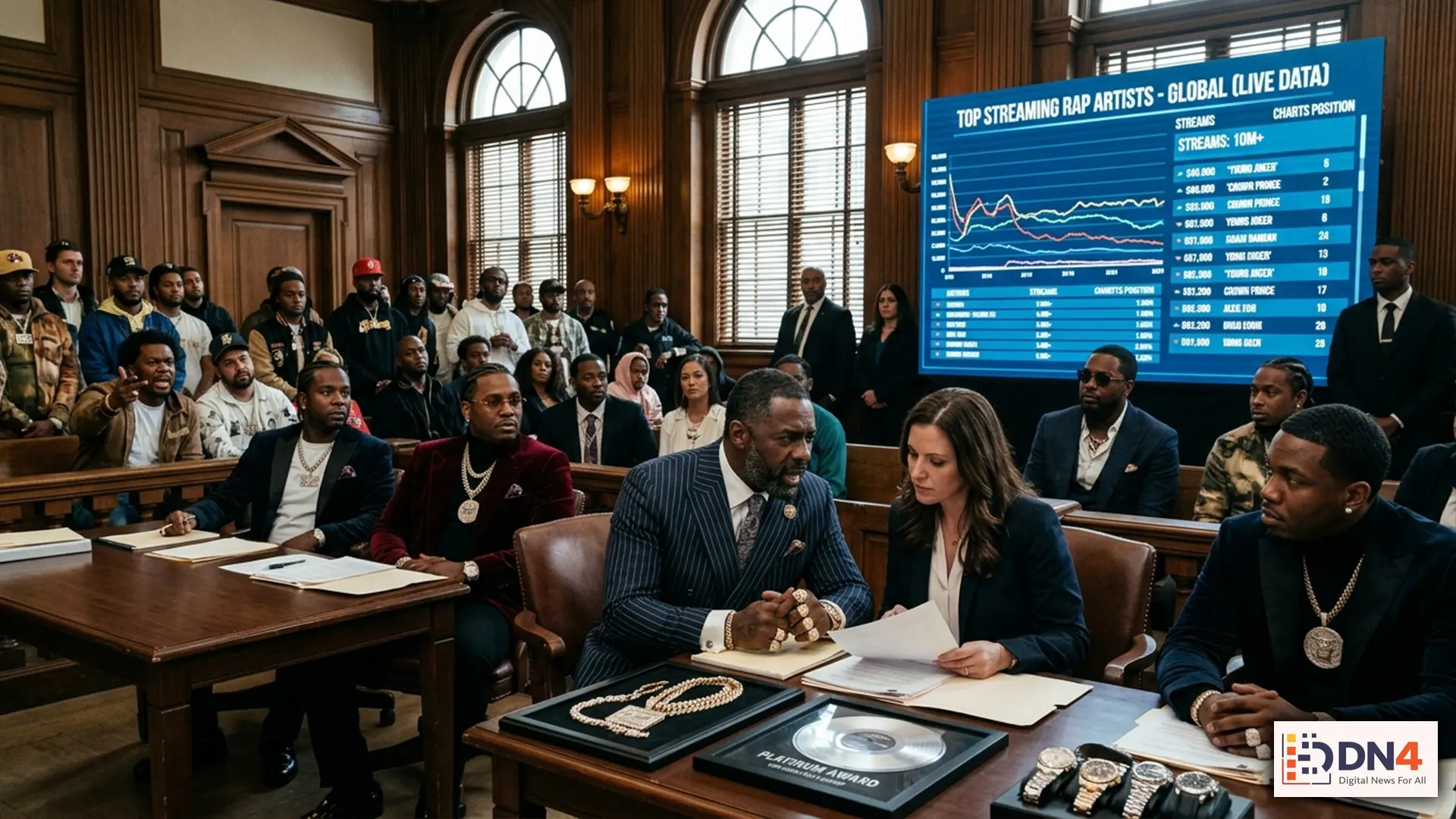
The music industry could be heading toward one of its most significant legal turning points in decades. Rumors surrounding a potential legal conflict involving Drake, Universal Music Group (UMG), and Spotify are already sending shockwaves through the entertainment business — and artists across hip-hop are watching closely.
If the dispute escalates into a full-scale courtroom battle, industry insiders believe it could expose how streaming giants, record labels, and superstar artists negotiate billions of dollars behind closed doors.
More importantly, it could permanently reshape the future of hip-hop contracts in the streaming era.
Reports circulating across entertainment media, including coverage from Billboard and Variety, suggest growing tensions around streaming economics, catalog ownership, royalty structures, and artist leverage.
Why This Lawsuit Matters Beyond Drake
Drake is not just another recording artist. He is one of the most commercially successful musicians in streaming history.
With billions of streams across platforms like Spotify, Apple Music, and YouTube, his catalog represents enormous financial power.
That’s why any legal challenge involving Drake and major industry players could create ripple effects across the entire music business.
For years, artists have questioned whether streaming platforms fairly compensate creators. While streaming transformed global music distribution, critics argue many contracts still heavily favor labels and technology platforms over musicians themselves.
The Real Battle: Ownership and Streaming Revenue
At the center of the controversy appears to be a larger fight over ownership, transparency, and digital-era profit sharing.
Industry experts say artists increasingly want:
- Greater ownership of master recordings
- Improved royalty transparency
- Higher streaming revenue percentages
- More control over licensing agreements
- Direct relationships with audiences
According to analysts at Rolling Stone, streaming economics remain one of the entertainment industry’s most controversial issues despite record-breaking music consumption globally.
As streaming revenues continue climbing, superstar artists are becoming more aggressive in renegotiating legacy contracts signed before the streaming explosion fully matured.
Could Hip-Hop Contracts Change Forever?
Many entertainment lawyers believe they could.
If legal discovery forces private contracts, royalty structures, or platform negotiations into public view, artists may gain unprecedented insight into how streaming profits are distributed.
That transparency alone could dramatically shift future negotiations between artists and labels.
Some experts compare the situation to previous landmark battles involving music ownership and artist rights, including disputes involving Taylor Swift, Prince, and other major stars who fought for greater control over their catalogs.
The Spotify Factor
Spotify’s role in the broader streaming economy also makes this case especially important.
As the world’s largest music streaming platform, Spotify sits at the center of ongoing debates over artist compensation, algorithmic promotion, playlist power, and streaming payouts.
Critics argue the platform’s economics disproportionately reward labels and top-tier artists while making sustainable income difficult for independent musicians.
At the same time, supporters claim streaming democratized global music access and created unprecedented exposure opportunities for emerging talent.
The Bigger Industry Shift
The potential Drake legal battle reflects a broader transformation happening across entertainment industries worldwide.
From Hollywood actors fighting AI protections to musicians challenging streaming economics, creators are increasingly pushing back against systems built during earlier digital eras.
Music contracts signed a decade ago may no longer reflect today’s streaming-driven reality.
And if Drake’s dispute moves forward publicly, it could become a defining moment for artist leverage in the modern music business.
For hip-hop — a genre deeply connected to ownership, independence, and entrepreneurial power — the outcome could influence contract negotiations for years to come.
#Drake #Spotify #UMG #HipHopNews #MusicIndustry #StreamingWars #ArtistRights #MusicBusiness #EntertainmentNews