

 By Vinod Ram
The Q4 earnings season officially kicked off today as major U.S. banks took center stage. With JPMorgan Chase and Citigroup reporting first, investors are closely watching what these financial giants reveal about interest rates, consumer spending, and the broader economic outlook for 2026.
Because banks sit at the center of lending, credit, and capital markets, their guidance often serves as a financial roadmap for the year ahead.
Why Bank Earnings Matter So Much Right Now
Bank earnings are more than just quarterly scorecards. In fact, they provide early insight into how businesses and households are responding to interest rates and inflation.
According to Reuters banking sector coverage, executives’ commentary on loan demand, credit quality, and consumer behavior often shapes market expectations well beyond the financial sector.
As a result, JPMorgan and Citi’s outlooks are being treated as bellwethers for 2026.
JPMorgan: Cautious Optimism on Rates and Growth
JPMorgan Chase, the largest U.S. bank by assets, struck a cautiously optimistic tone in its outlook. Management emphasized resilience in corporate activity while acknowledging that interest rate uncertainty remains a key variable.
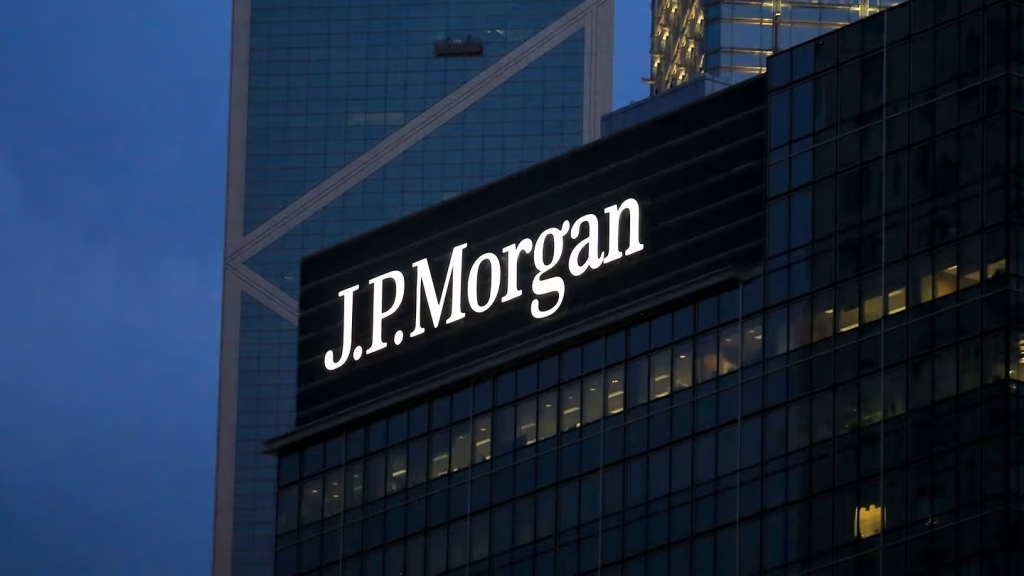
During its earnings commentary, JPMorgan pointed to steady credit demand from large clients. However, executives also signaled that the pace of future rate cuts will be critical for sustaining momentum.
As highlighted by CNBC’s earnings analysis, JPMorgan’s guidance suggests that markets may be entering a period of slower but more stable growth.
What JPMorgan’s Forecast Signals
- Interest rates likely to remain restrictive in the near term
- Corporate balance sheets still relatively healthy
- Lower volatility compared to recent years
Citigroup: Watching the Consumer Closely
Meanwhile, Citigroup placed greater emphasis on the health of the consumer. Executives noted that spending patterns remain intact, though signs of selectivity are becoming more apparent.
According to Citi’s leadership, consumers are prioritizing essentials while pulling back on discretionary purchases. That shift could shape lending and credit trends as 2026 unfolds.
Coverage from The Wall Street Journal highlights that Citi’s outlook reflects a more uneven recovery, especially across income groups.
Key Consumer Trends Citi Is Watching
- Stable employment supporting baseline spending
- Higher borrowing costs weighing on discretionary demand
- Credit quality holding up, but under close scrutiny
Interest Rates: The Central Theme for 2026
Both JPMorgan and Citi made it clear that interest rates will remain the dominant theme for the year ahead. Markets are increasingly focused on how quickly inflation cools and when central banks feel comfortable easing policy.

As noted by analysts at Bloomberg Markets, bank forecasts suggest fewer surprises but continued sensitivity to economic data.
In other words, 2026 may be less about dramatic shifts and more about disciplined execution.
A Financial Roadmap for Investors
Taken together, the early bank earnings paint a picture of measured confidence. Growth is slowing, but not collapsing. Consumers are spending, but more carefully. And interest rates are likely to stay higher for longer than many once expected.
For investors, this roadmap points toward selective opportunities rather than broad-based rallies.
The Q4 earnings kickoff from JPMorgan and Citi suggests that 2026 will reward patience and precision. While risks remain, the banking sector’s guidance points to stability rather than shock.
As more earnings roll in, investors will be watching closely to see whether this early roadmap holds — or begins to change.
#EarningsSeason #BankEarnings #JPMorgan #Citigroup #MarketOutlook #InterestRates #InvestingNews