

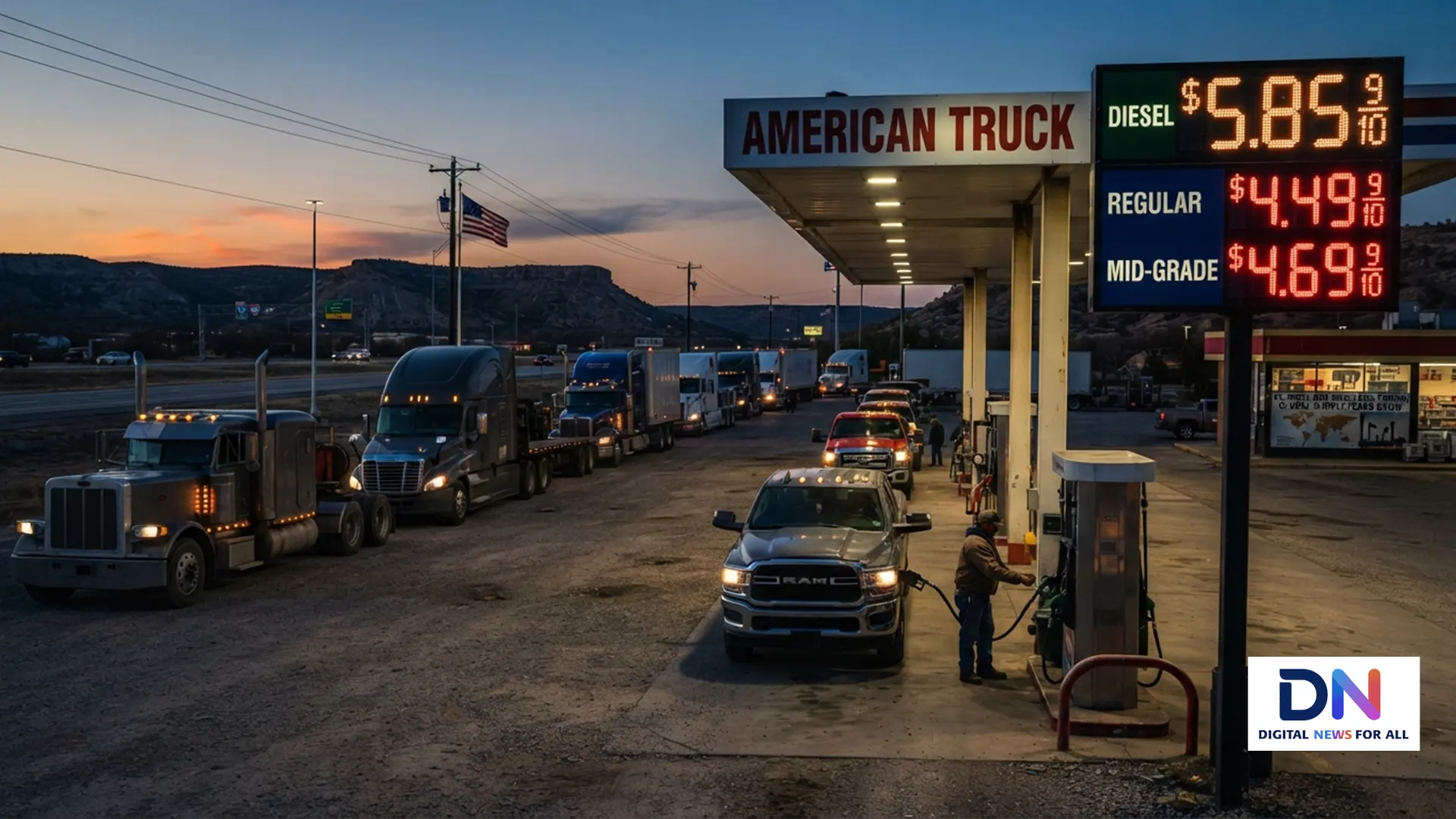
Diesel prices have become a major financial concern for American households. The national average reached a record $5.85 per gallon on September 4, 2026, according to AAA data reported at the time. The average has since climbed above $6, showing how quickly the fuel crisis is evolving.
The surge is closely tied to the ongoing Middle East conflict and disruptions across global oil markets. U.S. Energy Information Administration data show how crude oil and refined fuel markets are connected. When global supply tightens, American fuel prices can respond even when much of the country’s crude production is domestic.
Why Diesel Prices Are Rising
The International Energy Agency continues to monitor the severe disruption affecting global oil markets. The Reuters reports that renewed Middle East tensions have pushed crude prices higher while threatening supplies and shipping routes.
The Strait of Hormuz remains particularly important. Disruptions in this region can affect crude and refined-product flows far beyond the Middle East. Associated Press reporting has highlighted additional pressure from disruptions involving Saudi Arabia’s oil infrastructure.

Why Americans Feel the Impact
Diesel is not only a fuel for pickup trucks. It powers much of America’s freight transportation, agricultural equipment, construction machinery and commercial trucking network.
When diesel prices rise, trucking companies face higher operating costs. Those costs can eventually reach consumers through more expensive groceries, building materials, packages and other everyday goods. Farmers also face higher costs for tractors, harvesting equipment and transporting crops.
AAA’s fuel-price tracker shows how quickly national averages have moved. Meanwhile, Columbia University’s energy research has examined how refined-product shortages can create additional pressure even when crude oil remains available.

Could Prices Stay High?
The biggest question is how long the conflict and supply disruptions will last. A sustained disruption could keep diesel prices elevated and add another layer of inflation pressure for American consumers.
There is also a potential policy challenge. The U.S. Department of Energy has tools for monitoring energy security, but no single policy can instantly replace disrupted global refining and transportation capacity.
For now, the message for American households is straightforward: diesel prices are no longer just an energy-market story. They are becoming a broader cost-of-living issue. As global tensions continue, fuel prices could remain one of the clearest ways the Middle East conflict reaches directly into American wallets.
#DieselPrices #MiddleEastConflict #OilPrices #FuelCrisis #Inflation #USEconomy #AmericanConsumers #EnergyCrisis