

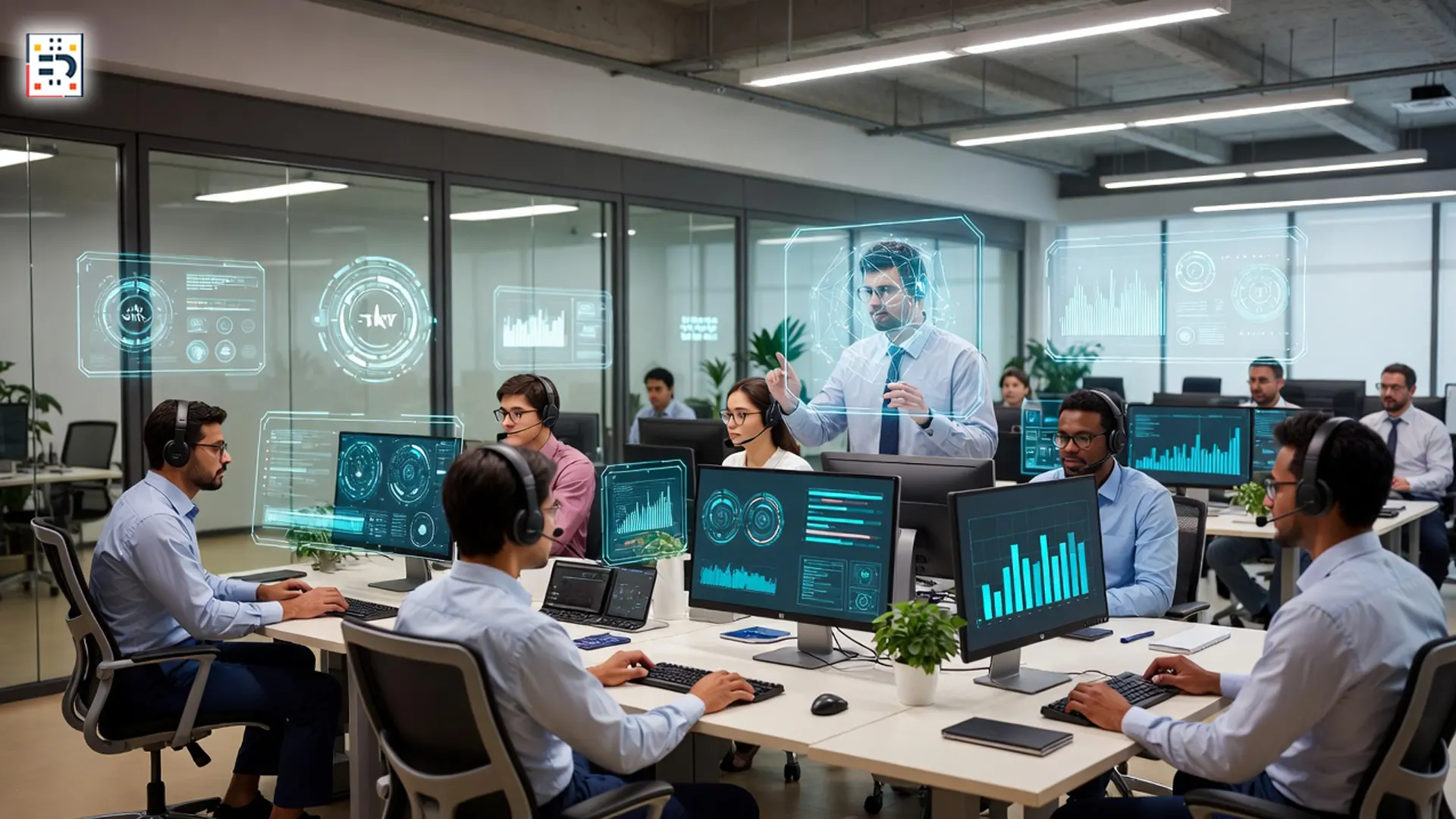
Artificial intelligence is no longer a future promise — it’s an economic force. According to new research from Pearson and IBM, AI could contribute as much as $6.6 trillion to the U.S. economy by 2034. But behind that staggering number lies a more urgent question:
What does this mean for the average American worker in 2026?
The answer signals a fundamental shift — not just toward efficiency, but toward innovation-driven work.
From Automation Anxiety to Economic Reality
For much of the past decade, AI discussions have centered on job loss. Automation, displacement, and workforce disruption dominated headlines.
The Pearson–IBM research reframes the narrative.
Rather than eliminating work, AI is increasingly reshaping how value is created — augmenting human capability, accelerating learning, and unlocking entirely new categories of jobs.
By 2026, this shift is already visible across industries.
Where the $6.6 Trillion Comes From
The projected economic impact isn’t driven by cost-cutting alone. The research highlights three primary growth engines:
- Productivity acceleration through AI-assisted workflows
- Faster innovation cycles in products and services
- Workforce reskilling at scale via AI-powered education
In other words, AI’s value lies less in replacing labor — and more in amplifying it.

What “Innovation Over Efficiency” Really Means
In 2026, AI’s most profound impact on workers isn’t about doing the same tasks faster.
It’s about changing what tasks matter.
The Old Model: Efficiency-First Work
- Repetitive processes
- Manual data handling
- Rigid job descriptions
The New Model: Innovation-First Work
- Problem-solving and creative decision-making
- AI-assisted research and analysis
- Cross-functional, adaptive roles
Workers who learn to collaborate with AI tools — rather than compete with them — are becoming more valuable, not less.
Which Jobs Are Changing the Fastest?
AI’s impact is uneven, but widespread.
Rapidly Transforming Roles
- Marketing and content strategy
- Software development and IT operations
- Finance, accounting, and risk analysis
- Healthcare administration and diagnostics support
In these fields, AI is taking over routine tasks, freeing workers to focus on higher-level judgment, strategy, and innovation.
The Skills That Matter Most in 2026
The Pearson–IBM findings emphasize that the biggest economic gains come from reskilling, not replacement.
Key skills gaining value include:
- AI literacy and prompt-based interaction
- Critical thinking and systems-level reasoning
- Creative problem-solving
- Emotional intelligence and collaboration
Workers who can translate AI outputs into business decisions are emerging as the new power players of the labor market.
What This Means for Wages and Job Security
Contrary to early fears, the research suggests AI adoption could:
- Increase wages in AI-complementary roles
- Create more fluid career pathways
- Reduce burnout by automating low-value tasks
However, workers who fail to adapt risk stagnation — not because AI replaces them, but because the nature of value creation has moved on.
The Bigger Picture: A Workforce Redefined
The $6.6 trillion projection is less about technology and more about human potential.
AI is becoming a general-purpose tool — like electricity or the internet — reshaping every industry it touches. The U.S. labor market of 2026 is already reflecting this transition.
The future belongs not to the fastest workers, but to the most adaptable ones.
The Payoff Is Human
AI’s economic promise won’t be realized through automation alone.
It will be unlocked through people — workers who learn, evolve, and innovate alongside intelligent systems.
If the Pearson–IBM forecast proves accurate, the $6.6 trillion payoff won’t just reshape balance sheets. It will redefine what work means in America.
From Efficiency to Innovation
AI is transforming the future of work by prioritizing creativity and problem-solving.
AI-Proof Skills
Skills like critical thinking and AI literacy align with trends tracked by the World Economic Forum.
#FutureOfWork #AITransformation #Careers