

 By Vinod Ram
When former OpenAI CTO Mira Murati stepped away from the company that helped launch the modern AI revolution, the tech world expected her next move to be ambitious. Few predicted it would evolve into one of the most serious competitive threats OpenAI has faced so far.
Murati’s startup, Thinking Machines Lab, has rapidly become one of Silicon Valley’s most closely watched AI ventures. Backed by billions in funding and stacked with elite researchers from OpenAI, Meta, and Mistral, the company is positioning itself as more than just another AI startup — it’s aiming to redefine how frontier AI systems are built, controlled, and deployed.
According to reports from TechCrunch, Reuters, and Forbes, Thinking Machines Lab has already secured massive infrastructure partnerships and attracted top engineering talent, signaling that Murati intends to compete directly with OpenAI, Anthropic, and Google DeepMind. :contentReference[oaicite:0]{index=0}
Why Mira Murati’s Exit Matters
Murati wasn’t just another executive at OpenAI. She played a central role in the development and launch of products like ChatGPT, DALL·E, and GPT-powered enterprise tools.
Her departure highlighted growing tensions inside the AI industry around governance, commercialization, and leadership. Recent testimony connected to ongoing legal battles involving OpenAI has brought those tensions back into public focus.
Now, by launching Thinking Machines Lab, Murati appears to be building an AI company designed around flexibility, openness, and customizable intelligence systems — a sharp contrast to the increasingly centralized strategies of larger AI labs.
The AI Talent War Is Escalating
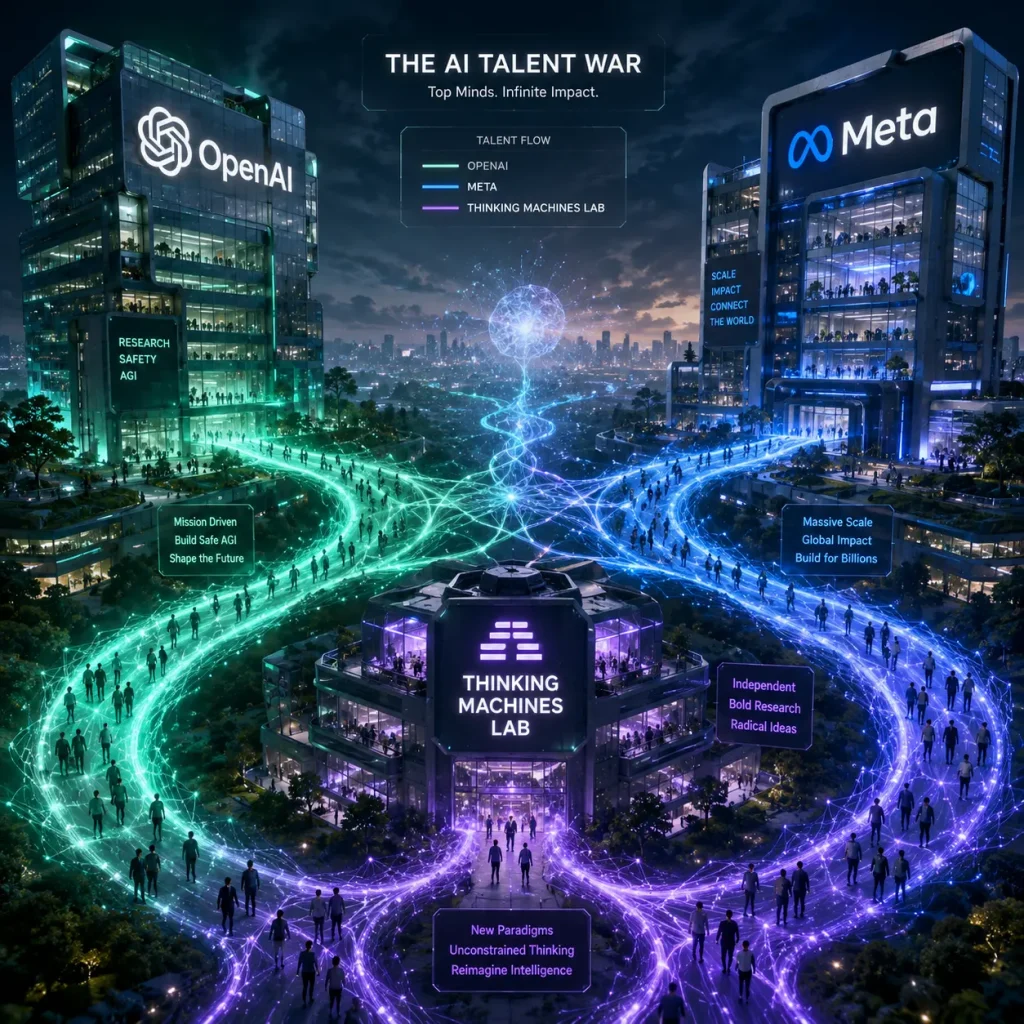
The rise of Thinking Machines Lab also reveals something bigger happening across Silicon Valley: the AI talent war is becoming more aggressive than ever.
Reports indicate that engineers and researchers are constantly moving between OpenAI, Meta, Google, and Murati’s new venture. Some employees left Thinking Machines Lab to rejoin OpenAI, while others were recruited by Meta’s expanding AI division
This level of movement shows just how valuable experienced AI researchers have become. Companies are no longer competing only on products — they are competing on compute power, infrastructure access, and elite human talent.
Murati’s startup reportedly secured multibillion-dollar cloud and GPU agreements, including partnerships tied to Nvidia-powered infrastructure.
Can Thinking Machines Lab Really Challenge OpenAI?
That depends on what “challenge” means in the AI race.
OpenAI still dominates consumer awareness thanks to ChatGPT and enterprise integrations with Microsoft. But Murati’s company may not need to surpass OpenAI overnight to reshape the industry.
Instead, Thinking Machines Lab could influence:
- Open-source AI development
- Enterprise customization tools
- Safer governance models
- Research transparency
- Developer-focused AI platforms
Industry analysts believe the startup’s structure as a public benefit corporation could also appeal to researchers concerned about how rapidly commercial AI firms are scaling.
The Bigger Impact on the AI Industry
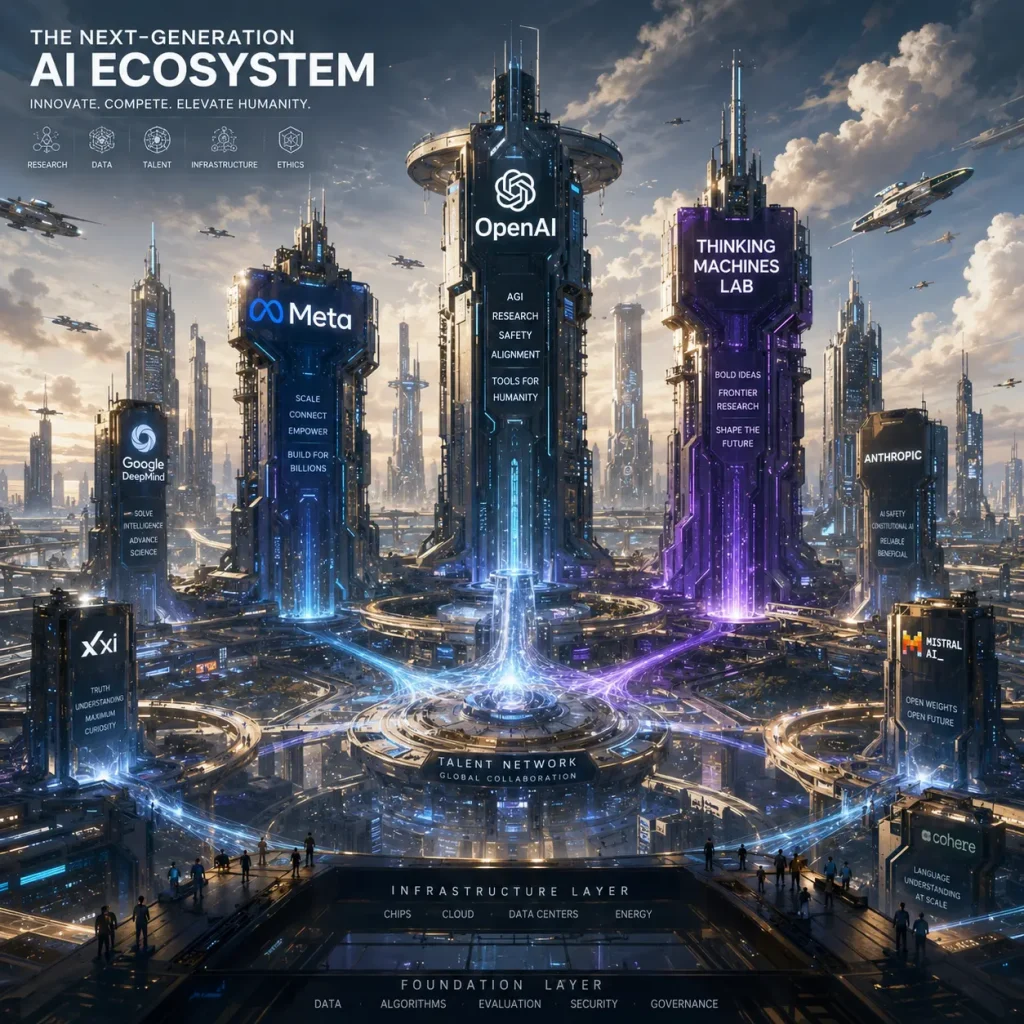
The emergence of Thinking Machines Lab reflects a broader shift in artificial intelligence. The market is moving from a handful of dominant labs toward a more fragmented and competitive ecosystem.
That could accelerate innovation, but it may also intensify concerns around regulation, ethics, compute monopolies, and AI safety.
For OpenAI, Murati’s new company represents more than a startup founded by a former executive. It symbolizes the next phase of the AI race — one where former insiders are building rival ecosystems powerful enough to reshape the future of artificial intelligence itself.
Whether Thinking Machines Lab becomes a true OpenAI rival or evolves into a specialized AI powerhouse, one thing is already clear: Mira Murati is no longer helping define OpenAI’s future. She’s building her own.
#MiraMurati #ThinkingMachinesLab #OpenAI #ArtificialIntelligence #AIStartup #GenerativeAI #TechNews #FutureOfAI #DigitalTransformation