

 By Vinod Ram
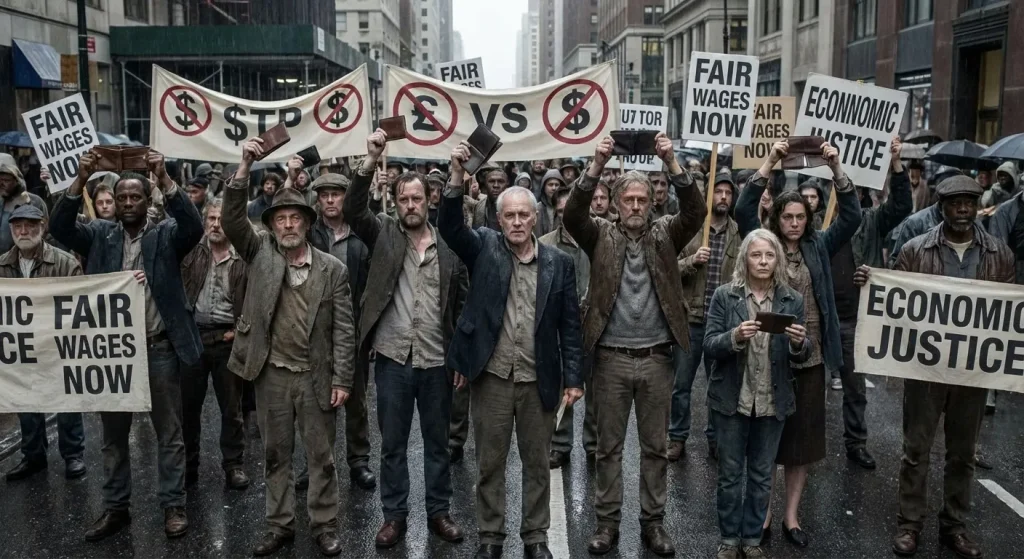
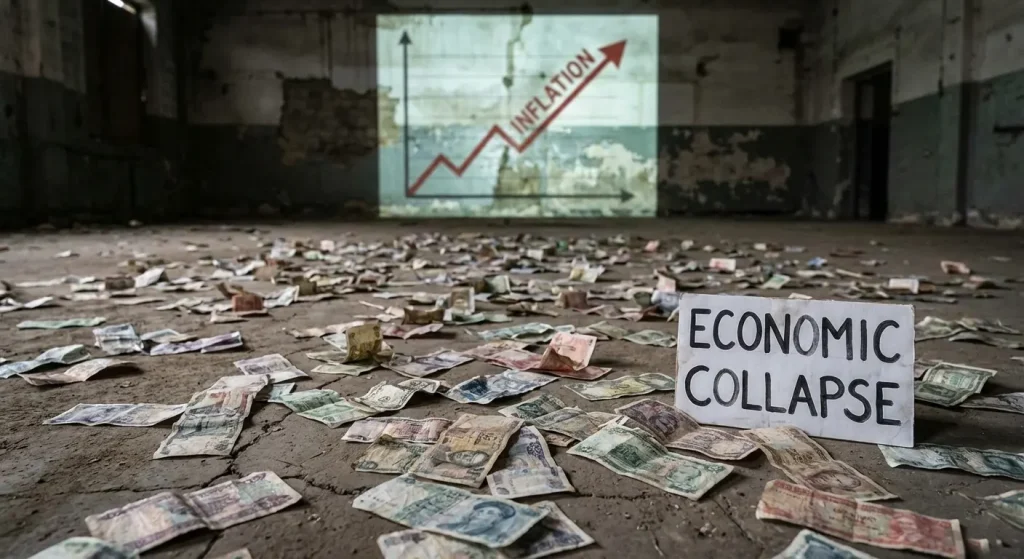
History shows a striking pattern: when inflation approaches or exceeds 60% annually, societies rarely remain politically stable. Across centuries and continents, extreme inflation has repeatedly triggered protests, revolutions, coups, or regime collapse.
While no economic rule applies without exception, economists and historians increasingly agree that around 60% inflation marks a psychological and political breaking point — one where citizens lose trust not only in money, but in the state itself.
Why Inflation Is More Dangerous Than Recession
Recessions cause hardship, but inflation corrodes daily life. Unlike unemployment, which affects segments of society, inflation hits everyone, every day.
According to the International Monetary Fund, high inflation destabilizes societies by:
- Destroying purchasing power faster than wages can adjust
- Wiping out savings and pensions
- Making basic goods unpredictable or unavailable
- Undermining trust in government statistics and institutions
As a result, inflation becomes political long before it becomes hyperinflation.
Why 60% Is a Critical Threshold
Economists often describe inflation in abstract terms. However, history suggests that citizens respond not to theory, but to lived experience.
At roughly 60% annual inflation:
- Prices double in about 14 months
- Monthly budgeting becomes impossible
- Cash wages lose meaning
- Black markets rapidly expand
Research cited by the Brookings Institution shows that political instability accelerates sharply once inflation exceeds this range — even in authoritarian states.
Historical Case Studies Where Inflation Led to Revolt
Weimar Germany (1921–1923)
Germany’s post-World War I inflation devastated the middle class. Although hyperinflation peaked later, political radicalization began earlier — once inflation crossed roughly 50–70%.
According to the Encyclopaedia Britannica, this erosion of trust paved the way for extremist movements and democratic collapse.
Iran (1978–1979)
Before the Iranian Revolution, inflation surged alongside food shortages and wage stagnation. As real incomes collapsed, protests spread rapidly across urban centers.
Inflation did not cause the revolution alone — but it eliminated the regime’s remaining legitimacy.
Latin America’s Debt Crisis (1980s)
Countries including Argentina, Brazil, and Peru experienced inflation well above 60%, leading to:
- General strikes
- Mass protests
- Military interventions
The World Bank later identified inflation as the single most destabilizing variable during this period.
Arab Spring Precursors (2008–2011)
In Egypt, Tunisia, and Syria, inflation — particularly food inflation — surged after the 2008 global financial crisis.
According to analysis published by Foreign Affairs, rising prices acted as the catalyst that transformed social frustration into mass revolt.
The Psychology of Inflation and Revolt
Extreme inflation produces more than economic stress — it creates moral outrage.
Once citizens believe:
- The government is lying about inflation
- Elites are protected while the public suffers
- Hard work no longer guarantees survival
obedience collapses rapidly.
As historian Adam Tooze notes in his work on economic crises, inflation breaks the social contract faster than almost any other economic force.
Why Governments Fail to Stop It in Time
Governments often delay action because inflation initially benefits them:
- Debt becomes cheaper in real terms
- Tax revenues rise nominally
- Public anger lags behind price increases
However, once inflation reaches the 60% range, corrective policies require painful austerity — which leaders often fear more than unrest.
By the time reforms begin, revolt momentum is already irreversible.
Does 60% Inflation Always Lead to Revolt?
Strictly speaking, no historical rule is absolute. Yet the record is remarkably consistent.
According to comparative datasets reviewed by the Our World in Data project, nations that avoid revolt at extreme inflation levels typically rely on:
- Heavy repression
- External financial lifelines
- Short-lived stabilization before collapse
Even then, instability usually follows.
The Modern Warning
Today, policymakers closely monitor inflation not just as an economic indicator, but as a political one.
History suggests that once inflation approaches the 60% threshold, legitimacy erodes faster than policy can respond. Revolt does not require ideology — only despair.
Extreme inflation has never been politically neutral. Again and again, when inflation reaches roughly 60%, societies cross from hardship into rupture.
Revolts may differ in form — protests, coups, revolutions — but the pattern remains: when money fails, authority soon follows.
#Inflation #Uprising #Revolt #EconomicHistory #PoliticalInstability #Hyperinflation #GlobalEconomy #WorldNews