

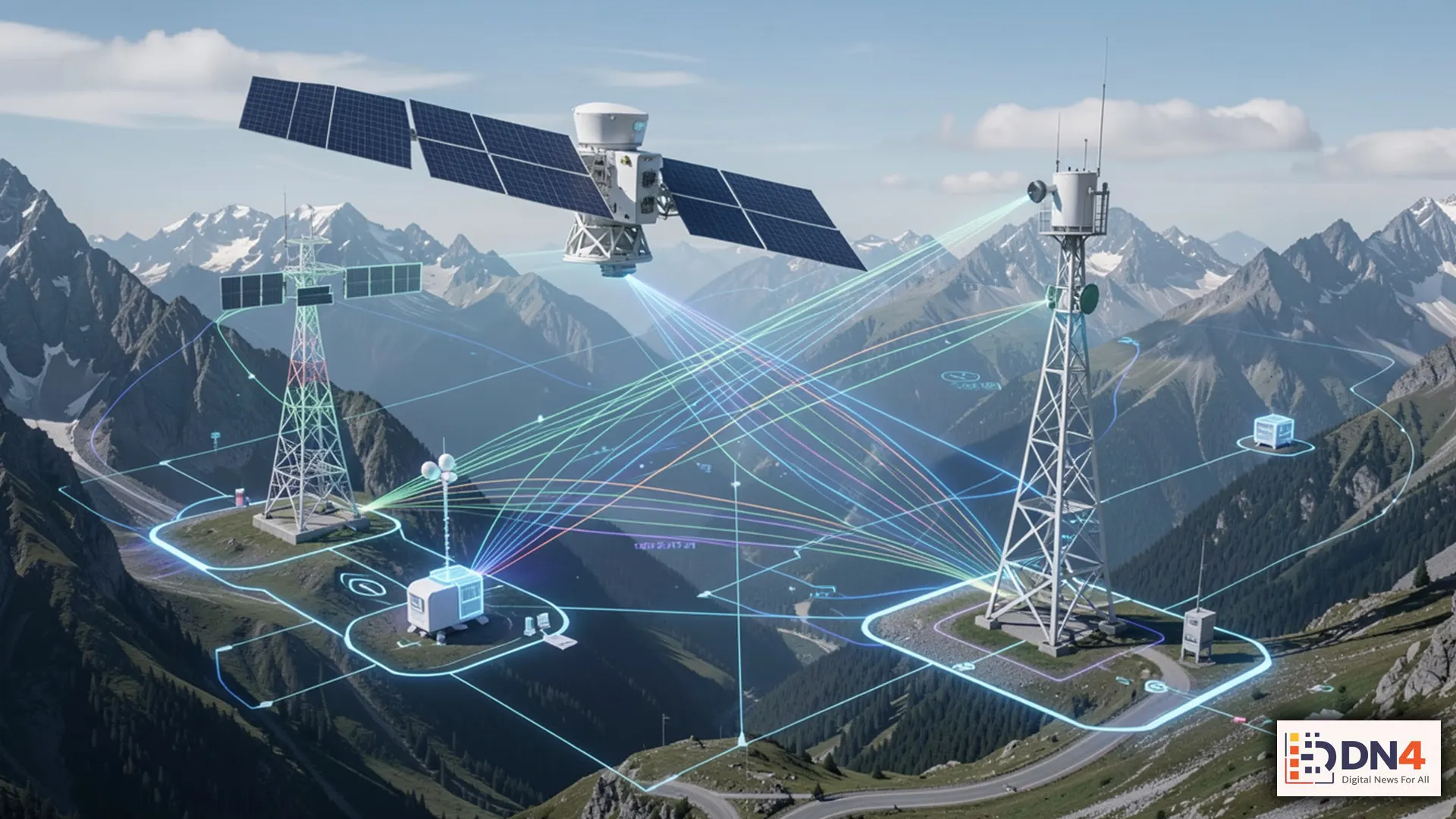
Internet connectivity is expanding worldwide, yet large parts of the planet still remain outside reliable cellular coverage. These so-called network dead zones affect rural communities, remote infrastructure, agriculture, shipping, and environmental monitoring.
A new solution is emerging: satellite-cellular hybrid connectivity. Companies like Blues Wireless and Skylo are collaborating to create IoT modules that seamlessly switch between terrestrial cellular networks and satellite coverage.
This hybrid approach promises continuous connectivity for devices operating in places where traditional networks simply cannot reach.
What Is Satellite-Cellular Hybrid Connectivity?
Traditional Internet of Things devices rely on cellular networks such as LTE or 5G to send data. However, these networks depend on ground-based towers.
Hybrid connectivity solves this limitation by allowing devices to automatically connect to satellites when cellular signals disappear. Networks such as those operated by Skylo’s satellite service act as a backup layer for communication.
The concept is gaining attention as industries increasingly deploy IoT sensors in remote areas.

How the Blues + Skylo IoT Module Works
The new IoT module integrates hardware and software that can communicate with both cellular towers and satellites. The device determines the best available network automatically.
Key features include:
- Automatic switching between cellular and satellite networks
- Low-power design optimized for IoT sensors
- Global satellite coverage in remote regions
- Cloud-based device management
According to documentation from Blues developer platform, these modules are designed to simplify building connected products for engineers and startups.
Why “Dead-Zone” Connectivity Matters
Many industries depend on reliable connectivity in locations where mobile networks are unavailable. Satellite-cellular hybrid systems could transform operations in several sectors.
Examples include:
- Precision agriculture sensors monitoring crops
- Environmental monitoring in remote forests
- Oil, gas, and mining operations
- Shipping and logistics tracking
- Disaster recovery communication systems
Organizations like the International Telecommunication Union have highlighted satellite connectivity as an important step toward global digital inclusion.
The Rise of Satellite IoT Networks
Satellite-powered connectivity is becoming one of the fastest-growing areas in the IoT ecosystem. Companies across the space industry are developing networks specifically designed for low-power devices.
Technology providers such as Starlink and emerging satellite operators are expanding the infrastructure required to support remote communication.
Meanwhile, hybrid solutions like Blues and Skylo are helping developers integrate these networks into everyday connected products.

Benefits for Remote Living and Smart Infrastructure
The satellite-cellular hybrid model is especially promising for communities living in remote areas. By allowing devices to remain connected even in low-coverage regions, the technology could enable new services such as:
- Remote healthcare monitoring devices
- Smart agriculture systems
- Wildlife conservation sensors
- Infrastructure monitoring for bridges and pipelines
As IoT adoption continues to grow, ensuring reliable connectivity everywhere will become increasingly important.
The Future of Hybrid Connectivity
The collaboration between Blues and Skylo represents a major step toward making always-connected devices possible, even in the most isolated environments.
Hybrid satellite-cellular technology could play a crucial role in expanding the reach of the Internet of Things and bridging connectivity gaps across the world.
For developers, businesses, and remote communities alike, the ability to stay connected beyond traditional network limits may define the next generation of digital infrastructure.
#IoT #SatelliteInternet #ConnectedDevices #SpaceTech #SmartInfrastructure #FutureConnectivity #TechInnovation