

 By Vinod Ram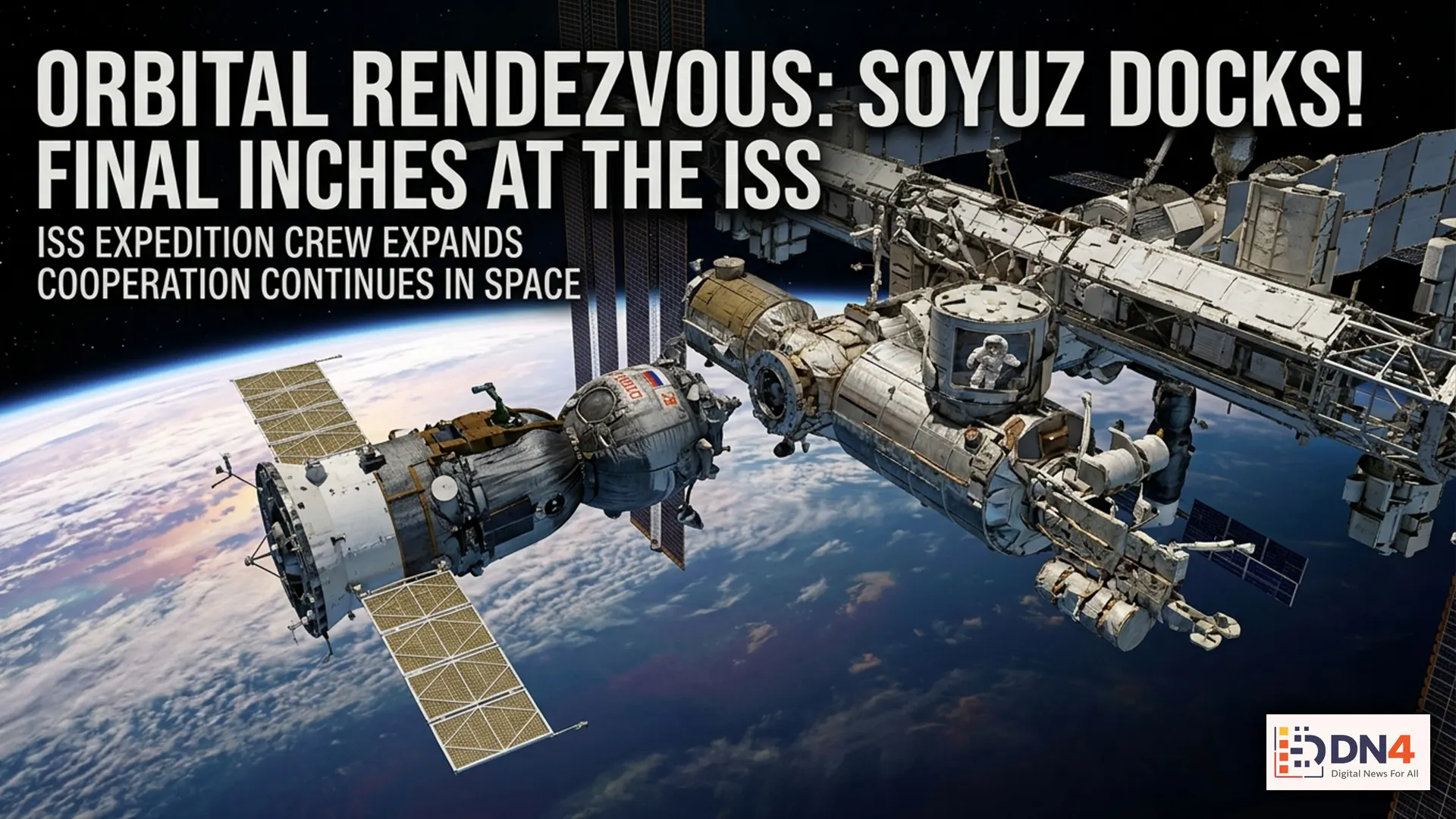
Space stations are built for redundancy — until suddenly they aren’t.
For a tense stretch of operations, Russia found itself confronting a high-stakes problem aboard the International Space Station (ISS): its crewed access and emergency return pathway had been compromised, and the only practical gateway it controlled to the orbital outpost was suddenly in question.
What followed was not just a technical fix. It was a vivid reminder that even after decades of human spaceflight, orbital logistics remain fragile, political cooperation remains essential, and one damaged spacecraft can put an entire operational architecture under pressure.
Russia’s eventual recovery of that access — through a replacement Soyuz mission and a carefully managed reshuffling of crew return capability — may not have had the cinematic flash of a launch-day spectacle. But inside the space industry, it was one of the clearest examples in recent years of how quickly “routine” spaceflight can turn into a systems-level crisis.
What exactly went wrong?
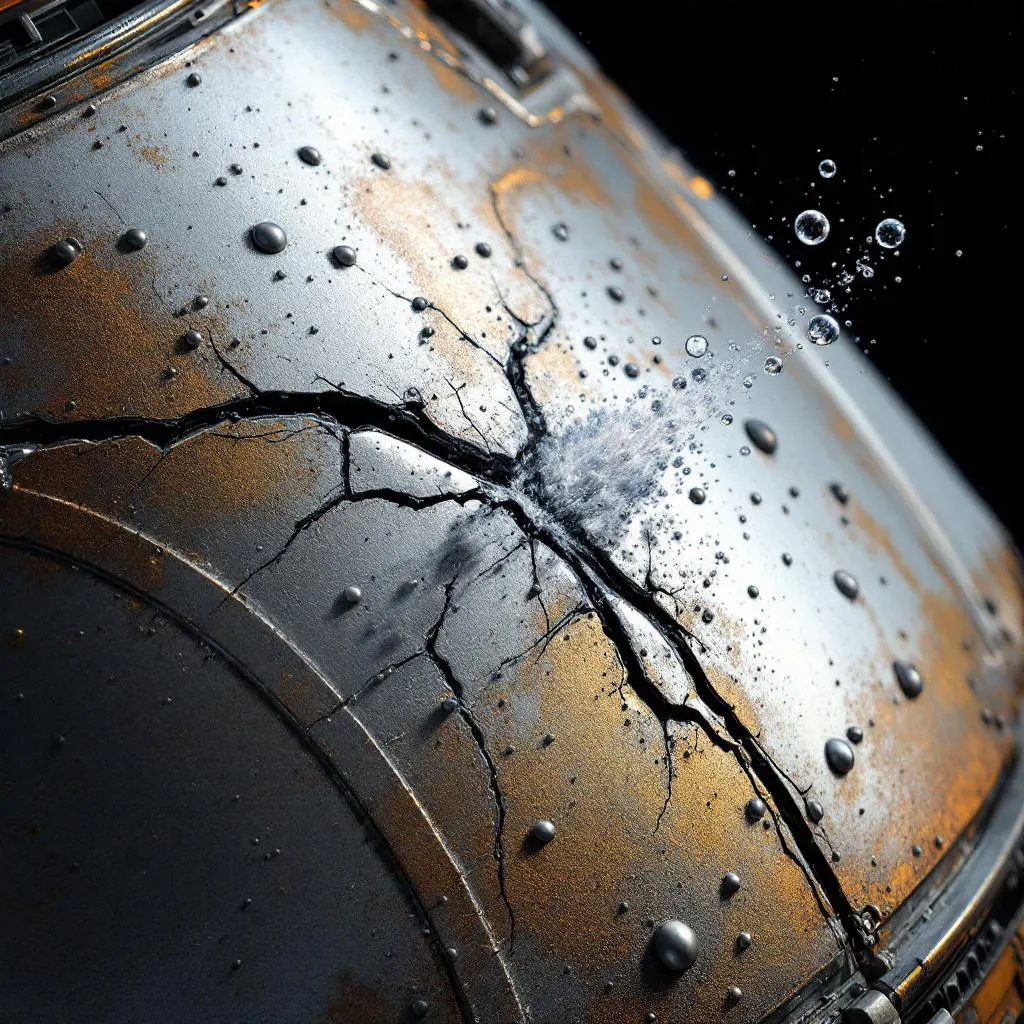
The turning point came when Russia’s Soyuz MS-22 spacecraft suffered a coolant leak while docked to the ISS, raising serious concerns about whether it could safely bring crew members back to Earth. According to NASA’s ISS mission coverage, the leak triggered an extended evaluation of the spacecraft’s ability to function as a safe return vehicle.
That mattered because Soyuz is not just a ride up to orbit — it is also a lifeboat. Every astronaut or cosmonaut aboard the ISS must have a viable emergency return option. If a docked spacecraft becomes unreliable, the problem is not theoretical. It becomes operational immediately.
Roscosmos later confirmed that the spacecraft had likely been damaged externally, and reporting from Reuters and analysis from Space.com pointed to a probable micrometeoroid strike as the cause.
That explanation made the situation more unsettling, not less. A mechanical defect can often be engineered around. Orbital debris and micrometeoroid threats are harder: they are environmental risks that every spacecraft operator in low Earth orbit has to live with.
Why this was a much bigger problem than a damaged capsule
To understand why this became such a major issue, you have to understand how the ISS works in practice.
The station is a permanently inhabited orbital laboratory, but it is also a tightly choreographed transport ecosystem. Crew rotations, cargo runs, scientific schedules, and emergency procedures all depend on the availability of docked spacecraft.
At that moment, Russia’s Soyuz system was effectively its only sovereign crew access route to the station. While NASA and its partners now also rely on commercial crew systems such as SpaceX Crew Dragon, Russia’s human spaceflight architecture for the ISS still revolved around Soyuz.
That meant the issue wasn’t just “Can this vehicle survive re-entry?” It was also “Can Russia safely maintain its role in station operations if its only direct crew gateway is degraded?”
That’s a very different level of problem.
The fix: replace the gateway before it becomes a crisis
The solution was as elegant as it was urgent: send up a replacement spacecraft.
Roscosmos ultimately launched Soyuz MS-23 uncrewed to the ISS, specifically to replace the compromised MS-22 capsule. The official Roscosmos mission updates framed the move as a direct contingency response designed to restore full crew return capability.
This was a smart operational decision for several reasons:
- It reduced immediate crew safety uncertainty
- It preserved station emergency evacuation logic
- It avoided forcing astronauts into a higher-risk re-entry scenario
- It protected the long-term rhythm of ISS transport operations
In effect, Russia didn’t just repair a broken link — it re-established its presence and credibility in one of the most unforgiving transport environments imaginable.
Why the ISS still depends on international trust
One of the most striking parts of this episode was how it underscored the practical interdependence built into the ISS itself.
Even at a time of strained geopolitics on Earth, station operations remained grounded in a kind of hard realism: in orbit, cooperation is not symbolic. It is infrastructure.
The ISS is jointly operated by multiple agencies, including NASA, Roscosmos, ESA, JAXA, and CSA. That means safety planning is never purely national. If one transportation system is compromised, the implications ripple across the entire orbital ecosystem.
This is why even a “Russian spacecraft problem” quickly becomes an ISS problem.
What this incident revealed about spaceflight risk
The Soyuz recovery story also highlighted something the public often underestimates: the most dangerous part of spaceflight is not always launch.
Sometimes the real risk is continuity.
Can the station maintain safe access? every crew member get home? Can the orbital architecture absorb unexpected damage without triggering a broader mission cascade?
Those are the questions that matter in mature human spaceflight operations, and they are exactly why redundancy is treated almost like religion in aerospace engineering.
NASA’s broader human spaceflight safety framework has long emphasized layered contingency planning. But this incident showed that redundancy is only as strong as the systems actually docked and available at the time.
Back from the brink — but not beyond vulnerability
In the end, Russia did what it needed to do. It restored a safe, functioning, credible pathway to and from the ISS using the only transport system it currently controls directly in that environment.
That is a meaningful operational success.
But it would be a mistake to read the recovery as proof that the system is invulnerable. If anything, the opposite is true. The event exposed how narrow the margins can become when one vehicle family carries so much strategic weight.
And in an era of growing orbital congestion, rising debris risk, and increasingly complex multinational missions, those margins may only get tighter.
Russia’s restoration of Soyuz access to the ISS was more than a technical recovery — it was a demonstration of orbital resilience under pressure.
It showed how fast a spacecraft anomaly can evolve into a strategic access problem, and how essential rapid contingency execution remains in human spaceflight.
The ISS survived the moment because the system bent without breaking.
That is good news for the station.
But it is also a reminder: in space, even “routine access” is always one failure away from becoming history.
#Soyuz #ISS #Roscosmos #SpaceStation #RussiaSpace #NASA #SpaceNews #OrbitalSafety #CrewTransport #Aerospace