

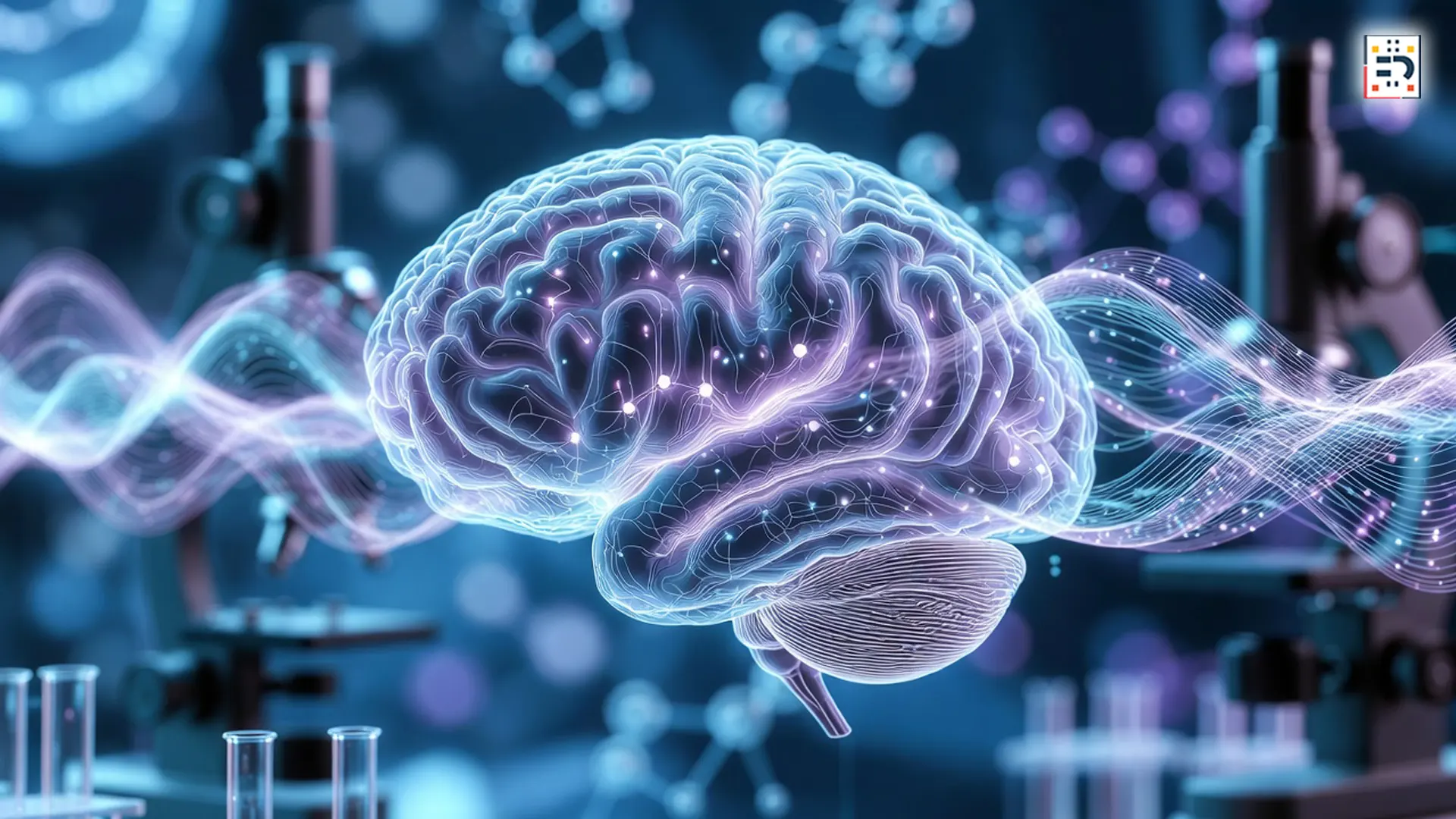
For centuries, consciousness has been one of science’s greatest mysteries. How do thoughts form? Where does awareness emerge? And can the human mind ever be mapped in real time?
Now, a groundbreaking line of research from MIT suggests that we may be closer than ever. Using a technique known as transcranial focused ultrasound, scientists are beginning to explore how human thought and consciousness might be observed, influenced, and eventually understood.
The Long Quest to Understand Consciousness
Consciousness has long resisted scientific definition. Unlike vision or motor control, it cannot be easily isolated to a single brain region.
Traditional tools such as EEG and fMRI have allowed researchers to observe brain activity, but these methods come with trade-offs. EEG lacks spatial precision, while fMRI is slow and indirect.
As described by researchers at MIT, understanding consciousness requires tools that can interact with the brain both precisely and safely — something that has remained elusive until recently.
What Is Transcranial Focused Ultrasound?
Transcranial focused ultrasound (tFUS) is a non-invasive technology that uses sound waves to target specific areas of the brain with remarkable accuracy.
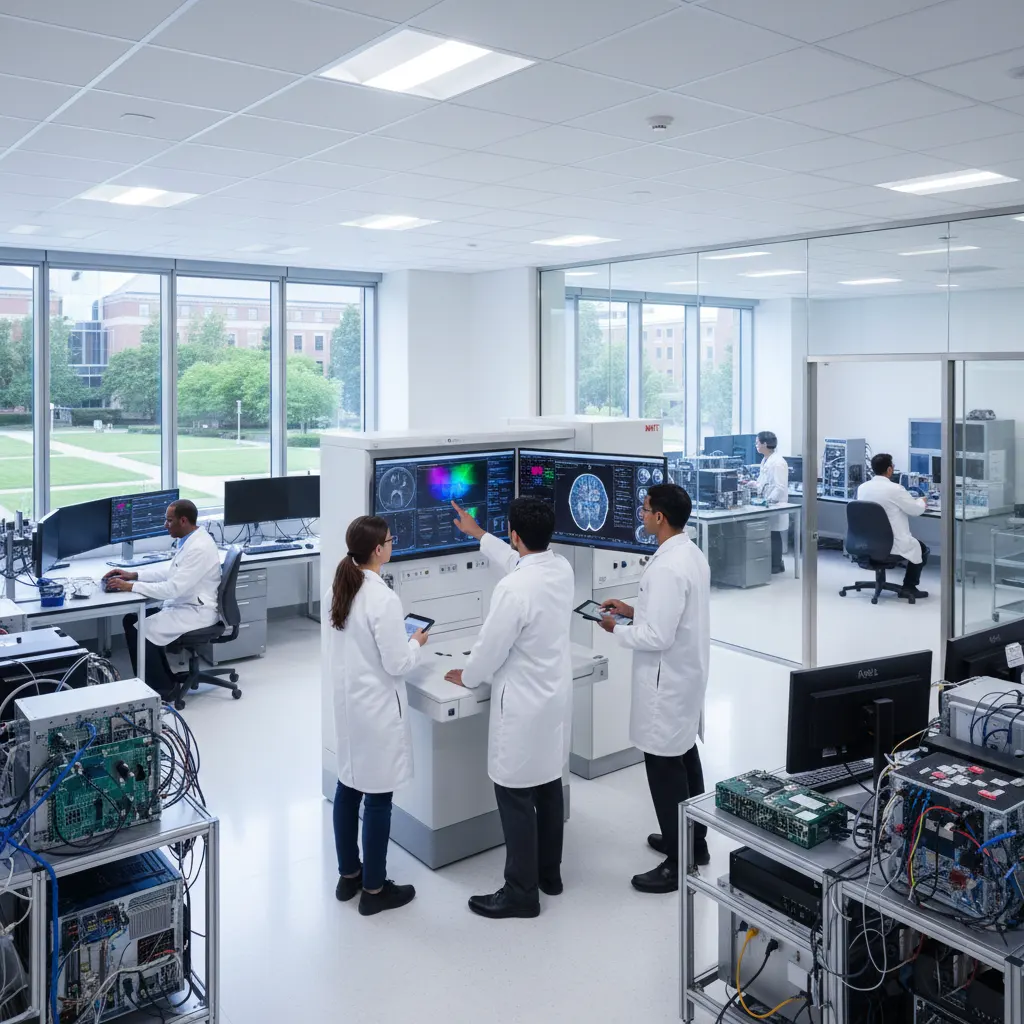
Unlike electrical stimulation or magnetic fields, ultrasound can reach deep brain structures without surgery. Researchers can modulate neural activity by gently stimulating or suppressing neurons in targeted regions.
According to analysis published in Nature, focused ultrasound offers millimeter-level precision — a major leap forward for neuroscience.
Why Ultrasound Is Different
- Non-invasive and reversible
- Targets deep brain regions
- High spatial and temporal precision
MIT’s Breakthrough: Mapping Thought in Real Time
MIT researchers are using focused ultrasound to explore how patterns of neural activity correlate with perception, awareness, and decision-making.
By stimulating precise brain regions while monitoring behavioral and neural responses, scientists can observe how conscious experience shifts in real time.
As reported by Scientific American, this approach allows researchers to test theories of consciousness rather than merely observe correlations.
In other words, scientists are moving from passive observation to active experimentation.
What This Means for the Science of Consciousness
The implications are profound. If consciousness can be mapped as a dynamic process rather than a static state, long-standing philosophical questions may finally become testable.
Researchers hope to identify:
- Neural signatures of awareness
- How attention shifts between brain networks
- Why consciousness fades during sleep or anesthesia
Some scientists believe this could help unify competing theories, such as global workspace theory and integrated information theory.
Potential Medical Applications
Beyond theory, the technology could transform medicine. Focused ultrasound may offer new treatments for conditions involving altered states of consciousness.
Possible applications include:
- Improving recovery in coma and brain injury patients
- Treating depression and PTSD
- Enhancing precision in neurological therapies
According to NIH research summaries, non-invasive brain modulation could become a cornerstone of future mental health care.
Ethical Questions and Future Risks
With great insight comes serious ethical concern. If technology can influence awareness, questions around consent, privacy, and misuse become unavoidable.
Who controls access to brain-modulating tools? Could thought mapping ever be used coercively? These issues are already being debated in academic and policy circles.
As this technology advances, ethical frameworks will need to evolve alongside it.
The Future of Tech Meets the Mind
MIT’s ultrasound research represents more than a scientific milestone. It marks a turning point in how humanity approaches the mind itself.
For the first time, consciousness is being treated not as an abstract mystery, but as a phenomenon that can be explored, tested, and potentially understood.
Cracking the code of consciousness may still take decades. However, MIT’s focused ultrasound breakthrough shows that the tools to explore it are finally catching up to the questions.
As neuroscience, AI, and advanced imaging converge, the line between mind and machine may become clearer — and more complex — than ever before.
#FutureOfTech #Neuroscience #Consciousness #MITResearch #BrainScience #TechBreakthrough