

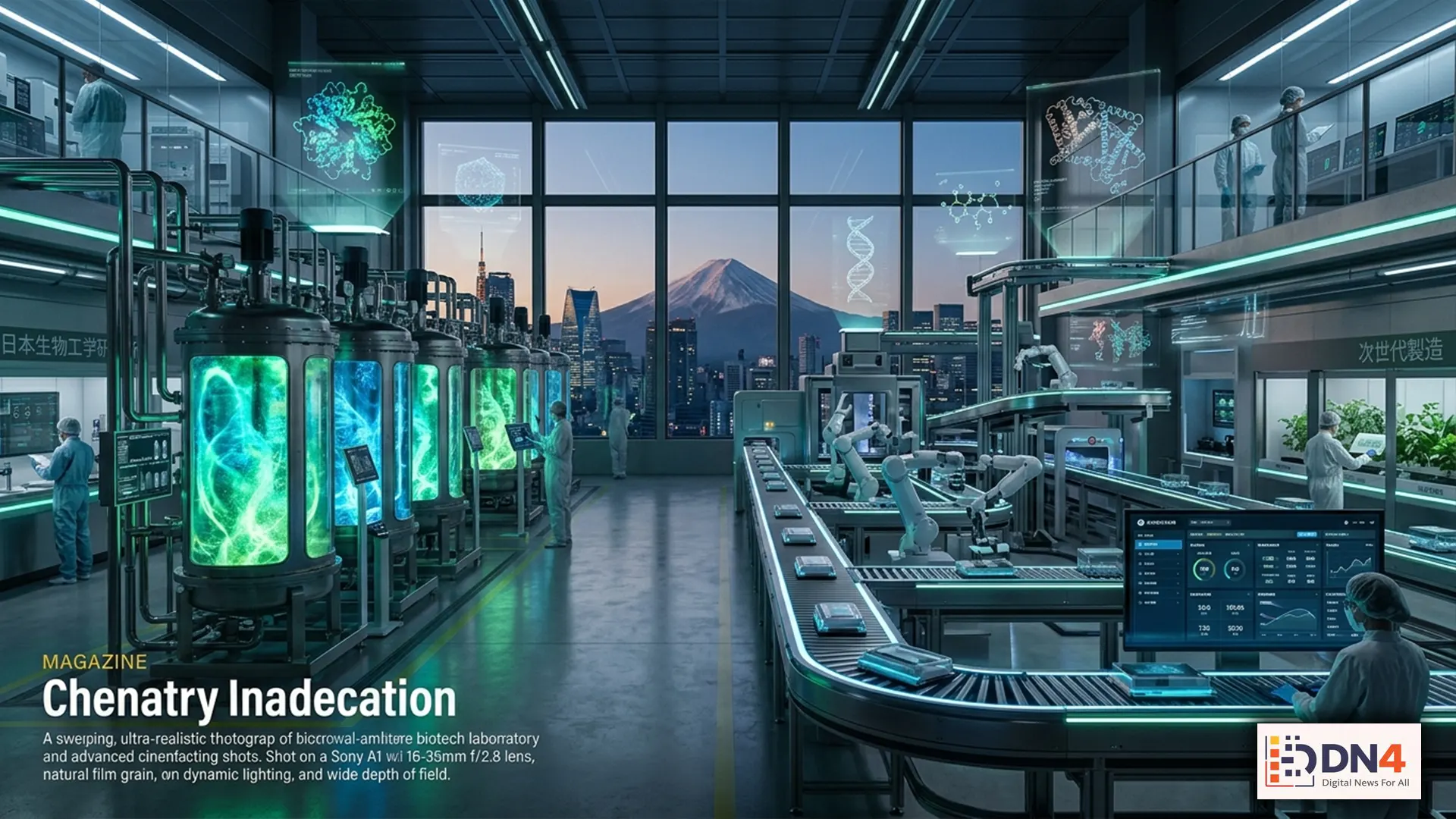
For more than a century, the modern global supply chain has been built on a deceptively simple foundation: petroleum. It powers transport, yes — but it also sits invisibly inside plastics, coatings, solvents, packaging, textiles, specialty chemicals, cosmetics, and countless industrial inputs that move through factories every day.
Now, Japan is helping push a quiet but potentially transformative shift away from that model.
At the center of it is synthetic biology — the fast-evolving field that uses engineered biology to design new materials, molecules, and manufacturing processes. While synthetic biology often gets framed as a futuristic science story, in Japan it is increasingly becoming something more practical: a strategic industrial tool. According to the World Economic Forum, synthetic biology is expected to become one of the defining technologies shaping the next industrial era.
And if that trend accelerates, it could change not just what products are made from, but how global supply chains are structured in the post-petroleum era.
What Synthetic Biology Actually Means in Industrial Terms
Synthetic biology is often misunderstood as a niche lab discipline. In reality, it is becoming one of the most important emerging technologies in industrial production.
At its core, synthetic biology allows scientists and manufacturers to program biological systems — often microbes such as yeast or bacteria — to produce valuable compounds that traditionally come from fossil fuels or resource-intensive chemical processes. Institutions like Nature and Science have increasingly highlighted how engineered biology is moving from research environments into commercial-scale manufacturing.
That means instead of relying solely on petroleum-derived feedstocks, companies can increasingly use engineered biological pathways to create things like:
- Bio-based chemicals
- Sustainable plastics and polymers
- Industrial enzymes
- Advanced materials and coatings
- Specialty ingredients for pharmaceuticals, food, and cosmetics
In supply chain terms, that is a big deal. It shifts production from extraction-heavy systems toward programmable manufacturing — where biology becomes part of the factory floor.
Why Japan Is Emerging as a Quiet Leader
Japan may not always dominate the global synthetic biology conversation in the same way as the United States or parts of Europe, but that can be misleading. The country has several structural advantages that make it unusually well-positioned to benefit from industrial biotech.
First, Japan has a long-standing strength in precision manufacturing, advanced materials, specialty chemicals, and process engineering — all of which are highly compatible with synthetic biology commercialization. Organizations such as JETRO have repeatedly emphasized Japan’s competitive position in high-value industrial innovation and advanced production systems.
Second, Japanese industry tends to excel in the less glamorous but highly consequential layer of innovation: scaling, refining, integrating, and industrializing technologies that others initially overhype.
That makes Japan especially relevant in a field like synthetic biology, where the real winners may not simply be the companies with the flashiest science, but the ones that can make biology manufacturable at commercial scale.
Why This Matters Beyond Sustainability
It is easy to frame synthetic biology as purely an environmental story. And yes, reducing petroleum dependence and lowering emissions are major parts of the appeal. But the strategic importance goes much deeper than sustainability.
For global manufacturers, petroleum-based supply chains come with serious vulnerabilities. The International Energy Agency (IEA) and the OECD have both warned that industrial resilience increasingly depends on diversifying away from fragile, carbon-intensive input systems.
- Exposure to oil price volatility
- Geopolitical instability in energy-producing regions
- Carbon regulation and compliance pressure
- Long, rigid feedstock dependency chains
- Rising demand for traceable, lower-impact materials
Synthetic biology offers an alternative logic. Instead of tying so many industrial inputs to fossil infrastructure, companies can begin shifting toward biologically derived production systems that may ultimately be more flexible, localizable, and resilient.
That is not just green innovation. It is supply chain strategy.
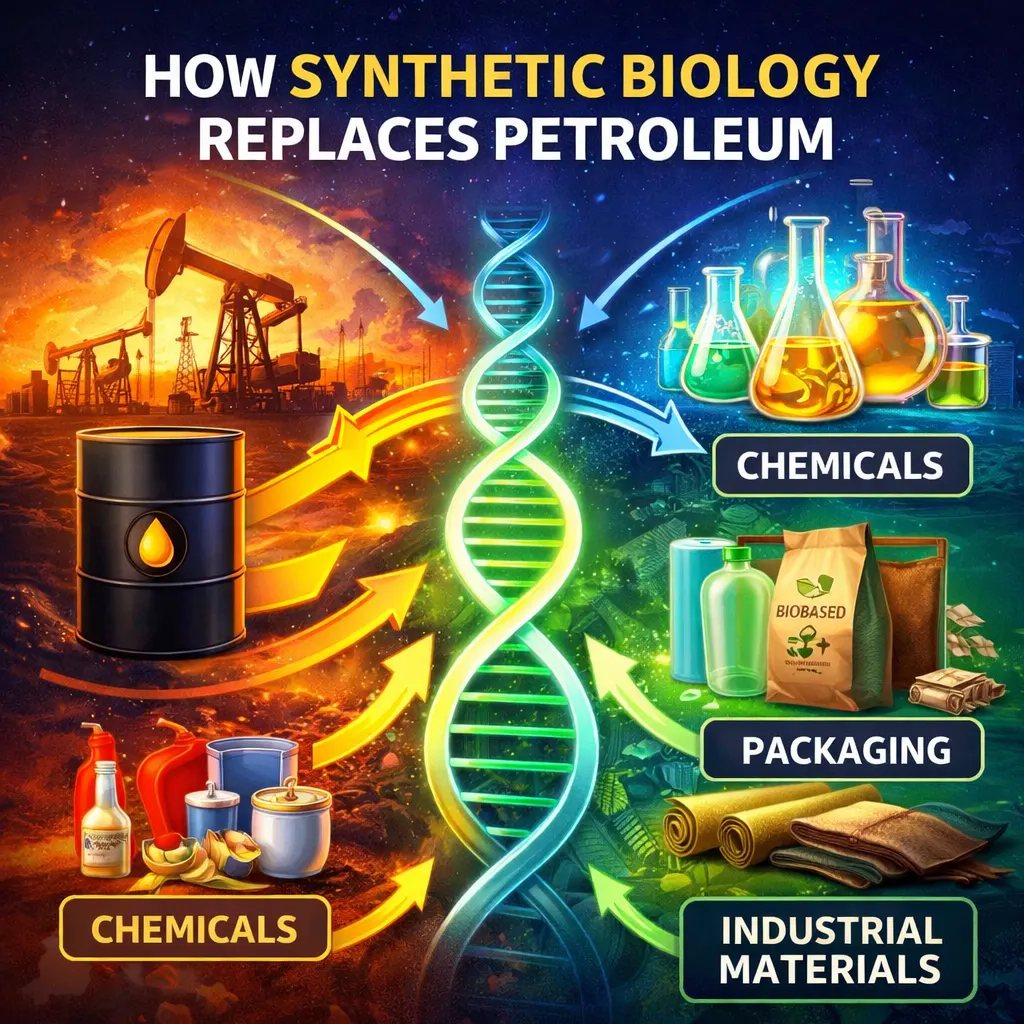
From Oil Barrels to Bioreactors
One of the most important shifts underway is conceptual. For decades, industrial production has largely been organized around refineries, petrochemical complexes, and centralized fossil feedstocks. Synthetic biology introduces a different production architecture — one built around fermentation, engineered organisms, and bioreactors.
This matters because biomanufacturing can, in theory, be distributed differently than traditional petrochemical systems. Over time, that could allow companies to rethink where and how certain materials are produced. Reports from McKinsey & Company and Boston Consulting Group suggest bio-based manufacturing could become a major force in reducing supply chain concentration risk over the next decade.
Imagine a future where some high-value industrial compounds are not made primarily in oil-linked chemical corridors, but in modular bio-manufacturing facilities closer to end markets or specialized industrial clusters.
Japan’s growing role in this space suggests it understands something important: the future of supply chains may not just be digital or automated. It may also be biological.
Which Industries Could Be Most Disrupted?
If Japan’s synthetic biology ecosystem continues to mature, several industries could feel the impact first.
These include:
- Chemicals: with bio-based alternatives to petroleum-derived intermediates
- Packaging: through biodegradable or lower-carbon material innovation
- Textiles: via new fibers, dyes, and performance materials
- Cosmetics and personal care: where engineered ingredients are already gaining traction
- Electronics and specialty manufacturing: through advanced bio-derived coatings and inputs
Japan’s industrial footprint across many of these sectors gives it a potentially outsized role in determining whether synthetic biology remains a promising niche — or becomes embedded in mainstream global production.
The Catch: Scaling Biology Is Hard
None of this means the transition will be simple.
Synthetic biology has enormous promise, but commercialization remains difficult. Producing something in a lab is very different from producing it reliably, affordably, and at industrial scale. That requires capital, infrastructure, process optimization, regulatory clarity, and long-term corporate patience. Analysis from Deloitte and PwC has repeatedly pointed to scale-up as the biggest challenge in industrial biotech.
This is where Japan’s approach could prove especially important. Rather than relying purely on startup hype, Japan’s industrial ecosystem may be better suited to the slower, more disciplined work of building supply chain-grade biomanufacturing capacity.
In other words, Japan may not be trying to win the synthetic biology narrative war. It may be trying to win the implementation war.
Why Global Supply Chains Should Pay Attention Now
Even if synthetic biology does not replace petroleum-linked manufacturing overnight, it is already beginning to alter how companies think about sourcing, resilience, and material risk.
That matters because the next decade of supply chain strategy will likely be shaped by three converging pressures:
- Decarbonization
- Geopolitical fragmentation
- Material innovation
Japan’s synthetic biology push sits directly at the intersection of all three.
For procurement leaders, manufacturers, investors, and policymakers, this is not just a science trend to watch from a distance. It may become one of the most important underappreciated shifts in industrial strategy.
Japan’s synthetic biology sector is not making as much noise as AI, semiconductors, or electric vehicles. But that may be exactly why it matters.
Quietly, steadily, and with characteristic industrial precision, Japan is helping build a future where biology becomes part of the manufacturing base — and where petroleum is no longer the default building block for modern production.
If that future arrives faster than expected, the global supply chain will not just look greener. It will be structurally different.
#SyntheticBiology #JapanInnovation #Bioeconomy #SupplyChains #SustainableManufacturing #Biotech #FutureOfIndustry #GreenChemistry