

 By Vinod Ram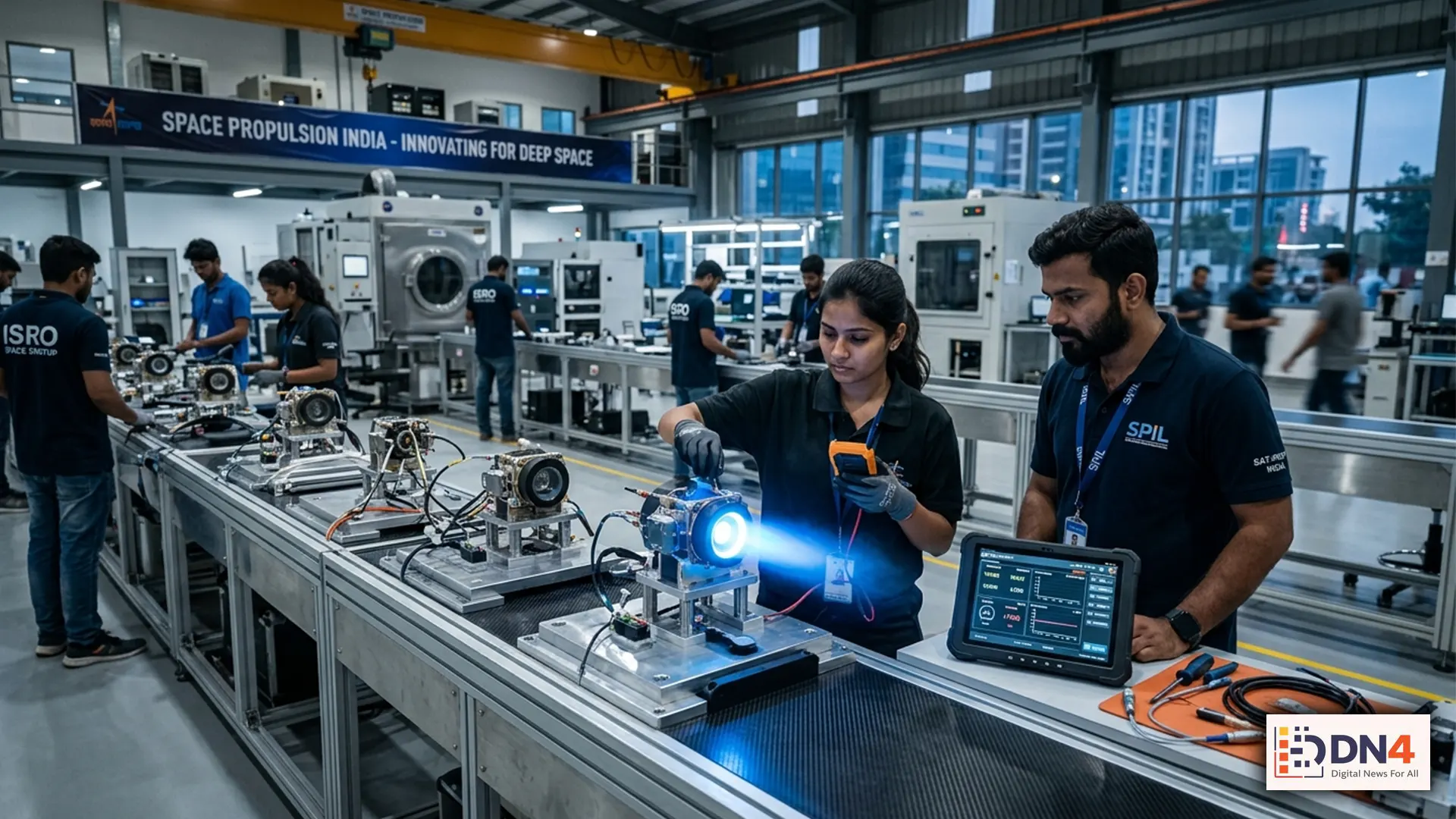
Bellatrix Aerospace has just crossed a line that many space startups never reach: the difficult leap from proving a technology in orbit to building a business that can manufacture it at scale.
Its newly announced $20 million pre-Series B round is more than a fundraising headline. It signals that investors increasingly believe the next big winners in space won’t just be launch providers or satellite operators — they’ll also be the companies building the “picks and shovels” of the orbital economy.
And Bellatrix, with its propulsion stack, green thrusters, orbital mobility ambitions, and production plans, is positioning itself right at the center of that shift.
Why this funding round matters more than the dollar amount
On paper, $20 million may not look massive in a global industry where some space ventures burn through far larger sums. But in the context of India’s emerging private space sector, this round matters because of what it is meant to unlock: manufacturing, delivery capacity, and repeatable commercial execution.
According to a recent Reuters report, the capital is expected to help Bellatrix expand production as demand rises for satellite propulsion systems from customers in India and overseas.
That distinction is important. A lot of deep-tech startups can build one impressive prototype. Far fewer can reliably manufacture dozens — and eventually hundreds — of mission-critical systems that customers trust enough to integrate into expensive satellites.
In other words, Bellatrix is moving from “Can this work?” to “Can this ship at scale?” That’s where the real business begins.
From lab ambition to orbital credibility
Bellatrix isn’t trying to sell a dream without technical receipts. The company has spent years building credibility in one of the hardest engineering categories in aerospace: in-space propulsion.
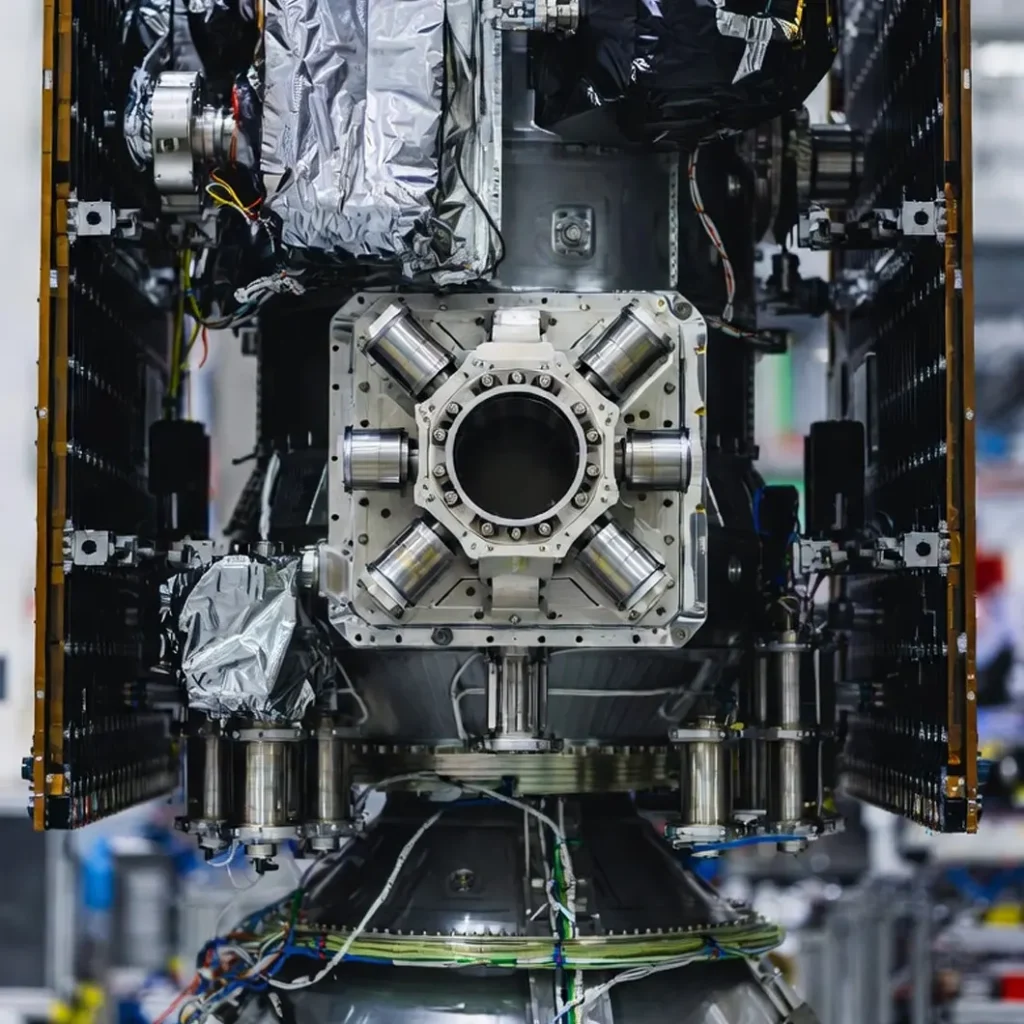
On its official company pages, Bellatrix describes itself as a complete satellite propulsion partner, with offerings spanning electric propulsion, green propulsion, nano-satellite systems, and in-space mobility platforms. Its broader mission is not just to help satellites launch — but to help them move, position, correct, and survive once they are already in orbit.
That’s a much bigger market than many casual observers realize.
As the global satellite economy expands, especially with the rise of satellite constellations, propulsion is no longer a niche subsystem. It is becoming a core enabler of mission economics, orbital control, debris mitigation, and operational lifespan.
For satellite operators, propulsion is not just about movement. It affects fuel efficiency, orbital flexibility, payload optimization, and the ability to adapt to changing mission conditions after deployment.
The real opportunity: selling the infrastructure of space
There’s a reason sophisticated investors are increasingly interested in space infrastructure companies rather than purely headline-grabbing launch stories.
Launch is dramatic. Infrastructure is durable.
Bellatrix’s business sits in a strategically attractive category: the tools that enable others to operate in orbit. That includes propulsion modules, green thrusters, and mobility platforms like its Project 200 and in-space mobility roadmap.
This is where the long-term commercial upside gets interesting. If the space economy continues to mature, the companies that make satellites more maneuverable, more efficient, and more commercially useful could become indispensable suppliers across the industry.
That’s also why Bellatrix’s positioning feels increasingly “global” rather than purely domestic.
Why “factory-ready” is the phrase that matters
The most overlooked phrase in many startup funding announcements is often some variation of “expanding manufacturing capacity.” It sounds operational, maybe even boring. In reality, it’s often the turning point.
Because in aerospace, manufacturing is strategy.
Once a company proves that its systems work, the next battle is about lead times, quality control, supply chain resilience, certification readiness, customer confidence, and unit economics. That’s where startups either graduate into serious industrial players — or get stuck in perpetual demo mode.
Bellatrix’s current moment suggests it wants to become a supplier that satellite operators can depend on, not just admire.
Its official company background emphasizes both innovation and reliability — a combination every aerospace buyer wants to hear, but few startups can convincingly claim.
Why timing is on Bellatrix’s side
Bellatrix is not scaling in a vacuum. It is scaling into a market that may finally be structurally ready for what it builds.
Across the world, governments, commercial operators, defense ecosystems, Earth observation firms, and communications players are all investing in orbital infrastructure. That means more satellites, more specialized missions, and more need for flexible propulsion solutions.
In India specifically, the policy environment has also changed dramatically in recent years. The country has increasingly opened up its space ecosystem to private participation, creating new momentum for homegrown players with export potential.
That shift is turning Indian space startups from “promising science stories” into businesses global investors are starting to price more seriously.
Bellatrix’s edge: it is solving a hard, expensive problem
The best deep-tech companies tend to win in categories where the engineering difficulty is so high that competition stays naturally limited. Space propulsion absolutely qualifies.
Bellatrix’s portfolio touches several commercially relevant pain points:
- Electric propulsion for efficient long-duration missions
- Green propulsion as an alternative to legacy toxic propellants
- Mobility systems for better orbital deployment and repositioning
- Ultra-low Earth orbit potential tied to next-gen satellite architectures
Those are not just cool technologies — they map directly onto future demand in Earth observation, telecom, defense, and commercial space operations.
Recent Bellatrix updates also show the company building strategically beyond hardware alone, including a U.S. expansion push and international partnerships. That matters because space customers don’t just buy performance; they buy confidence in long-term support, compliance, and delivery capability.
This is also a signal about India’s deep-tech maturity
There’s a broader story here that goes beyond Bellatrix itself.
For years, India’s startup narrative has often been dominated by consumer internet, fintech, and SaaS. But rounds like this are a reminder that the country’s next wave of strategic value may increasingly come from hard-tech and deep-tech — sectors where intellectual property, manufacturing depth, and engineering execution create stronger long-term moats.
That makes Bellatrix’s raise symbolically important. It shows that capital is willing to back not just software scale, but industrial capability in one of the most demanding sectors on Earth — and beyond it.
The market Bellatrix could help define
Bellatrix is still early relative to the size of its possible opportunity. But that may be exactly why this round matters.
If the company executes well, it could end up playing in one of the most strategically valuable layers of the modern space stack: orbital mobility infrastructure.
That category sits at the intersection of several high-growth trends:
- Smaller and cheaper satellites
- Growing demand for precise orbital control
- Commercialization of in-space logistics
- Pressure for cleaner, safer propulsion alternatives
- Rising need for constellation management and orbital efficiency
And unlike some speculative corners of the space industry, those are needs customers can justify in hard operational terms.
What could come next
The biggest question after this raise is simple: can Bellatrix turn technical momentum into industrial momentum?
If it can, this funding round may eventually be remembered not as a financing event, but as the moment Bellatrix stopped being “an exciting Indian space startup” and started becoming a serious global space systems company.
That is a very different game — and a much bigger one.
Bellatrix’s $20 million round matters because it is not just backing innovation — it is backing scale.
In the space economy, that is where the real winners are made.
Flight-proven technology earns attention. Factory-ready capability earns market share.
Bellatrix now has the chance to prove it can do both.
#BellatrixAerospace #SpaceTech #IndiaSpace #SatellitePropulsion #DeepTech #Startups #SpaceIndustry #Aerospace #PrivateSpace #OrbitalMobility #DigitalTransformation #Innovation