

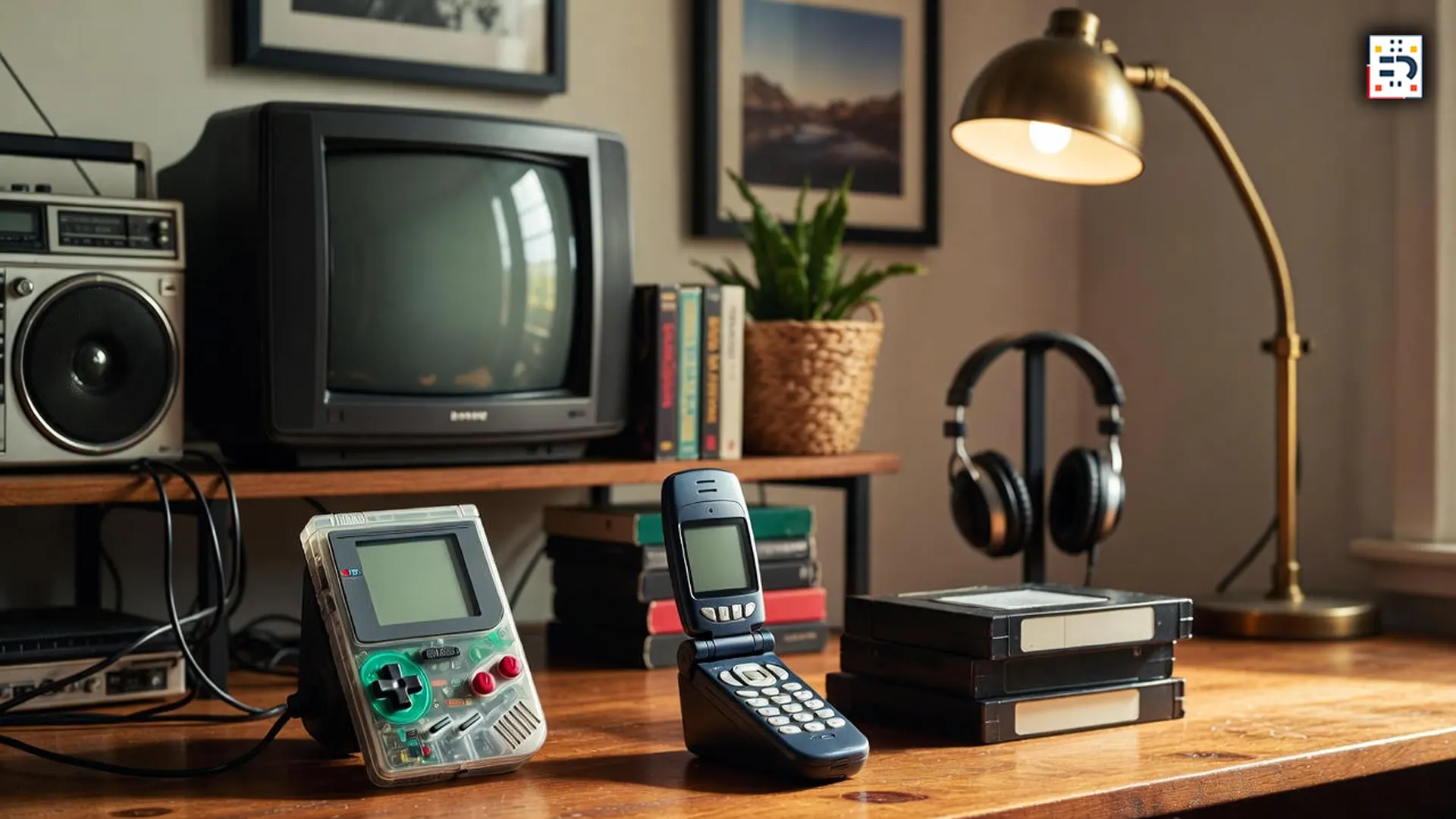
1. Nostalgia Isn’t Just Sentiment — It’s a Cultural Force
In 2025, the ‘90s and early 2000s aren’t just remembered — they’re living again. From fashion to technology, Gen Z and Millennials are driving a retro revival that blends emotional resonance with lifestyle choice. This isn’t limited to trends like oversized denim or cassette tape aesthetics — it’s now reshaping how people interact with technology itself.
Cultural commentators point out that retro devices bring a sense of warmth and permanence that modern, cloud-based tech often lacks, especially in home and interior design contexts, as explored in discussions around retro technology and emotional comfort.
For many younger people who didn’t grow up with 90s tech, the appeal isn’t pure nostalgia but authenticity. The imperfect, tactile experiences offered by older hardware — whether an analogue camera or a flip phone — feel refreshing compared to ultra-optimized, data-tracking smartphones. This generational shift is evident in how Gen Z is actively embracing nostalgia and retro culture.
2. Tech With Personality: Why Old Gadgets Feel New Again
A wide spectrum of retro technology is trending in 2025 — and the reasons go well beyond aesthetics.
Analogue and tactile devices
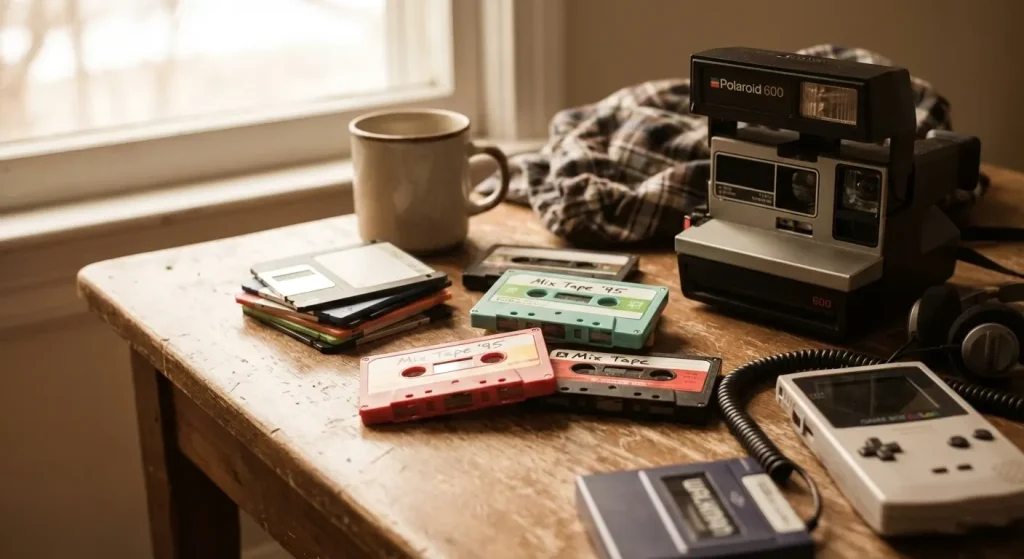
Devices such as instant film cameras, mechanical keyboards, and vintage audio equipment are seeing renewed interest because they deliver hands-on, sensory experiences modern screens cannot replicate. The broader movement behind this resurgence is often described as the return of analog tech.
Retro-inspired modern products
Manufacturers are now intentionally designing products that echo 1990s visual language. A notable example is how brands like Nothing incorporate translucent shells and playful UI cues, as seen in coverage of retro-inspired smartphone design trends.
Functional low-tech revival
Even once-discarded household tech — corded landline phones, CRT televisions, and compact kitchen TVs — is returning as statement pieces. Interior design publications highlight how ’90s tech objects are reappearing in modern homes.
Together, these trends reflect a growing pushback against digital overload, where people seek tech that feels deliberate, slow, and human-scaled rather than endlessly optimized.
3. Social Media as a Time Machine
Platforms like TikTok, Instagram, and Pinterest have become accelerators for retro culture. Aesthetic-driven communities turn old hardware into viral content, from Game Boy restorations to VHS-themed desk setups.
Trend analysts describe this phenomenon as part of the rise of “nostalgia-core” aesthetics, where visual memory and digital remix culture intersect. This is especially visible in how creators document and celebrate retro vibes and nostalgia-driven trends.
In this loop:
- Younger users discover retro tech as a novel aesthetic
- Older users reconnect emotionally with devices they once owned
- Creators remix past sounds, interfaces, and visuals into new formats
The result is a self-sustaining cultural cycle powered by platforms built for constant rediscovery.
4. Why the 1990s, Specifically?
The 1990s occupy a unique psychological middle ground: far enough away to feel retro, yet recent enough to remain culturally familiar. This makes the era particularly appealing across generations.
Design historians often point to the decade’s distinct visual identity, from translucent plastics to soft gradients and rounded interfaces. Styles like Frutiger Aero exemplify how optimism and futurism once coexisted in consumer tech design.
Beyond visuals, 90s tech emphasized physical interaction — buttons, switches, cartridges, and dials — reinforcing a sense of control and engagement. This tactile appeal is central to why analog interaction is regaining popularity.
Pop culture also plays a role. Music, gaming, and television from the era continue to resurface in modern media cycles, reinforcing why commentators say the ’90s are making their biggest comeback yet.
5. Retro as a Lifestyle, Not a Phase
In 2025, retro technology functions as more than a utility — it’s a lifestyle signal. People curate vintage gadgets as decor, creative tools, or personal statements, blending old tech seamlessly into modern environments.
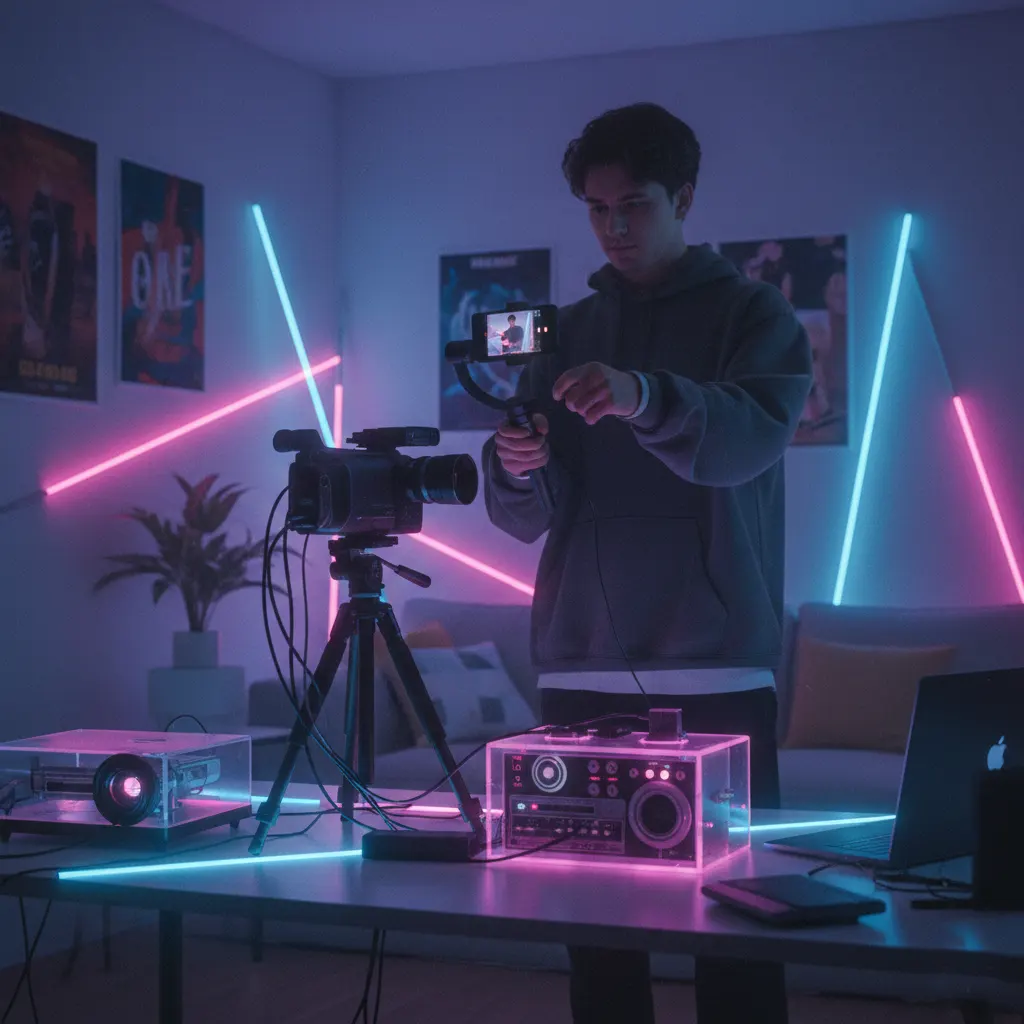
This broader lifestyle movement, often grouped under nostalgia-core, spans fashion, interiors, and digital identity. Cultural trend reports show how retro aesthetics now shape everyday living, not just niche hobbies.
A Polaroid camera on a shelf, a cassette player in a home office, or a refurbished Game Boy on a coffee table all communicate intention: slowing down, valuing presence, and reconnecting with tangible experiences.
Why ‘90s Tech Still Resonates in 2025
The return of 90s tech isn’t about rejecting innovation — it’s about rebalancing our relationship with technology. In an era of invisible algorithms and constant connectivity, retro devices offer something rare: friction, tactility, and emotional grounding.
As cultural analysts observe, nostalgia provides comfort during uncertain times, and that’s precisely why younger generations are turning to the past for meaning. The 90s didn’t just give us gadgets — they gave us experiences that still feel real.
#90sTech #TechNostalgia #RetroCulture #VintageTech #AnalogRevival #GenZNostalgia #MillennialCulture #DigitalWellbeing #RetroAesthetic #TechTrends2025