

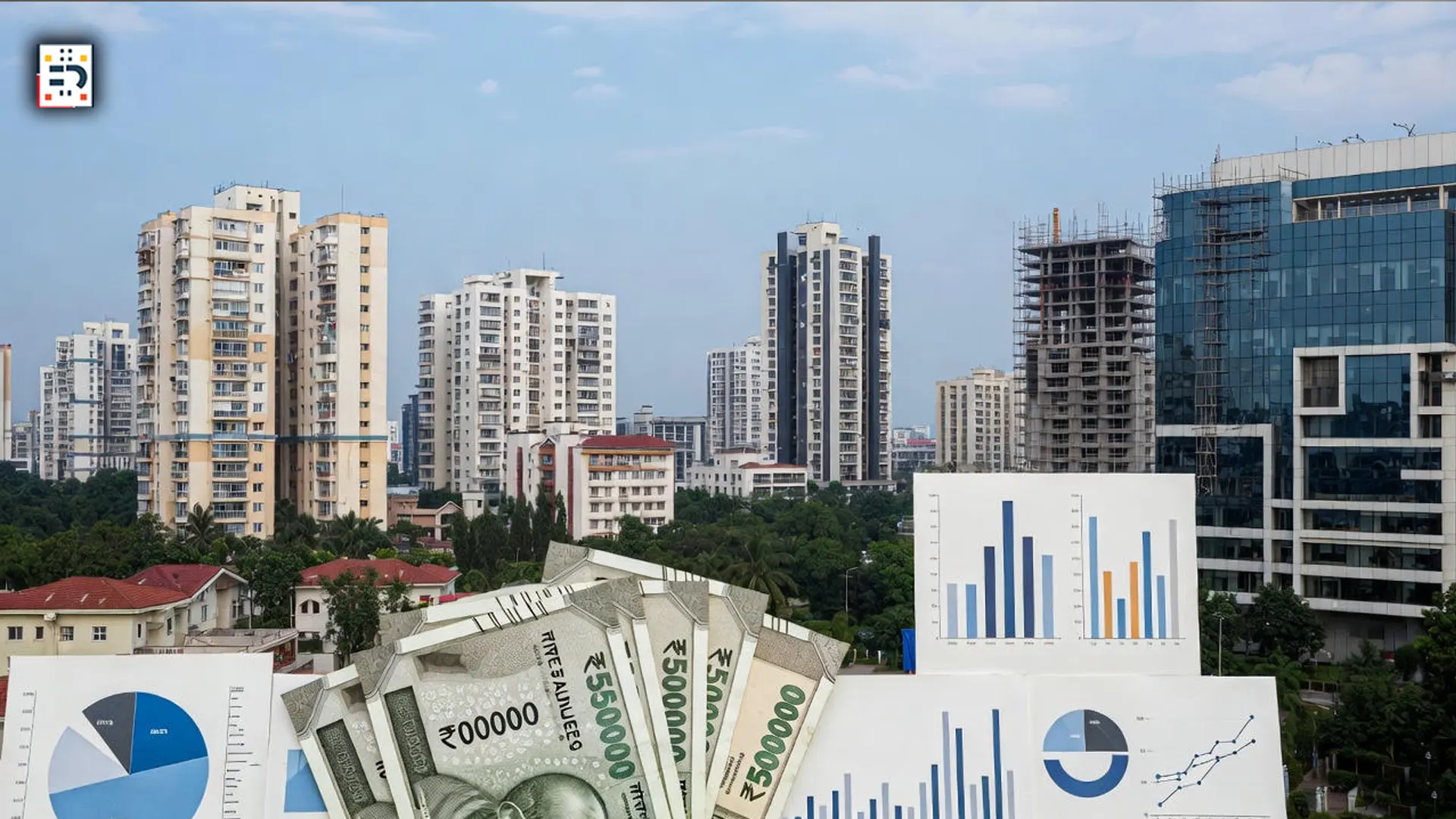
Real estate remains one of India’s most trusted wealth-building assets, but many beginners assume they need huge capital to get started. The truth is that you can begin real estate investing with as little as ₹5 lakhs in 2026, thanks to new digital platforms, REITs, and fractional ownership options.
Insights from RBI, NSE India, and leading property portals like MagicBricks outline how smaller investors can safely enter the real estate market with limited capital.
Start with REITs (Real Estate Investment Trusts)
REITs are the easiest and safest way for beginners to enter real estate with low capital. They allow you to invest in income-producing commercial properties like office parks, IT hubs, and malls — without owning physical property.
Why REITs work for ₹5 lakh investors:
- Minimum investment starts around ₹1,000
- High liquidity — buy/sell like stocks
- Regular dividend income
- Managed by professional real estate firms
See REIT listings on NSE India.

Try Fractional Real Estate Ownership
Fractional investment platforms allow you to buy a small share of high-value properties such as office spaces, warehouses, or co-working hubs. This model pools money from multiple investors and distributes rental income proportionally.
Benefits of fractional ownership:
- Start with ₹25,000–₹1,00,000
- Stable monthly rental payouts
- Access to premium commercial properties
- Lower maintenance responsibilities
Examples of fractional platforms include: Strata, Brick&Bolt, and PropertyShare.
Buy Low-Cost Plots on the Outskirts
Land remains one of India’s fastest-appreciating assets. With ₹5 lakhs, you can explore emerging areas near Tier-2 and Tier-3 cities, especially where infrastructure development is planned.
Look for:
- Upcoming highways
- Industrial corridors
- New metro or airport projects
- Government-approved layouts (DTCP/RERA)
Property verification guidelines are published by RERA India.
Explore Rental Micro-Investing (Co-Living & Student Housing)
Micro-investing lets you fund rental units in high-demand hubs like university towns or tech corridors. Your share earns a portion of the rental income.
Ideal micro-rental opportunities:
- Student hostels
- PG/co-living spaces
- Studio apartments near IT parks
- Managed rental properties
Invest in Real Estate Funds & AIFs (Higher Returns, Moderate Risk)
Real estate-focused funds and AIFs pool investor money into large development projects. While risk is higher than REITs, returns can be significantly stronger.
These funds often require investment slabs of ₹5–10 lakhs, making them accessible for serious beginners.

Start an SIP in Real Estate ETFs
If you prefer a hands-off approach, real estate ETFs track property indexes and offer diversification with low capital. You can start with ₹500–₹1,000 monthly.
Why ETFs make sense:
- Low entry cost
- Lower volatility vs. individual property
- Ideal for long-term wealth building
Combine 2–3 Options for Better Balance
A ₹5 lakh real estate strategy works best when you diversify across multiple channels. This gives you stability (REITs), appreciation (plots), and income (fractional or micro-rentals).
Sample ₹5 lakh beginner portfolio:
- ₹2 lakhs → REITs
- ₹1.5 lakhs → Fractional ownership
- ₹1 lakh → Low-cost land
- ₹50,000 → Real estate ETFs
This mix balances safety, income, and long-term growth.
Real estate investment no longer requires crores — or even tens of lakhs. Thanks to new financial products and tech platforms, you can begin your journey with ₹5 lakhs or less. By diversifying across REITs, fractional ownership, land, and ETFs, beginners can build a profitable, manageable real estate portfolio in 2026.
#RealEstateIndia #Investing2026 #REITs #PassiveIncome #IndiaInvestments #5LakhInvestment #FractionalRealEstate #WealthBuilding #PropertyInvestment #SmartMoney