

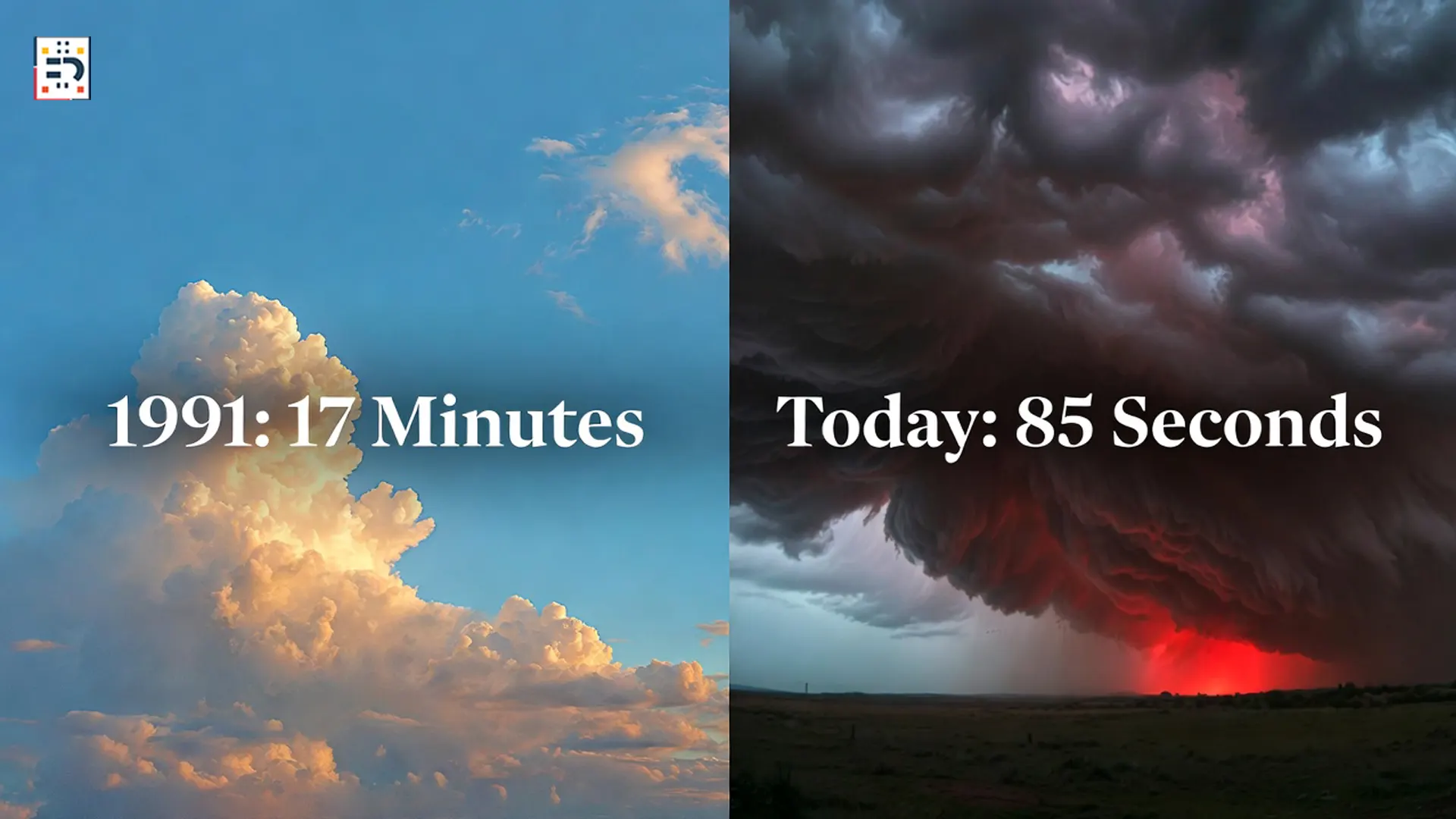
In 1991, the world stood at its safest point in modern history—17 minutes to midnight on the Doomsday Clock. Three decades later, humanity is just 85 seconds away from symbolic catastrophe. That stark shift tells a story of changing threats, missed opportunities, and compounding global risks.
This data-driven look back compares the optimism of the post–Cold War era with the complex dangers defining today’s world.
What Is the Doomsday Clock?
The Doomsday Clock is a symbolic timepiece maintained by the Bulletin of the Atomic Scientists. It represents how close humanity is to self-inflicted global catastrophe, factoring in nuclear risk, climate change, biological threats, and disruptive technologies.
Midnight represents total global disaster. The closer the clock is set to midnight, the greater the perceived danger.
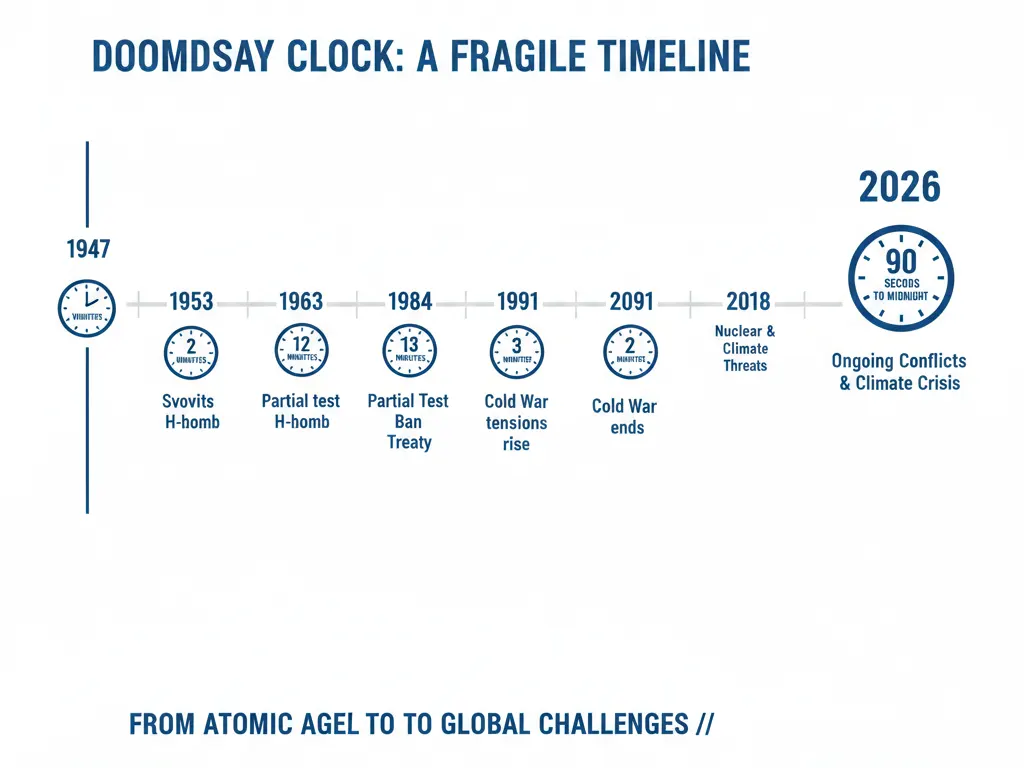
1991: The Safest the World Ever Felt
In 1991, the clock was pushed back to an unprecedented 17 minutes to midnight. The Cold War had ended, major nuclear treaties were signed, and the threat of immediate nuclear conflict appeared to be receding.
Key factors behind the optimism included:
- The dissolution of the Soviet Union
- Strategic arms reduction treaties
- Improved U.S.–Russia relations
- A belief in long-term global cooperation
For many, it felt like history had bent toward stability.
The Clock Starts Moving Forward Again
That optimism didn’t last. Over the following decades, the clock steadily moved closer to midnight as new threats emerged and old ones returned.
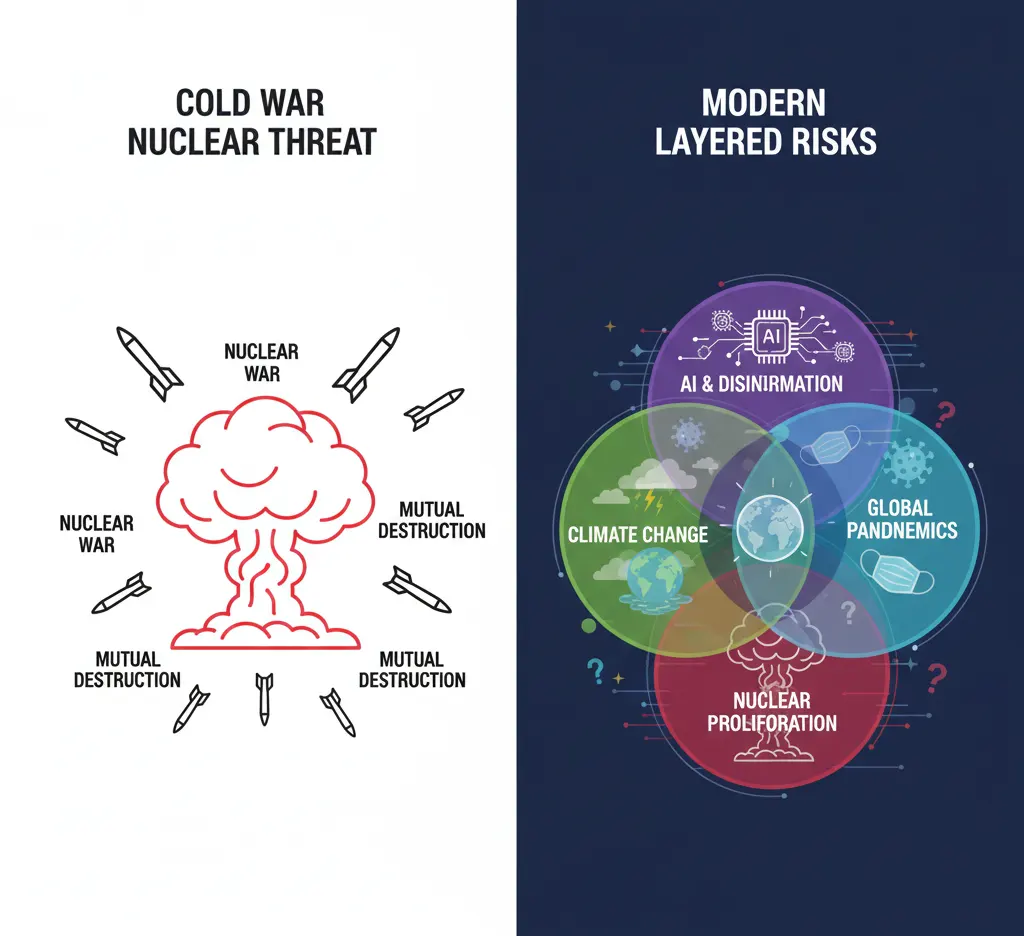
Unlike the Cold War era, modern risk is no longer dominated by a single factor.
85 Seconds to Midnight: Why Today Is Different
In recent updates, the Bulletin of the Atomic Scientists has set the Doomsday Clock at 85 seconds to midnight—the closest it has ever been.
According to the Bulletin, today’s risks are driven by a convergence of dangers:
- Renewed nuclear tensions and arms modernization
- Climate change impacts accelerating faster than mitigation
- Biological threats highlighted by global pandemics
- Artificial intelligence and cyber warfare outpacing regulation
Unlike 1991, these risks interact and amplify one another.
Why the Clock Resonates With the Public
The Doomsday Clock endures because it translates abstract global risks into a single, emotionally resonant metric. It doesn’t predict the future—but it reflects expert consensus about the present.
Each adjustment sparks renewed debate about leadership, responsibility, and whether humanity can still step back from the brink.
A Perfect Story for Data-Driven Visualization
The clock’s year-by-year changes make it ideal for infographics and timelines. Visualizing the contrast between 1991 and today highlights just how dramatically the global risk landscape has shifted.
From a single dominant nuclear threat to a web of interconnected crises, the data tells a sobering story.
The journey from 17 minutes to 85 seconds is more than a countdown—it’s a reflection of global priorities. The Doomsday Clock reminds us that we cannot take safety for granted, and we can reverse progress.
Whether the clock moves back again depends not on fate, but on choices we are still making.
#DoomsdayClock #GlobalRisk #ColdWarHistory #NuclearThreat #ClimateCrisis #WorldHistory #Geopolitics #DataJournalism