


Studying for hours sounds like a productivity flex — until you try it and realize most long study sessions dissolve into distraction, fatigue, and frustration. The problem isn’t willpower. It’s strategy.
Consistent, extended study isn’t about forcing focus. It’s about designing your environment, energy, and mindset so focus becomes sustainable — an idea strongly supported by research summarized by Harvard Health Publishing.
Here’s how high-performing students, professionals, and researchers study for hours — without burning out.
1. Redefine What “Studying for Hours” Actually Means
Studying for hours does not mean staring at notes nonstop.
Effective long study sessions are:
- Structured into focused blocks
- Interrupted intentionally with breaks
- Task-specific, not vague
This aligns with cognitive science findings discussed by Verywell Mind on attention span and mental fatigue.
Think cycles, not endurance.
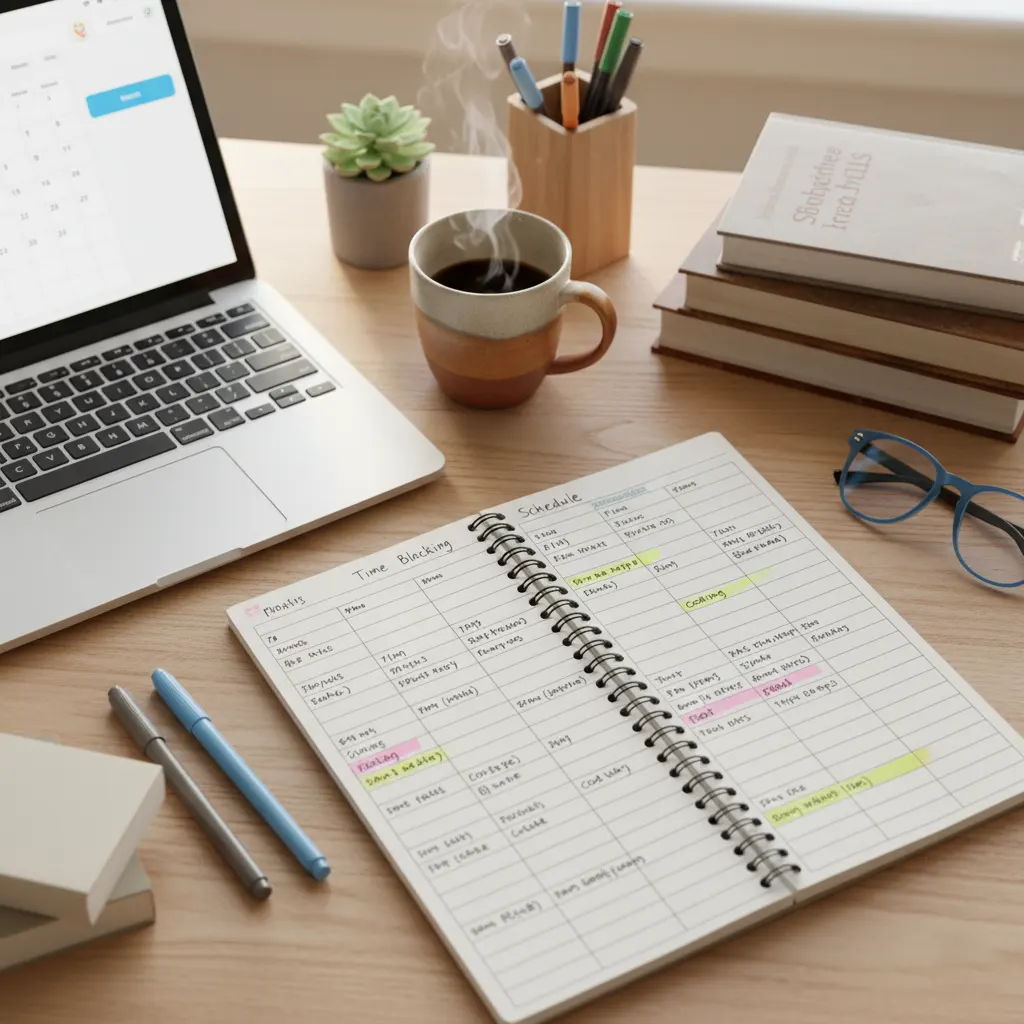
2. Use Time Blocks, Not Open-Ended Sessions
Open-ended studying invites procrastination. Time-boxed studying creates urgency.
A structure similar to the Pomodoro Technique works well:
- 50 minutes focused study
- 10 minutes break
- Repeat 3–5 times
Key rule:
👉 Stop when the block ends — even if you feel “in the zone.”
This protects motivation for the next session.
3. Study One Clear Task at a Time
Long sessions fail when tasks are vague.
❌ “Study chemistry”
✅ “Solve 15 stoichiometry problems”
Research on goal specificity shows clear endpoints reduce mental resistance and improve follow-through.
4. Eliminate Decision-Making During Study
The brain tires faster from decisions than from effort — a phenomenon known as decision fatigue, explained by APA.
Before you start:
- Choose materials
- Outline tasks
- Decide break activities
During study, your only job should be execution.
5. Work With Your Energy, Not Against It
Not all hours are equal.
Chronobiology research summarized by Sleep Foundation shows that cognitive performance varies throughout the day.
Use:
- High-energy hours → deep problem-solving, memorization
- Low-energy hours → review, flashcards, light reading
Matching task difficulty to energy level makes long sessions sustainable.
6. Make Breaks Active (But Not Distracting)
Breaks should help your brain reset — not overload it.
The University of Illinois found that brief mental breaks significantly improve sustained attention.
Best break activities:
- Walking
- Stretching
- Water or light snack
Avoid:
- Social media
- Endless scrolling
- Autoplay videos
7. Use Active Study Methods Only
Passive studying doesn’t scale to long sessions.
Avoid:
- Re-reading notes
- Over-highlighting
Instead, rely on active recall, one of the most effective learning strategies according to Cognitive Psychology research.
Effective methods include:
- Practice questions
- Teaching concepts out loud
- Writing summaries from memory
- Flashcards
Active engagement keeps focus high and fatigue low.

8. Build Consistency Before Duration
Trying to study for hours immediately often backfires.
Behavioral research from James Clear’s Atomic Habits emphasizes starting small to build automatic habits.
Begin with:
- 60–90 minutes per day
- Same time, same place
Once consistency is automatic, duration increases naturally.
9. Study Environment Matters More Than Motivation
Motivation fluctuates. Environment shapes behavior.
Studies highlighted by Stanford Behavior Design Lab show that reducing friction has more impact than relying on willpower.
Optimize your space:
- Same desk daily
- Minimal clutter
- Phone out of reach
Your brain will associate the space with focus.
10. End Sessions With a “Next Step”
Never end a study session at a dead stop.
Productivity experts at Cal Newport’s Deep Work recommend closing sessions with a clear restart point.
Before finishing, write:
- What you’ll study next
- Where to begin
- Any questions to tackle
This makes starting again effortless.
The Real Secret to Studying for Hours
People who study consistently for hours aren’t more disciplined.
They:
- Reduce friction
- Remove decisions
- Work in systems
- Protect energy
Studying longer isn’t about pushing harder — it’s about designing smarter.
When studying feels manageable, consistency follows.
And when consistency compounds, results show up fast.
#StudyTips #StudentProductivity #StudyHabits #FocusSkills #DeepWork #LearningStrategies #AcademicSuccess