

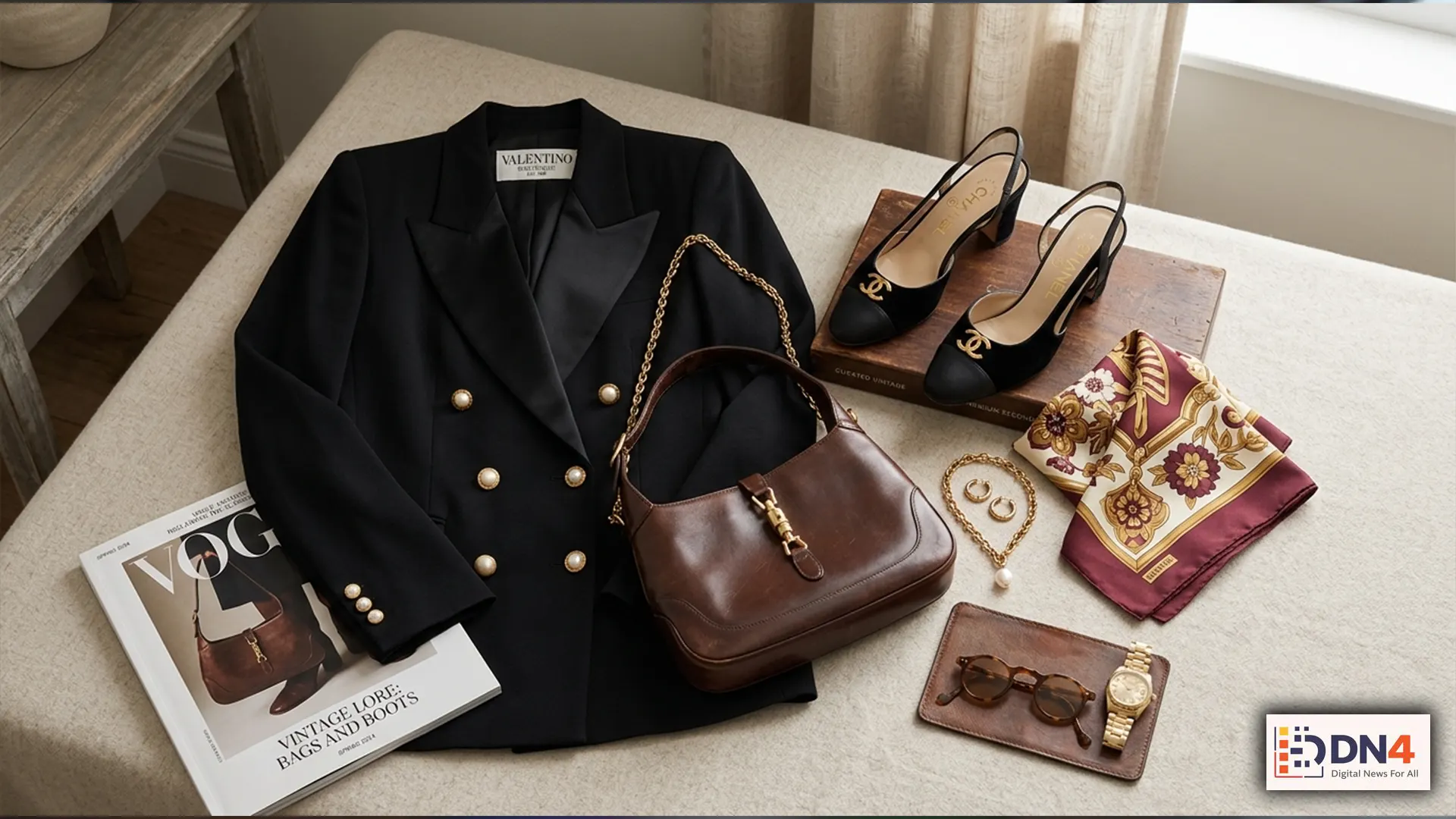
Luxury used to mean new. New season. New drop. New label. New packaging. New price tag.
In 2026, that definition is changing — and not quietly.
Across fashion capitals, social feeds, resale apps, and high-end wardrobes, a new status language is taking over: pre-loved. What was once framed as thrift, secondhand, or budget shopping is now increasingly being rebranded as taste, discernment, sustainability, and economic intelligence.
And the shift is not just aesthetic. It is structural.
As inflation reshapes consumer behavior, younger shoppers reject old luxury signals, and the resale economy matures into a legitimate fashion infrastructure, secondhand is no longer the backup option. It is becoming the aspiration.
Why “pre-loved” sounds more powerful than “used”
Language matters in luxury. Always has.
That is part of why the phrase “pre-loved” fashion has become so commercially effective. It removes the stigma of “used” and replaces it with something softer, more curated, and emotionally richer. It suggests history, taste, and continuity rather than compromise.
And brands, platforms, and consumers have all noticed.
Major resale platforms such as The RealReal, Vestiaire Collective, and Depop have helped turn secondhand fashion into a lifestyle category rather than a bargain bin behavior.
That shift matters because luxury is rarely just about the product. It is about the story around the product — and “pre-loved” tells a far more desirable story than “used designer bag.”
The economic shift behind the trend
For many consumers, this change is not just philosophical. It is financial.
Luxury fashion has become dramatically more expensive in recent years, with premium brands repeatedly pushing prices upward. Reports from McKinsey’s State of Fashion and broader market analysis from The Business of Fashion have pointed to a widening tension between aspirational demand and affordability.
That creates a simple consumer question: if luxury is getting harder to justify at retail, why not buy it differently?
For a growing number of shoppers, resale is the answer. It offers:
- Access to premium brands at lower prices
- A way to buy quality over fast fashion volume
- The thrill of finding rare or discontinued pieces
- A smarter-feeling purchase in uncertain economic times
That is especially powerful in 2026, when many households still want style, but increasingly want every purchase to feel defensible.
Why younger shoppers are driving the resale luxury boom
If Millennials helped normalize resale, Gen Z is helping redefine its cultural value.
For younger fashion buyers, secondhand is not just acceptable — it is often more interesting than buying straight from the mall or a brand site. It signals individuality in a market increasingly saturated by algorithmic sameness.
Instead of asking, “Is this new?” many style-conscious shoppers are now asking, “Is this me?”
That is a huge cultural shift.
On platforms like TikTok and Instagram, vintage finds, archive pieces, and resale hauls often outperform conventional luxury flexes because they feel more personal, more surprising, and more authentic.
In that sense, secondhand has become part of a broader rejection of over-polished consumption. New luxury in 2026 is less about obvious spending and more about curated identity.
Why resale now feels more “luxury” than some luxury stores
There is also a strange irony in the current market: sometimes the resale experience feels more emotionally satisfying than the original retail experience.
Why? Because resale taps into something modern shoppers crave: discovery.
Luxury retail can sometimes feel standardized, repetitive, and over-commercialized. Resale, by contrast, feels like a hunt. You are not just buying a product — you are finding something with scarcity, personality, and context.
That is a powerful emotional loop. It makes secondhand feel less like compromise and more like connoisseurship.
And in fashion, connoisseurship has always been a higher-status signal than pure spending.
The sustainability angle is real — but not the whole story
Yes, sustainability is part of this movement. But it is important not to oversimplify it.
Secondhand fashion is often promoted as a more circular alternative to high-churn retail, and that argument is supported by organizations and industry advocates pushing for a stronger circular fashion economy.
For many buyers, especially younger ones, resale offers a way to align style with values — or at least feel less wasteful about consumption.
But if you want to understand why secondhand is becoming “the new luxury,” sustainability alone does not explain it.
People do not just want to consume more ethically. They also want to consume more intelligently. Resale works because it sits at the intersection of:
- Style
- Status
- Scarcity
- Value
- Cultural relevance
That combination is what makes it powerful.
Why brands can no longer ignore the resale economy
Luxury brands used to treat secondhand markets as something adjacent — useful, maybe, but not central to the brand story.
That is becoming much harder to do.
As the resale market grows, it is increasingly influencing how consumers think about durability, brand equity, and long-term value retention. If a product has no secondhand appeal, that may increasingly be interpreted as a weakness.
In other words, resale value is becoming part of perceived luxury value.
That is a major shift in consumer psychology.
Fashion is no longer judged only at the point of purchase. It is increasingly judged on its afterlife.
What “new luxury” really means in 2026
Luxury in 2026 is becoming less about obvious newness and more about intentional ownership.
The new signals are different:
- Knowing what to buy, not just being able to buy it
- Finding rare pieces, not just current-season pieces
- Curating a wardrobe, not just consuming trends
- Buying for longevity, not just social media novelty
That is why secondhand now sits closer to luxury than many people expected. It rewards knowledge, patience, taste, and timing — all the things old-school luxury once claimed to represent.
Secondhand is becoming the new luxury because it offers something traditional retail increasingly struggles to deliver: meaning per purchase.
It feels smarter in a fragile economy. It feels more individual in a copy-paste culture. And it feels more aligned with how younger consumers want to express status in public.
That does not mean new luxury disappears. But it does mean the old idea that “luxury must be brand-new” is losing its grip.
In 2026, the most stylish purchase in the room may not be the newest one.
It may be the one with a past.
#SecondhandFashion #PreLoved #LuxuryResale #SustainableFashion #CircularFashion #VintageStyle #FashionTrends2026 #AffordableLuxury #ResaleEconomy