

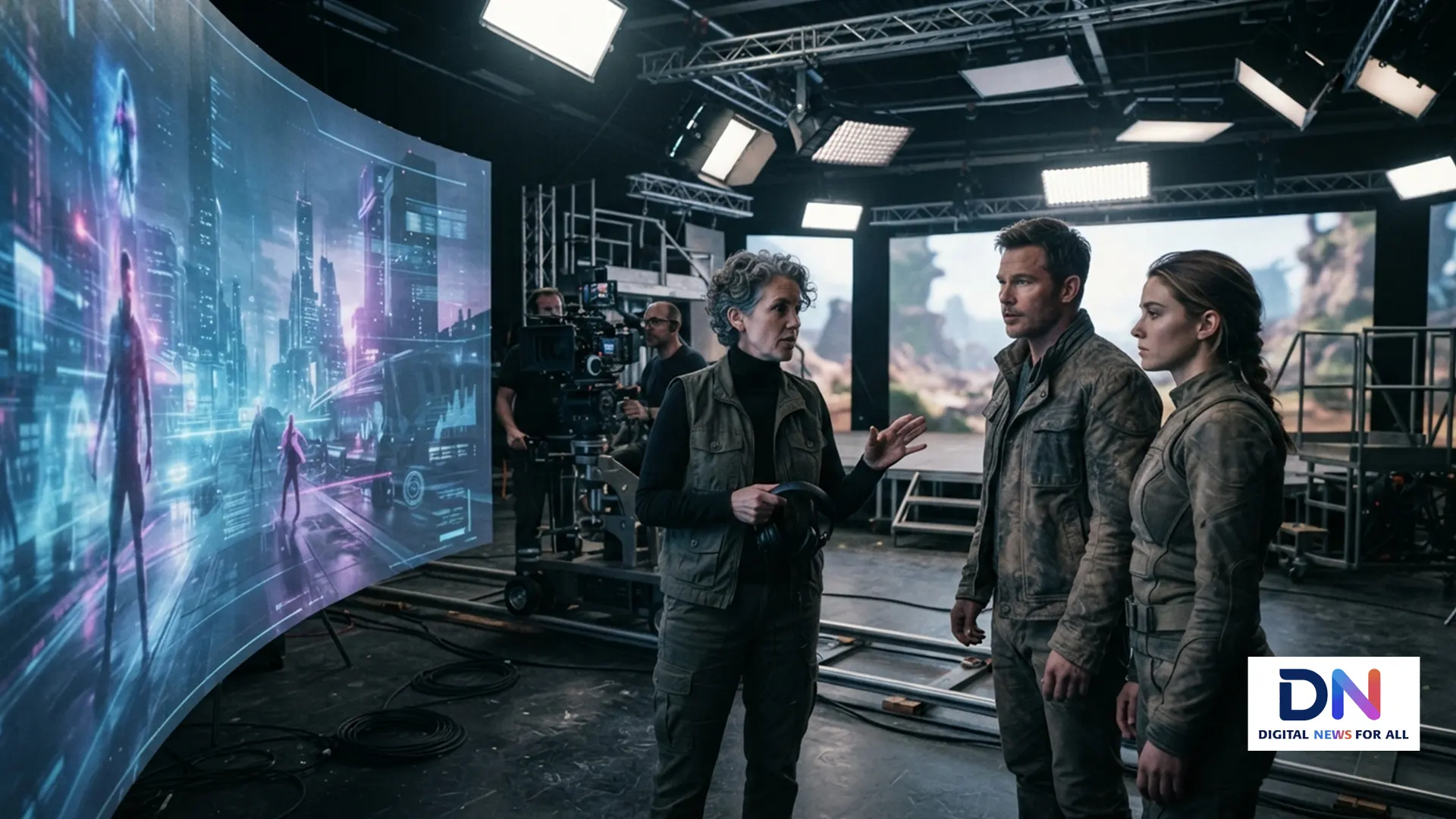
The Hollywood AI backlash is entering a new phase. Generative artificial intelligence is no longer a distant technology discussed at industry conferences. It is appearing in films, advertising, visual effects and production workflows. At the same time, actors, filmmakers and audiences are asking a difficult question: how much AI is too much?
The debate has become especially visible in 2026. Recent projects have demonstrated what AI can accomplish, while also exposing concerns about jobs, consent, copyright and human creativity.
1. AI Is Moving From Experiment to Production
Hollywood studios are increasingly experimenting with generative AI. The technology can create images, modify footage, generate visual effects and reconstruct scenes that would otherwise require expensive production work.
That potential explains the industry’s interest. AI can reduce costs and speed up certain parts of filmmaking.
But the SAG-AFTRA artificial-intelligence resources show why performers remain focused on how their likenesses, voices and performances can be used.

2. Actors Fear Their Digital Doubles Could Replace Them
One of the biggest concerns involves digital replicas.
Actors may agree to scans or digital representations for a specific production. The fear is what happens afterward. Could a studio reuse that likeness in another project? Could a synthetic performer eventually replace opportunities for real actors?
The controversy surrounding AI-generated virtual performers has made the issue even more visible. The fictional AI actress Tilly Norwood triggered strong criticism from performers and entertainment unions after being presented as a new type of synthetic acting talent.
For many performers, the issue is therefore not simply technology. It is consent and control.
3. Filmmakers Are Worried About the Creative Cost
AI can generate impressive images quickly. However, filmmaking involves more than producing attractive frames.
Directors, cinematographers, editors, production designers and visual-effects artists make thousands of creative decisions. Those decisions shape tone, emotion and storytelling.
Critics of excessive AI use worry that studios could prioritize speed and cost savings over human judgment. The concern becomes particularly strong when AI replaces creative workers rather than assisting them.
At the same time, some filmmakers are taking the opposite approach. A documentary that premiered at the Venice Film Festival used AI-generated visuals alongside real interviews and archival material. Its creators argued that AI could function as a creative tool rather than a replacement for human filmmaking.
4. Audiences Are Becoming More Suspicious of “AI Slop”
The backlash is not coming only from Hollywood workers.
Online audiences are increasingly questioning whether the entertainment they see was created by people or generated primarily by machines.
That matters because movies and television depend on emotional connection. Viewers may tolerate AI-assisted effects when the technology supports a story. They can react very differently when they believe a studio used AI simply to save money.
The distinction is becoming increasingly important: AI-assisted filmmaking is not necessarily the same as AI-generated filmmaking.

5. Hollywood Is Sending Mixed Signals
This may be the biggest reason the debate keeps growing.
Hollywood can publicly discuss protecting creative workers while quietly exploring AI systems that could reduce production costs. That apparent contradiction has intensified skepticism.
A recent example involved Artificial, Luca Guadagnino’s film about OpenAI CEO Sam Altman. Amazon MGM dropped the project, which was later acquired by Neon. The controversy generated broader discussion about the relationship between Silicon Valley and Hollywood.
Meanwhile, the U.S. Copyright Office’s AI initiative continues to address questions surrounding copyright and artificial intelligence.
What Happens Next?
The Hollywood AI backlash probably will not stop AI experimentation. The financial incentives are simply too significant.
Instead, the industry is likely to fight over boundaries.
Who owns an AI-generated performance? When must actors give permission? Should audiences receive disclosure when substantial generative AI is used? Can studios train models on copyrighted material without authorization?
Those questions could shape the next generation of entertainment contracts and regulations.
The Bigger Hollywood Debate
The argument is ultimately bigger than whether AI is good or bad.
Hollywood has always adopted new technologies. Digital cameras, computer-generated imagery and virtual production all changed filmmaking.
The difference with generative AI is that the technology can potentially reproduce parts of the creative process itself.
That is why the Hollywood AI backlash is attracting so much attention. Workers are defending jobs. Filmmakers are defending creative control. Audiences are defending authenticity.
AI may become a permanent part of Hollywood. The real battle is now about ensuring that technological efficiency does not come at the expense of the people and creative choices that make movies worth watching.
#Hollywood #GenerativeAI #HollywoodAI #AIinHollywood #ArtificialIntelligence #FilmIndustry #AIActors #Filmmaking #EntertainmentNews #FutureOfFilm