

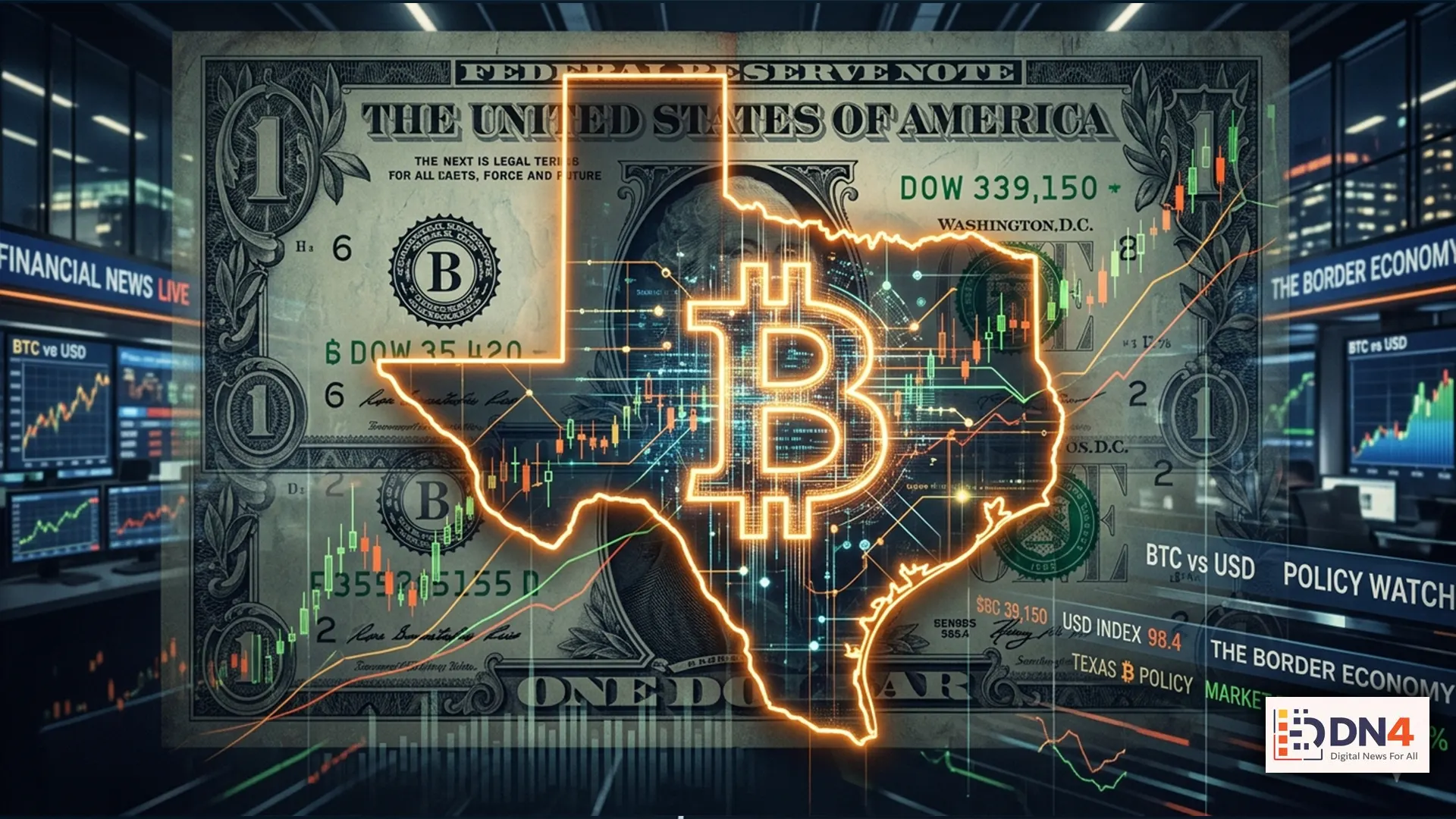
Texas is not just making a crypto statement. It is making a political and financial one too.
By establishing a Strategic Bitcoin Reserve, Texas has become one of the boldest U.S. states to formally treat Bitcoin as a reserve-style asset rather than just a speculative technology play.
That does not mean the U.S. dollar is suddenly in danger. But it does signal something more important: Bitcoin is moving closer to the language of statecraft.
And once governments start using that language, markets pay attention.
What Texas Actually Did
Texas lawmakers created the Texas Strategic Bitcoin Reserve as a special fund administered by the state comptroller, with the stated purpose of improving financial resilience and providing a hedge against inflation and volatility.
According to the official text of Senate Bill 21 and legislative records from the Texas Senate Journal, the reserve sits outside the state treasury, can receive appropriated funds, and is managed with oversight and reporting requirements.
The bill also sets a very high eligibility threshold for digital assets by market capitalization—meaning Bitcoin is effectively the only realistic asset that qualifies right now.
Why This Matters Symbolically
On paper, this is a state-level reserve fund.
In practice, it is also a public legitimacy signal.
For years, Bitcoin has lived in two worlds at once: one as a volatile speculative asset, and the other as “digital gold.” Texas is clearly leaning into the second narrative.
That matters because governments do not usually create strategic reserves around memes. They do it around assets they believe may matter in future financial stress scenarios.
Even supporters of the bill framed it that way. In a statement after Senate passage, the office of Lt. Gov. Dan Patrick described Bitcoin as “digital gold” and pitched the reserve as part of Texas’s long-term financial strategy.
Does This Threaten the U.S. Dollar?
Not directly. Not even close.
The U.S. dollar remains dominant because it is backed by the world’s largest economy, the deepest Treasury market, global trade settlement, and decades of institutional trust.
A single state buying or holding Bitcoin does not undo any of that.
But that is not really the right question.
The more useful question is this: does this chip away at the idea that the dollar should be the only serious reserve-like store of value inside the American system?
And there, the answer is more interesting: yes, a little.
Why the Bigger Story Is About Confidence
Reserve assets are not only about utility. They are about confidence.
Gold matters because people believe it matters. Treasury bonds matter because institutions trust them. The dollar dominates because the world still sees it as the cleanest, most liquid safe-haven system available.
When a major U.S. state begins carving out formal space for Bitcoin, it does not dethrone the dollar. But it does send a message that some policymakers want optionality outside the traditional fiat-only framework.
That is not de-dollarization. It is more like reserve diversification theater with real long-term implications.
What Bitcoin Supporters Will Argue
Bitcoin advocates will say this move proves the asset is maturing from speculation into strategic infrastructure.
They will argue that:
- Bitcoin’s fixed supply makes it attractive in inflationary eras
- Its decentralized design reduces political control risk
- Its portability makes it easier to hold than gold in some scenarios
- State-level adoption helps normalize it for institutions
That case is not crazy. It is also not complete.
What Critics Will Argue
Critics will say Texas is flirting with volatility and symbolism more than sound reserve management.
Bitcoin remains highly volatile. It produces no cash flow. It is still vulnerable to regulatory, liquidity, and sentiment shocks. And unlike the dollar, it does not function as the backbone of tax collection, wages, or sovereign debt markets.
That is why many economists still view it more as a speculative macro asset than a true reserve substitute.
Even some academic critiques continue to argue that Bitcoin’s volatility and structural limits make it a poor candidate for stable monetary use over time.
What This Means for the Future
The biggest impact of Texas’s move may not be on the dollar today. It may be on what other states, institutions, and political coalitions feel newly allowed to try next.
If more states create similar funds, even at small scale, Bitcoin begins to move from fringe financial asset to semi-official reserve experiment.
That shift would matter less because of the size of the holdings and more because of the precedent.
And precedent is how financial narratives change.
Texas establishing a Strategic Bitcoin Reserve does not mean the dollar is falling.
But it does mean the conversation around what counts as a legitimate reserve asset in America is changing.
That alone is a big deal.
Bitcoin is not replacing the dollar. Not now. Maybe not ever.
But Texas just helped push it one step closer to being treated not as a curiosity—but as a contender.
#Bitcoin #Texas #USDollar #CryptoPolicy #BitcoinReserve #DigitalAssets #FinancialNews #CryptoRegulation #StateFinance