

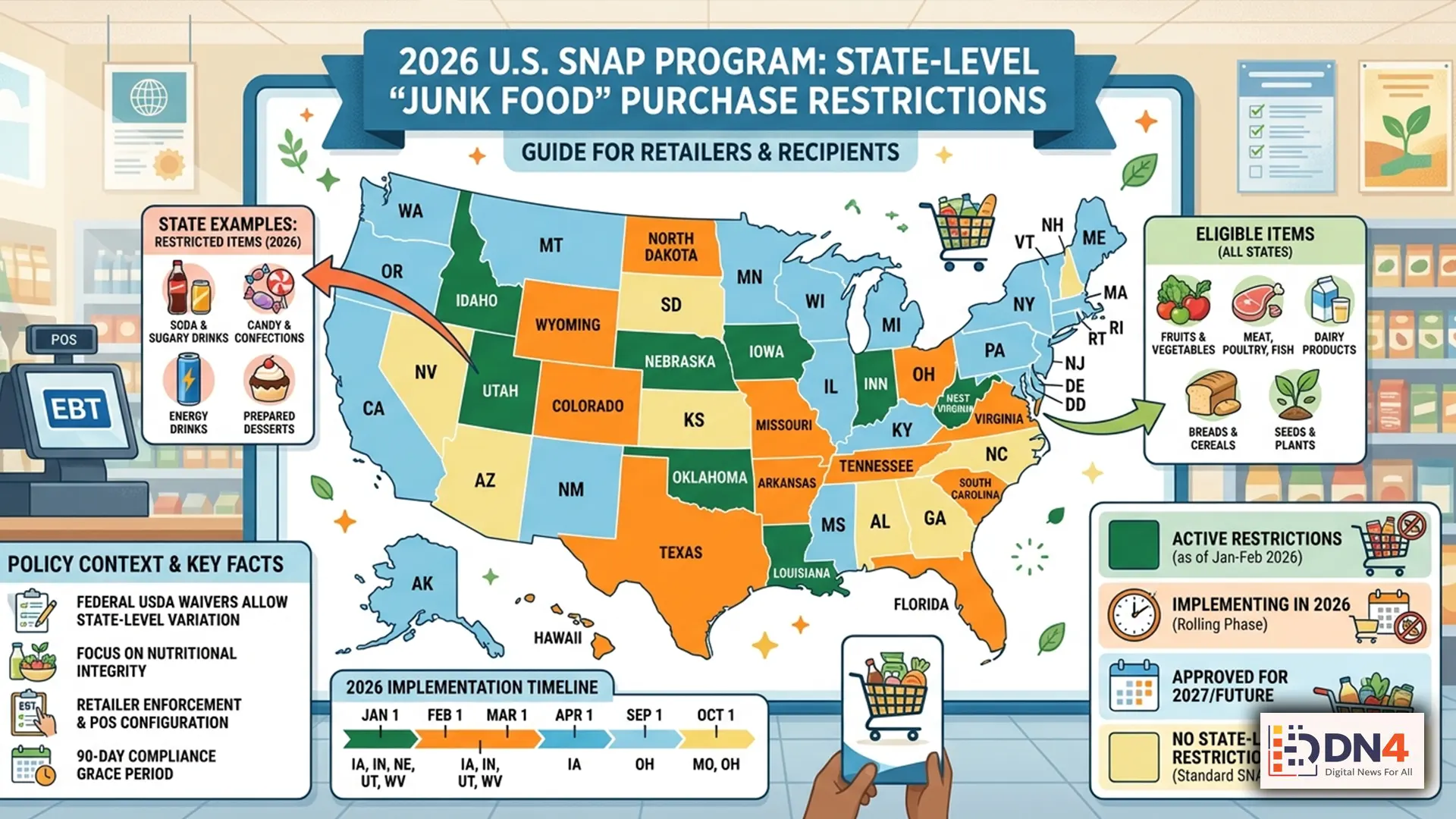
One of the biggest U.S. benefits policy changes of 2026 is already rolling out: some states are now blocking certain “junk food” purchases under SNAP (the Supplemental Nutrition Assistance Program, often called food stamps).
That means in some places, people using SNAP benefits can no longer buy items like soda, candy, energy drinks, or other sweetened products—depending on the state.
So which states are changing the rules, what foods are being restricted, and when do the new SNAP limits actually begin?
What’s Changing With SNAP in 2026?
Traditionally, SNAP allowed benefits to be used for most grocery food items sold for home consumption. But in 2026, multiple states are now using new USDA-approved food restriction waivers to block some purchases.
According to the U.S. Department of Agriculture’s SNAP Food Restriction Waivers page, states with approved waivers can restrict categories such as soda, candy, energy drinks, and certain sweetened beverages.
The policy push is part of a broader debate over whether SNAP should prioritize food access only or also be used to influence nutrition choices.
Which States Have Approved SNAP “Junk Food” Restrictions?
As of 2026, the USDA waiver tracker shows that a growing number of states have approved restrictions, although implementation dates and banned items vary by state.
Based on the latest USDA waiver map, these states currently have approved SNAP food restriction waivers:
- Arkansas
- Colorado
- Florida
- Hawaii
- Idaho
- Indiana
- Iowa
- Kansas
- Louisiana
- Missouri
- Nebraska
- Nevada
- North Dakota
- Ohio
- Oklahoma
- South Carolina
- Tennessee
- Texas
- Utah
- Virginia
- West Virginia
- Wyoming
Not all of these states are banning the exact same products, and not all changes start at the same time.
Which States Are Banning Soda, Candy, or Sugary Drinks First?
Some states have already implemented the restrictions in 2026, while others are rolling them out later in the year—or even in 2027.
Here are some of the most notable state changes already documented in official or state-level guidance:
Nebraska
Nebraska became the first state approved to restrict certain purchases, with soda and energy drinks removed from SNAP eligibility effective January 1, 2026, according to the USDA’s Nebraska waiver announcement.
Iowa
Iowa says SNAP changes began January 1, 2026, and lists soda, candy, gum, vitamins/minerals, and some prepared foods among ineligible purchases, according to the Iowa Department of Health and Human Services.
Idaho
In Idaho, SNAP benefits can no longer be used for candy or soda beginning February 15, 2026, according to the Idaho Department of Health and Welfare.
Texas
Texas is implementing restrictions starting April 1, 2026, targeting sweetened drinks and candy, according to state guidance and multiple local reports. A summary of the state’s rollout has been widely reported, including by the Houston Chronicle.
Arkansas
Arkansas is scheduled to restrict soda, low- and no-calorie soda, certain fruit drinks under 50% juice, and candy beginning July 1, 2026, according to the official Arkansas SNAP waiver approval.
West Virginia
West Virginia’s approved waiver is set to restrict soda beginning January 1, 2026, according to the USDA waiver list.
What Counts as “Junk Food” Under the New SNAP Rules?
This is where things get confusing—and controversial.
There is no single national “junk food” definition for SNAP restrictions. Each state waiver can define restricted items differently.
That means one state may ban:
- Soda
- Energy drinks
- Candy
- Sweetened beverages
- Prepared desserts
…while another may only block soft drinks.
That’s also why many recipients and retailers have been confused about what is and isn’t covered at checkout. Community discussions online have pointed to inconsistent labeling, unclear product categories, and uncertainty around borderline items like flavored drinks, sweet teas, or candy-coated snacks.
Why This Policy Is So Controversial
Supporters say the restrictions are about public health and taxpayer accountability. Their argument is simple: if SNAP is federally funded nutrition assistance, it shouldn’t subsidize heavily sweetened or low-nutrition products.
Opponents argue the policy is paternalistic, confusing, and unfairly targeted at low-income families. They also point out that people paying with regular cash can still buy the same foods without restrictions.
The broader legal and policy environment around USDA authority has also become more politically charged in 2026, as seen in recent federal disputes over USDA program conditions reported by Reuters.
What This Means for SNAP Users at Checkout
For households using benefits, the biggest practical impact is simple: some items that used to go through on EBT now won’t.
That means shoppers may need to:
- Double-check what qualifies in their state
- Split transactions between SNAP and cash/card
- Watch for retailer signage and app updates
- Plan grocery budgets differently
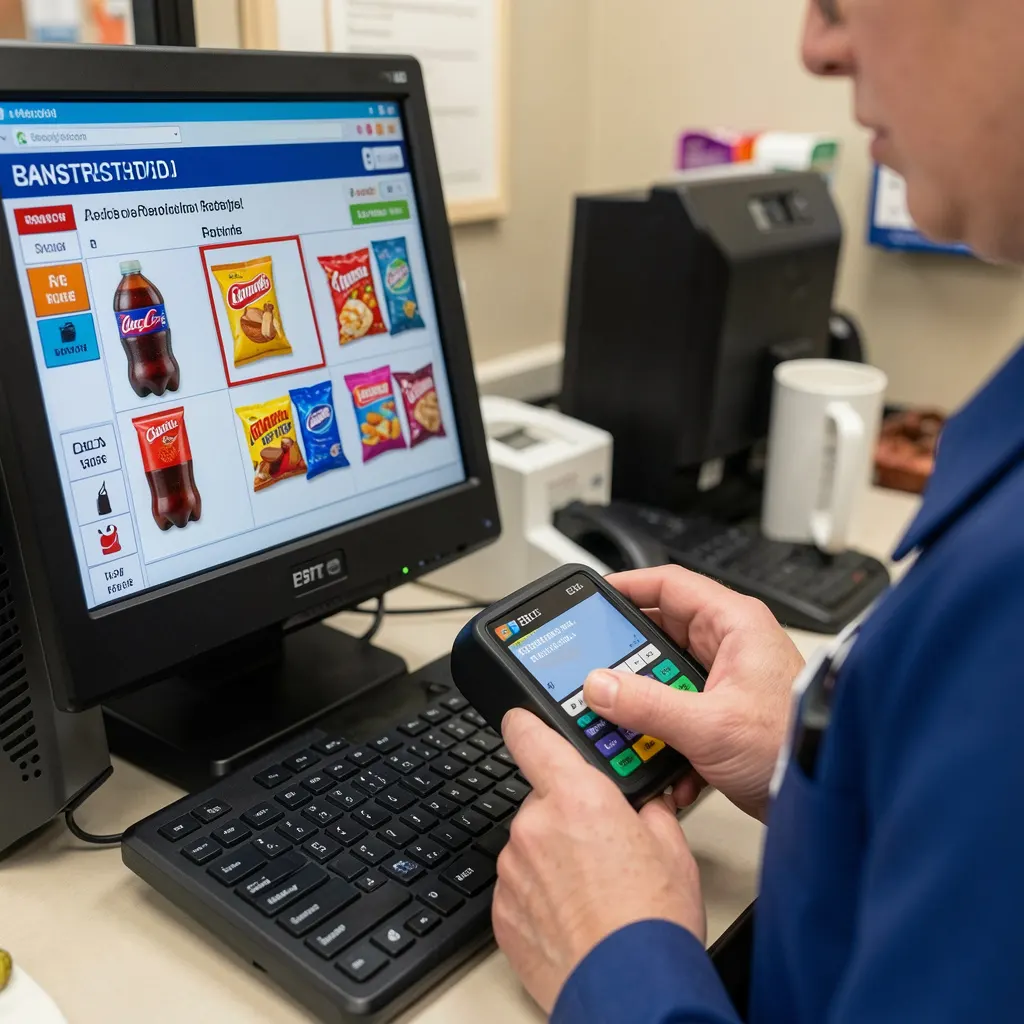
Retailers also have to update systems so blocked items are automatically flagged during SNAP purchases.
Will More States Join in 2026 and 2027?
Probably, yes.
The USDA has encouraged states to submit food restriction waivers, and several states already have future implementation dates listed. That means this story is likely not finished.
If the current trend continues, more Americans could see SNAP purchase rules become increasingly state-specific over the next 12 to 24 months.
Yes—multiple states are now banning some “junk food” purchases under SNAP in 2026.
But the rules are not national, and they are not uniform.
That means the answer depends heavily on where you live, what you’re buying, and when your state’s waiver takes effect.
For now, one thing is clear: SNAP in 2026 is becoming far more state-driven than many households expected.
#SNAP #FoodStamps #PublicPolicy #Benefits2026 #USPolitics #HealthPolicy #CostOfLiving