

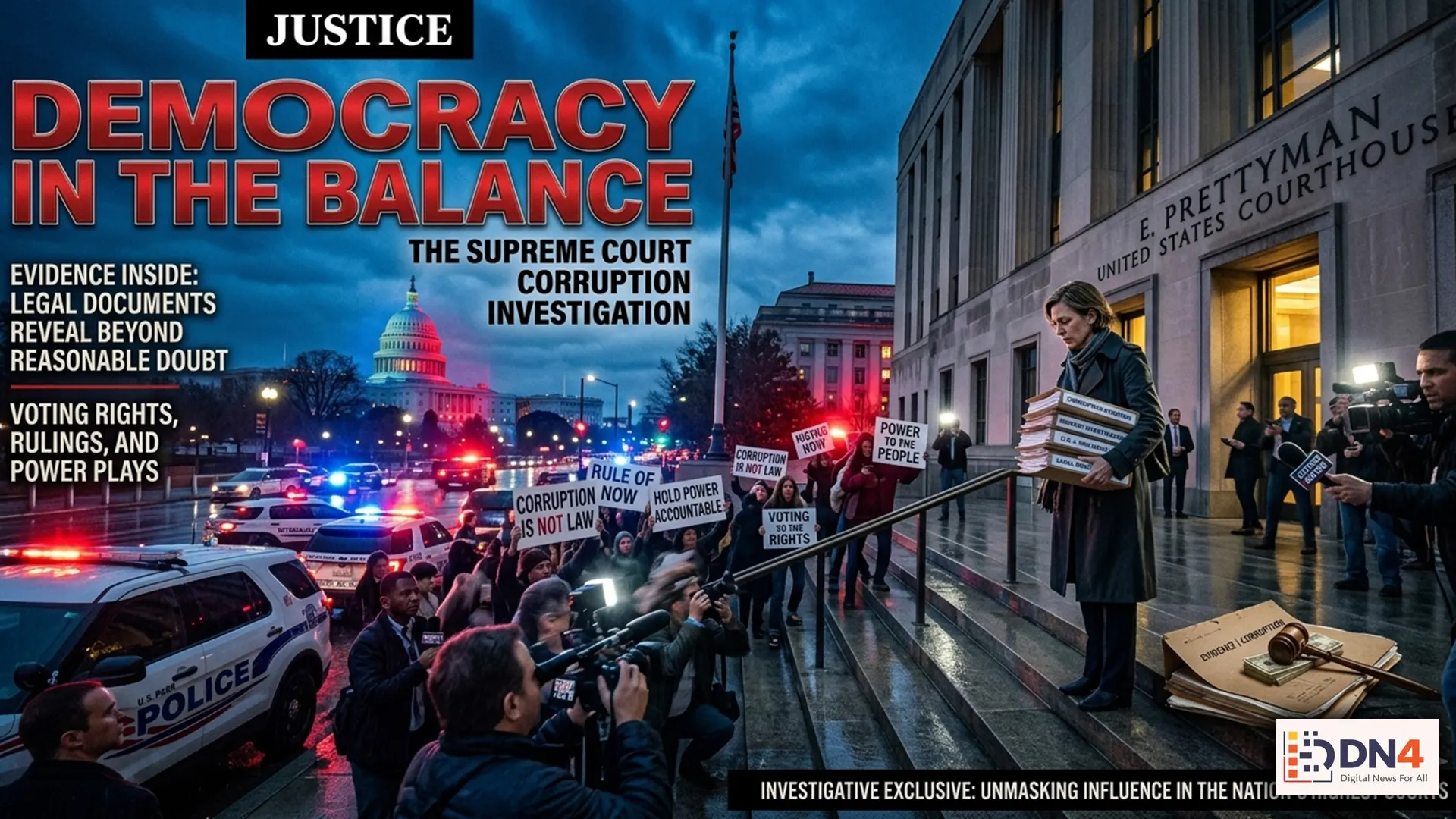
Public corruption cases used to follow a familiar federal script: prosecutors cast a wide net, juries heard the phrase “quid pro quo,” and courts often gave the government broad room to argue that suspicious political conduct crossed the criminal line. But that legal landscape has been steadily narrowing — and the apparent unraveling of former Cincinnati councilman P.G. Sittenfeld’s conviction may be one of the clearest signs yet that the rules have changed.
At first glance, this looks like a local political scandal getting a second life through appellate law. In reality, it is much bigger than that. It is part of a broader Supreme Court-driven shift that is making it significantly harder for federal prosecutors to win corruption cases unless they can prove a very specific, clearly defined exchange of official power for personal gain.
And that shift is already rewriting the boundaries of what counts as criminal corruption in America.
Why the Sittenfeld Case Matters Beyond Cincinnati
Sittenfeld’s case was always politically combustible because it centered on something that sits in the grayest zone of American politics: campaign money, influence, and access.
Federal prosecutors said he accepted $40,000 in contributions tied to official action and “delivering votes” on a development matter. A jury convicted him in 2022 on bribery and attempted extortion-related counts, making the case look, at the time, like a relatively straightforward anti-corruption win for the government.
But the legal terrain beneath that conviction has shifted dramatically since then.
In recent years, the Supreme Court has repeatedly signaled discomfort with expansive federal corruption theories — especially when prosecutors rely on broad or ambiguous readings of bribery, honest-services fraud, or influence-based conduct rather than a tightly provable quid pro quo.
The Real Legal Earthquake: SCOTUS Has Been Narrowing Corruption Law for Years
The apparent reversal pressure in Sittenfeld’s case does not exist in isolation. It fits into a much larger Supreme Court pattern.
In Snyder v. United States, the Court held that the federal bribery statute used for state and local officials, 18 U.S.C. § 666, criminalizes bribes but not after-the-fact gratuities. That distinction matters enormously. It means federal prosecutors cannot simply point to money or benefits following official conduct and call it corruption without proving the payment was part of a prior corrupt agreement.
That is not a technicality. That is a major evidentiary burden shift.
And it builds on a decade-plus trend in which the Court has steadily tightened the federal government’s reach in public corruption prosecutions.
Why This Rewrites the Prosecutor’s Playbook
For years, many corruption cases depended on persuading juries that the “smell test” was enough: if a politician took money and later acted favorably, the inference of corruption felt obvious.
But the modern Supreme Court is increasingly saying that criminal law cannot run on vibes, optics, or political disgust alone.
Instead, prosecutors now face a much tougher standard. They increasingly need to prove:
- A clear and identifiable agreement
- A direct exchange between official action and payment or benefit
- A theory of criminal liability narrow enough to survive appellate review
- Jury instructions that do not blur ethical wrongdoing with federal felony conduct
That changes everything.
It does not mean suspicious conduct becomes ethical. It means a growing share of ethically ugly behavior may no longer fit neatly inside federal criminal statutes.

The Honest-Services Problem Keeps Getting Bigger
One of the deeper forces behind this legal shift is the Court’s longstanding skepticism toward “honest services” and similarly broad anti-corruption theories.
From Skilling v. United States to later decisions limiting public corruption and wire-fraud theories, the Court has repeatedly warned against criminal statutes that are too vague, too flexible, or too dependent on prosecutorial interpretation.
That same concern has shown up in more recent cases involving public officials and political influence, where the justices have increasingly prioritized fair notice, statutory clarity, and federalism over broad anti-corruption enforcement.
Sittenfeld’s case lands directly inside that judicial mood.
Why This Is a Political Story as Much as a Legal One
The implications go far beyond one defendant or one city council scandal.
If courts keep demanding more explicit proof of bribery and less inference-based corruption logic, public officials across the country may find themselves exposed to less federal criminal risk — even as public cynicism about pay-to-play politics keeps rising.
That creates a dangerous civic tension:
- The public may still view certain conduct as obviously corrupt
- But courts may increasingly say that “obvious” is not legally precise enough
That gap between ethical intuition and legal proof is where the next generation of corruption battles will likely be fought.
P.G. Sittenfeld’s overturned conviction matters because it is not just about whether one politician gets a legal second chance.
It is about whether the federal government still has the tools to prosecute modern political corruption the way it once did — or whether the Supreme Court has now redrawn those lines so tightly that many future cases will become much harder to win.
Because the biggest consequence of this legal moment is not just who walks free — it is how narrowly America may now be defining corruption itself.
#PGSittenfeld #SCOTUS #CorruptionLaw #LegalNews #SupremeCourt #HonestServicesFraud #FederalLaw #PublicCorruption #PoliticsAndLaw