

 By Vinod Ram
Introduction — Why Rice Is Suddenly a Geopolitical Flashpoint
Rice is a cornerstone of global food security, feeding over half the world’s population. When tensions arise between major players like the United States and India—two countries that influence global pricing, stockpiles, and market stability—the ripple effects hit commodity markets and vulnerable importing nations worldwide. According to the UN Food and Agriculture Organization, even small disruptions in Asian export flows can increase food-security risks for low-income nations.
U.S. Tariff Threats and Claims of “Dumping”
Recent political rhetoric in Washington accused India of exporting artificially low-priced rice, potentially harming U.S. growers. These claims fueled calls for new tariffs, echoing past agricultural disputes documented by USDA Economic Research Service. Market analysts warn that such tariff threats often trigger immediate volatility across rice futures and exporter share prices.
India’s Export Controls: Bans, Duties, and Minimum Prices
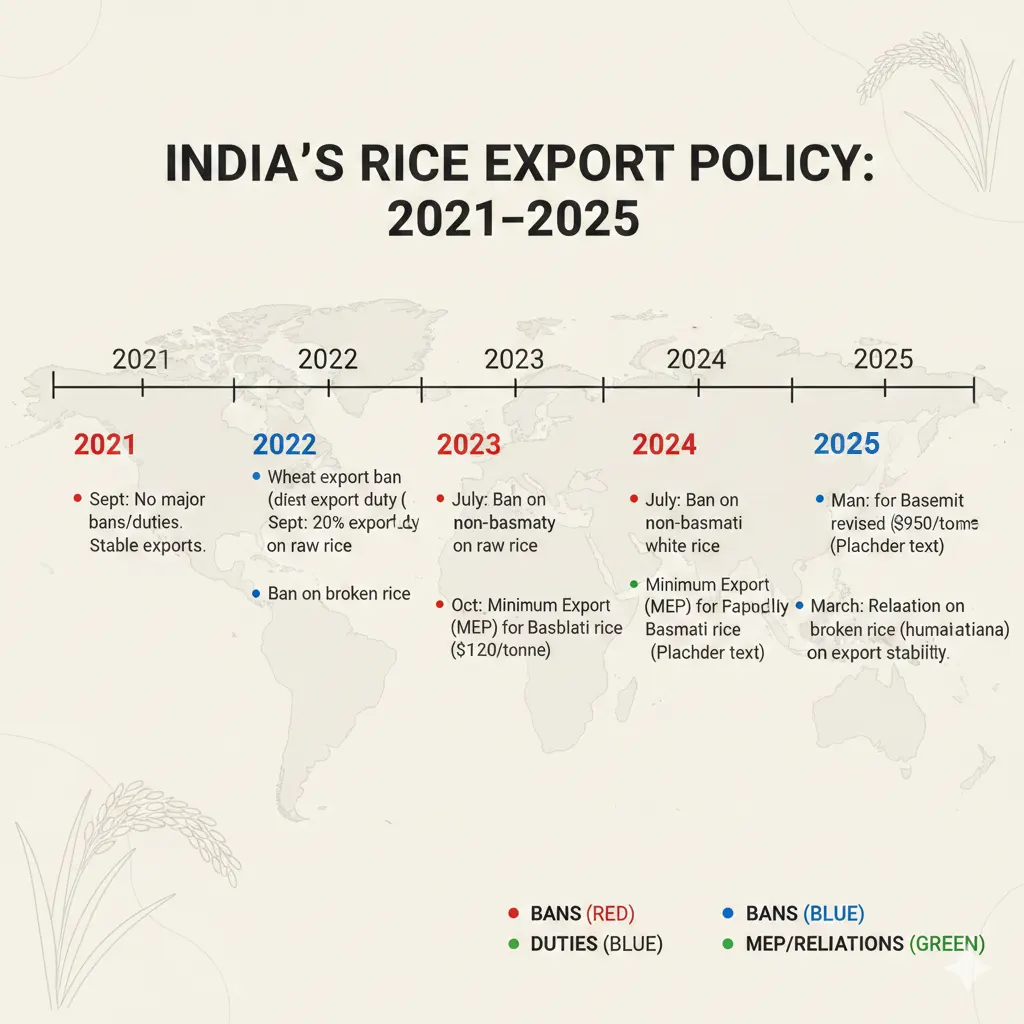
India, the world’s largest rice exporter, has repeatedly used export bans, duties, and minimum export prices to stabilize domestic inflation. Reports from Reuters Commodities highlight that India’s policy shifts—particularly restrictions on non-basmati rice—have sharply affected global supply chains.
How Markets React: Prices, Stocks, and Supply Chains
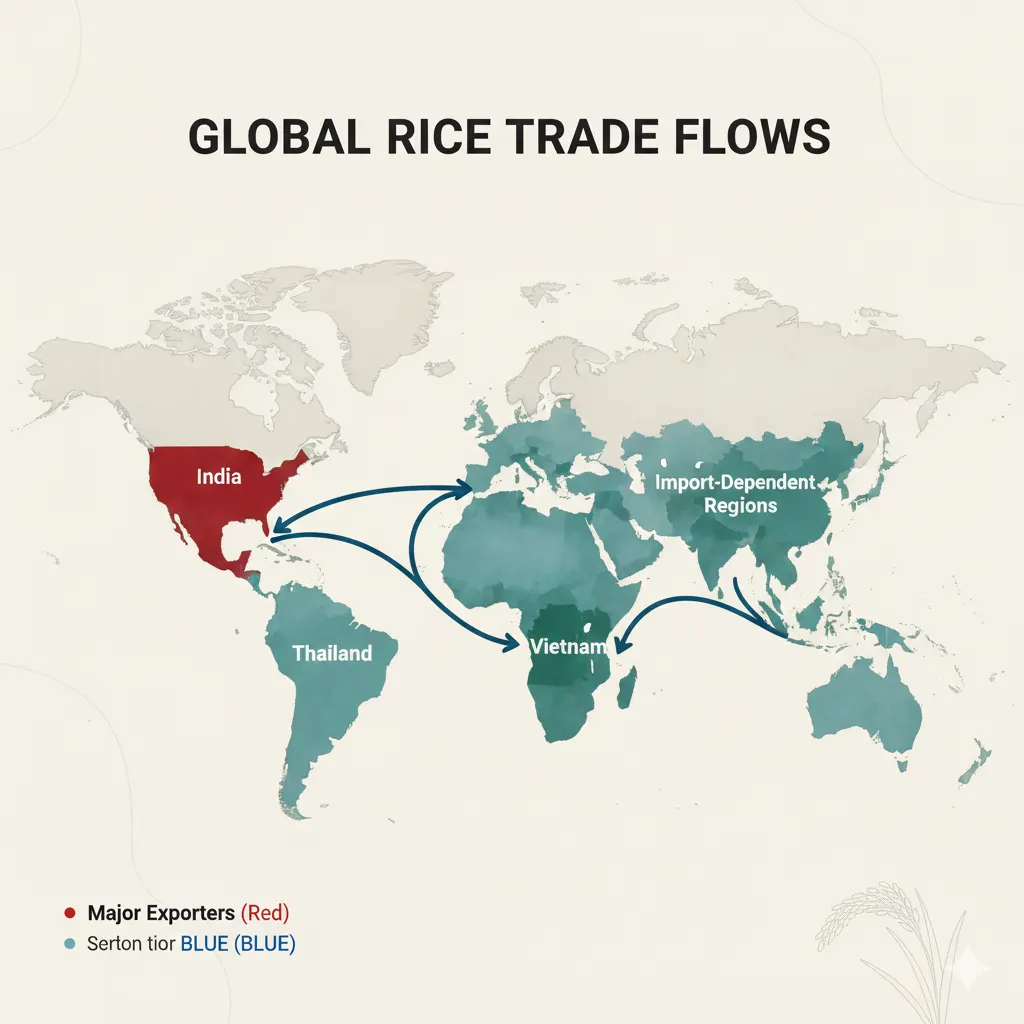
With India’s outsized role, any policy shift immediately affects global prices. A study published via the World Bank Agriculture & Food division reveals that import-dependent African and Middle Eastern nations face the highest volatility when Indian export controls tighten.
Rice as Diplomatic Leverage: The Geopolitical Stakes
Rice has quietly become a diplomatic tool. Exporting nations can prioritize friendly countries, delay shipments, or adjust volumes to influence negotiations. Several geopolitical analysts cited by CSIS (Center for Strategic & International Studies) note that food-commodity leverage is growing as supply chains face climate-driven pressures.
For India, export flexibility ensures domestic stability. For the U.S., tariff threats can strengthen negotiation positions in wider trade talks. But for import-dependent nations, these maneuvers create uncertainty that can escalate into humanitarian concerns.
Winners and Losers: Who Gains From the Tensions?
- Potential winners: Domestic rice farmers in protected markets; exporters like Thailand and Vietnam that may fill supply gaps.
- Potential losers: Import-dependent African nations; U.S. consumers facing higher retail prices; exporters whose profitability depends on stable trade routes.
Policy Options to Defuse the Tensions
Experts recommend strategies such as:
- Time-bound safeguards to protect domestic farmers without destabilizing global supply
- Transparent consultations and WTO notifications
- Food-security carve-outs for vulnerable countries
- Compensation programs for farmers affected by sudden market shifts
Signals That Traders, Farmers, and Consumers Should Watch
Traders: Monitor official export notifications from India and tariff statements from U.S. agencies.
Farmers: Watch domestic support measures or subsidy updates related to trade disruptions.
Consumers: Rising retail prices or shrinking supply in ethnic and mainstream markets.
Rice Is Now a Strategic Commodity
The US–India rice dispute reflects broader geopolitical trends: the weaponization of commodities, the fragility of food supply chains, and the growing importance of agricultural diplomacy. A balanced, transparent approach—protecting national interests while preserving global food security—remains the most stable long-term path.
#TsunamiTech #EarlyWarningSystems #AIDisasterResponse #CoastalSafety #NOAA #UNESCO #DisasterPrep #TsunamiAwareness #ClimateResilience #OceanTechnology