

 By Vinod Ram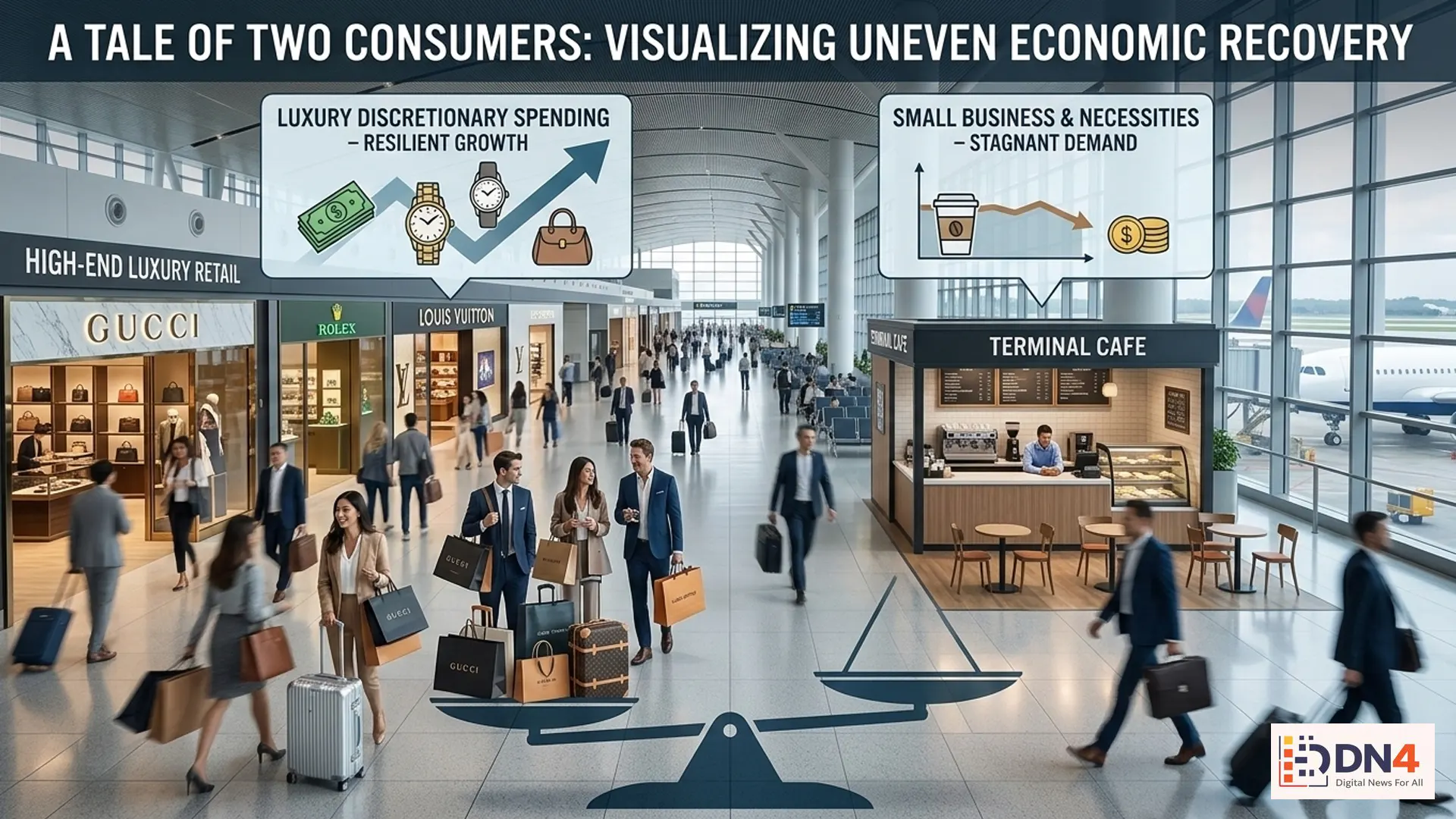
If your spending habits feel contradictory lately, you’re not alone. Many consumers are booking expensive vacations while simultaneously cutting back on everyday purchases like coffee, dining, or streaming subscriptions.
Economists call this phenomenon the K-shaped economy. The term gained popularity during the pandemic recovery and now defines a widening gap in spending patterns across income groups. According to research from the International Monetary Fund and analysis from McKinsey & Company, higher-income households continue to spend aggressively on experiences, while many middle-income consumers tighten their budgets.
What Is a K-Shaped Economy?
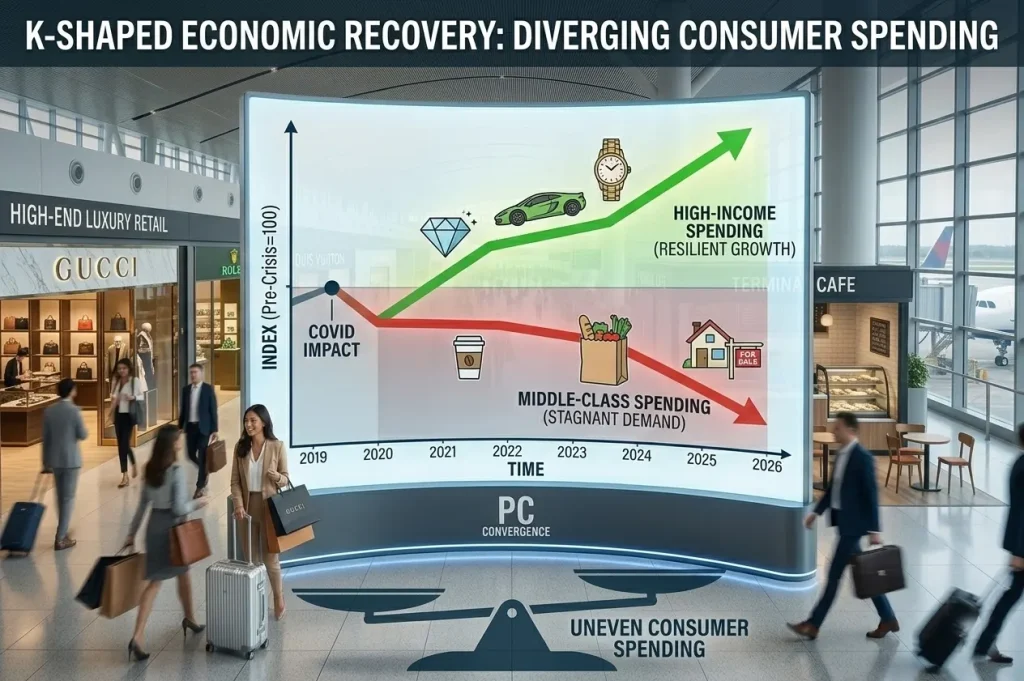
The phrase “K-shaped economy” describes a recovery where different groups experience opposite economic trajectories. Some sectors and income groups see strong growth, while others struggle with rising costs.
The concept became widely discussed after global disruptions in the early 2020s. Analysts at the World Bank and Organisation for Economic Co-operation and Development use the term to explain uneven economic recovery patterns across industries and households.
In practical terms, the upper branch of the “K” represents rising wealth and spending among higher-income consumers. The lower branch represents stagnation or reduced spending among those facing higher living costs.
Why Travel Spending Is Booming
Despite economic uncertainty, travel demand has surged globally. Data from the United Nations World Tourism Organization shows international tourism returning close to pre-pandemic levels, with some regions even surpassing previous records.
Several factors drive this trend:
- Pent-up demand for experiences after years of restrictions
- Higher disposable income among affluent households
- Flexible remote work enabling longer trips
- Airline and hotel promotions encouraging travel spending
Travel has increasingly become a priority expense for many consumers. Surveys from PwC suggest that younger professionals often prioritize experiences like travel over material purchases.
Why Everyday Spending Is Shrinking
At the same time, many households are reducing spending on daily items such as coffee, takeout meals, and small entertainment purchases.
Rising prices continue to influence consumer decisions. Inflation data from the U.S. Bureau of Labor Statistics shows steady increases in food, housing, and energy costs over recent years.
When budgets tighten, people often cut small recurring expenses first. These include:
- Coffee shop purchases
- Restaurant dining
- Streaming services
- Subscription boxes
Ironically, reducing these everyday costs allows consumers to redirect money toward larger experiences like vacations.
The Psychology Behind Experience Spending
Behavioral economists say consumers increasingly prioritize experiences because they create lasting memories and social value.
Studies from Harvard Business School suggest that people derive greater long-term happiness from experiences than from material purchases.
As a result, consumers may skip daily luxuries but still justify spending thousands on travel or major events.
What This Means for Businesses
The K-shaped economy creates very different opportunities depending on the industry.
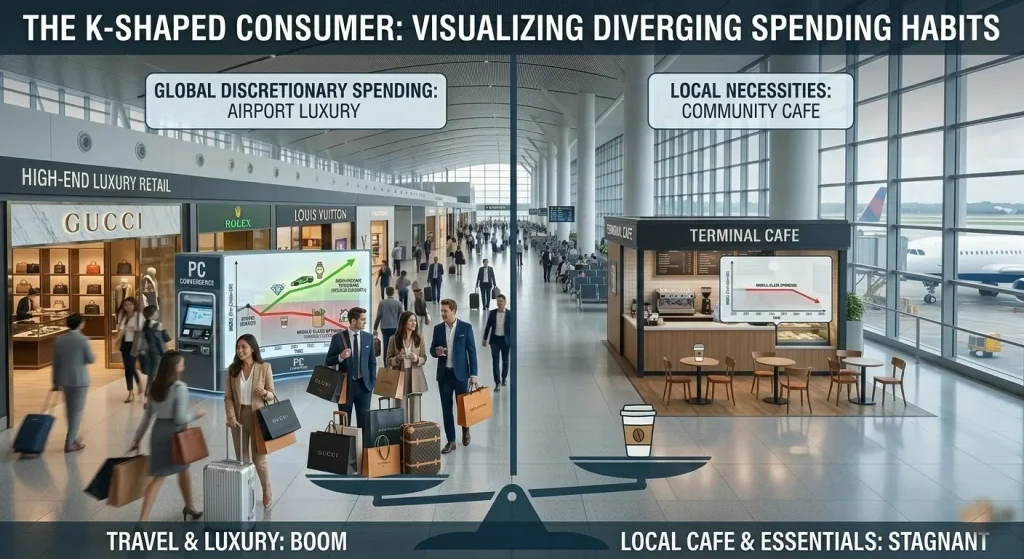
Companies connected to travel, hospitality, and luxury experiences often benefit from rising high-income spending. Meanwhile, businesses that rely on frequent small purchases face more cautious consumers.
Retailers and service providers increasingly adapt by offering flexible pricing, loyalty programs, and premium experiences designed to capture higher-value spending.
The Bigger Economic Picture
The 2026 K-shaped economy highlights a broader shift in global consumer behavior. Economic inequality, inflation, and changing lifestyle priorities continue to shape how people spend money.
While some consumers pursue luxury travel and experiences, others remain focused on managing everyday expenses.
This divide does not necessarily mean economic collapse. Instead, it reflects a complex and evolving economy where different groups experience prosperity in very different ways.
If you find yourself booking flights while brewing coffee at home instead of visiting cafés, you are participating in one of the defining economic trends of the decade.
The K-shaped economy reveals a simple reality: people still want meaningful experiences. They are simply becoming more selective about how they spend their everyday money.
#KShapedEconomy #ConsumerSpending #EconomicTrends #TravelBoom #InflationImpact #GlobalEconomy