

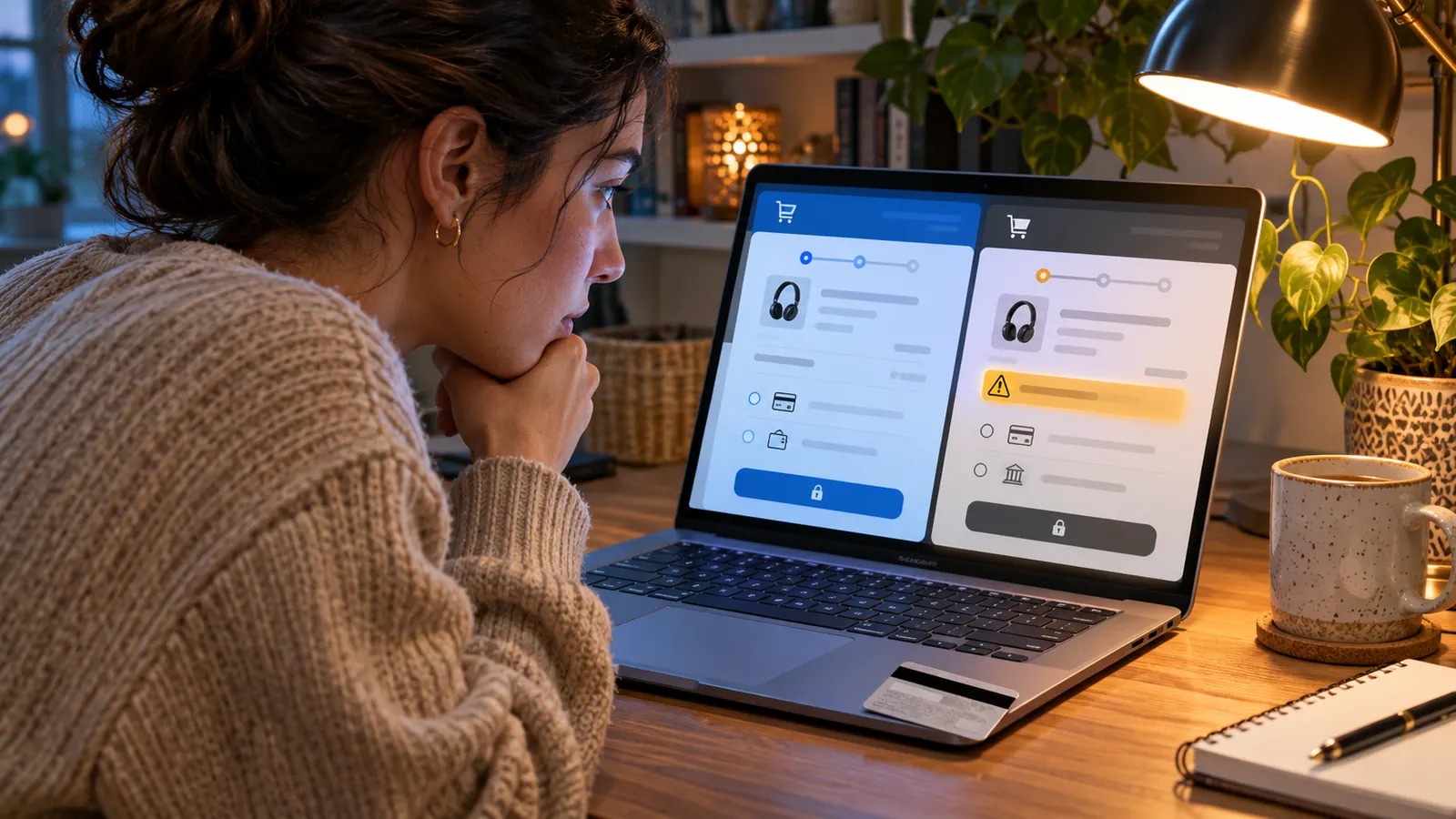
A big discount can get your attention. Before it gets your card details, take one minute to check who is selling the item, what it will cost to get it to you, and how you can dispute a charge if something goes wrong.
Start with the seller
Open the retailer’s app or type the address you already know. Find the product again from there. On a marketplace, look for the actual seller’s name and check who handles returns. Search an unfamiliar seller and its domain alongside words such as “complaint” or “scam.” A familiar logo and a padlock can appear on a fraudulent site.
Compare the total you would actually pay
Match the exact model, condition, warranty and bundle before comparing prices. Then include shipping, taxes where shown, and return costs. A cheaper listing can lose its advantage if it is refurbished, includes fewer accessories, or has expensive return shipping. If the advertised discount exists only on an unfamiliar site, give yourself time to check it independently.
Pause when the seller dictates the payment method
The FTC recommends paying by credit card when possible for online shopping. Walk away from a seller who insists on a gift card, wire transfer or cryptocurrency. Save the item listing, order confirmation and return terms. If you already paid and suspect fraud, contact the card issuer or payment provider through its official app or number promptly and ask what dispute or recovery options are available. US shoppers can also report the incident to the FTC at ReportFraud.ftc.gov.
Sources