

Antarctica is the coldest, windiest, and driest continent on Earth. Located at the southernmost point of the planet, this vast frozen wilderness plays a crucial role in regulating the global climate. While it may seem remote and untouched, what happens in Antarctica can affect the entire world.
From massive ice sheets and towering mountain ranges to unique wildlife and groundbreaking scientific research, Antarctica is a place of extremes. Today, it is also one of the most important regions scientists study to understand climate change and the future of our planet.
The Coldest Place on Earth
Antarctica holds the record as the coldest place on Earth. During winter, temperatures can drop below −80°F (−62°C). The continent is also the windiest on the planet, with powerful katabatic winds sweeping across the ice-covered landscape.
Despite its harsh environment, Antarctica is an enormous and important landmass. Covering about 14 million square kilometers, it is roughly 1.3 times the size of Europe.
Nearly 98% of the continent is covered by ice, forming the largest ice sheet on Earth.
Antarctica Holds 60% of the World’s Fresh Water
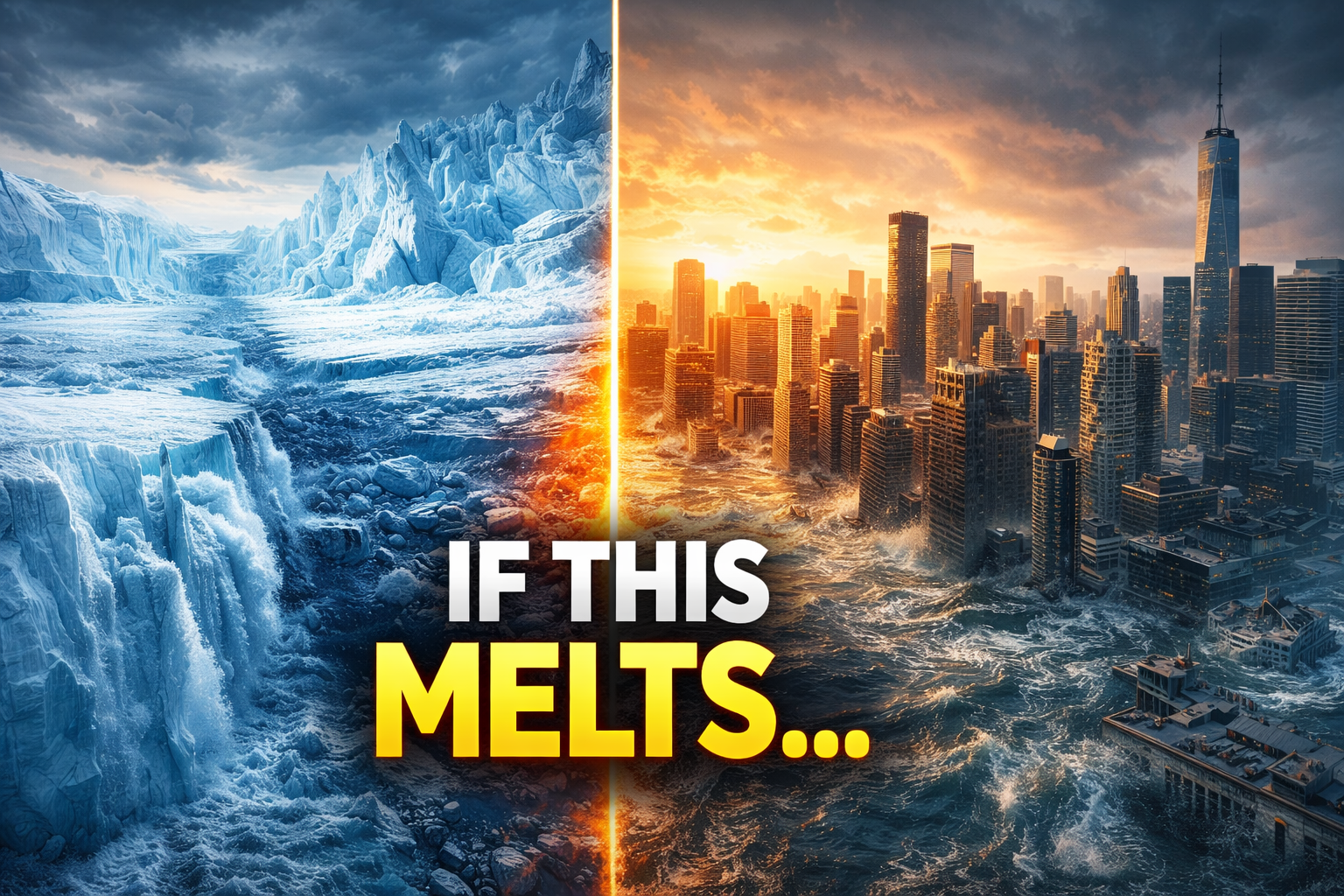
One of Antarctica’s most important global roles is storing fresh water. The continent’s massive ice sheets contain about 60% of the world’s fresh water.
If even a portion of this ice melts, it could significantly raise global sea levels and affect coastal cities around the world.
This is why scientists monitor Antarctica closely. Changes here can signal major shifts in the global climate system.
The Transantarctic Mountains: Dividing the Continent
One of the most striking geographical features in Antarctica is the Transantarctic Mountains. These mountains stretch across the continent and divide it into East Antarctica and West Antarctica.
Some peaks in this mountain range rise more than 16,000 feet (4,800 meters) above sea level.
Beyond their beauty, these mountains help scientists understand the geological history of Antarctica and the forces that shaped its icy landscape.
The “Doomsday Glacier”
One of the most closely watched areas in Antarctica is the Thwaites Glacier, often called the “Doomsday Glacier.”
This enormous glacier is melting faster than expected, and scientists worry about its potential impact.
If Thwaites Glacier were to collapse, it could contribute significantly to global sea level rise, potentially affecting millions of people living in coastal regions.
Monitoring glaciers like Thwaites helps scientists predict how climate change may reshape our planet in the future.
Life in One of Earth’s Harshest Environments
Despite its extreme conditions, Antarctica is home to remarkable wildlife that has adapted to survive in the cold.
One of the most iconic animals is the Emperor Penguin, the only penguin species that breeds during the harsh Antarctic winter.
These penguins survive freezing temperatures and fierce winds by huddling together in groups to conserve warmth while protecting their eggs.
Other animals living in or around Antarctica include:
- Weddell seals
- Leopard seals
- Various seabirds
- Whales
- Antarctic krill
The Southern Ocean surrounding the continent is rich in nutrients, supporting a thriving marine ecosystem.
At the base of this ecosystem is krill, a tiny shrimp-like creature that serves as food for whales, seals, penguins, and fish.
A Global Hub for Scientific Research
Although Antarctica has no permanent residents, it hosts many scientific research stations operated by countries around the world.
Scientists live and work here for months at a time studying:
- Climate change
- Glaciology (the study of glaciers)
- Marine ecosystems
- Atmospheric science
- Earth’s geological history
The continent is governed by the Antarctic Treaty, signed in 1961, which established Antarctica as a region dedicated to peaceful scientific cooperation and environmental protection.
The treaty prohibits military activity and mineral mining, ensuring that Antarctica remains a place of research and conservation.
Antarctica and Climate Change
Antarctica is one of the most important places on Earth for understanding climate change.
Some regions, especially the Antarctic Peninsula, are warming faster than most parts of the planet. Rising temperatures are contributing to:
- Increased ice melt
- Changes in wildlife behavior
- Shifts in ocean ecosystems
These changes do not just affect Antarctica. Melting ice can influence global sea levels, ocean circulation, and weather patterns worldwide.
Living in Antarctica
Life in Antarctica is challenging and unlike anywhere else on Earth.
Researchers and support staff often live in isolated stations for months during the harsh winter, when the continent experiences 24 hours of darkness.
During the summer months, Antarctica experiences the opposite extreme—continuous daylight.
Despite the difficult conditions, scientists form strong communities as they work together to better understand Earth’s climate and ecosystems.
Protecting the Frozen Continent
Antarctica also contains natural resources, but exploiting them raises serious environmental concerns.
The Antarctic Treaty currently bans mineral extraction, emphasizing the importance of protecting this fragile environment for future generations.
Balancing scientific research, conservation, and potential resource management remains an ongoing global discussion.
Why Antarctica Matters to the Entire Planet
Antarctica may seem distant and isolated, but its influence extends across the globe.
The continent acts as a natural climate regulator, and changes in its ice sheets can have worldwide consequences.
Rising sea levels, shifting weather patterns, and changes in marine ecosystems are all linked to what happens in this frozen landscape.
The Future of Antarctica
As climate change continues to affect the planet, Antarctica has become one of the most closely studied places on Earth.
Scientists are racing to understand how fast the ice is melting and what that means for the future of our oceans and coastal communities.
The story of Antarctica is not just about a remote continent covered in ice—it is about the future of our planet.
Protecting this unique environment will require global cooperation, scientific research, and environmental responsibility.
Final Thought
Antarctica stands as one of Earth’s most powerful reminders of how interconnected our planet truly is. What happens in this icy wilderness may shape the future of oceans, ecosystems, and societies around the world.
Understanding Antarctica is not just about exploring a frozen continent—it’s about protecting the future of Earth itself.