

 By Vinod Ram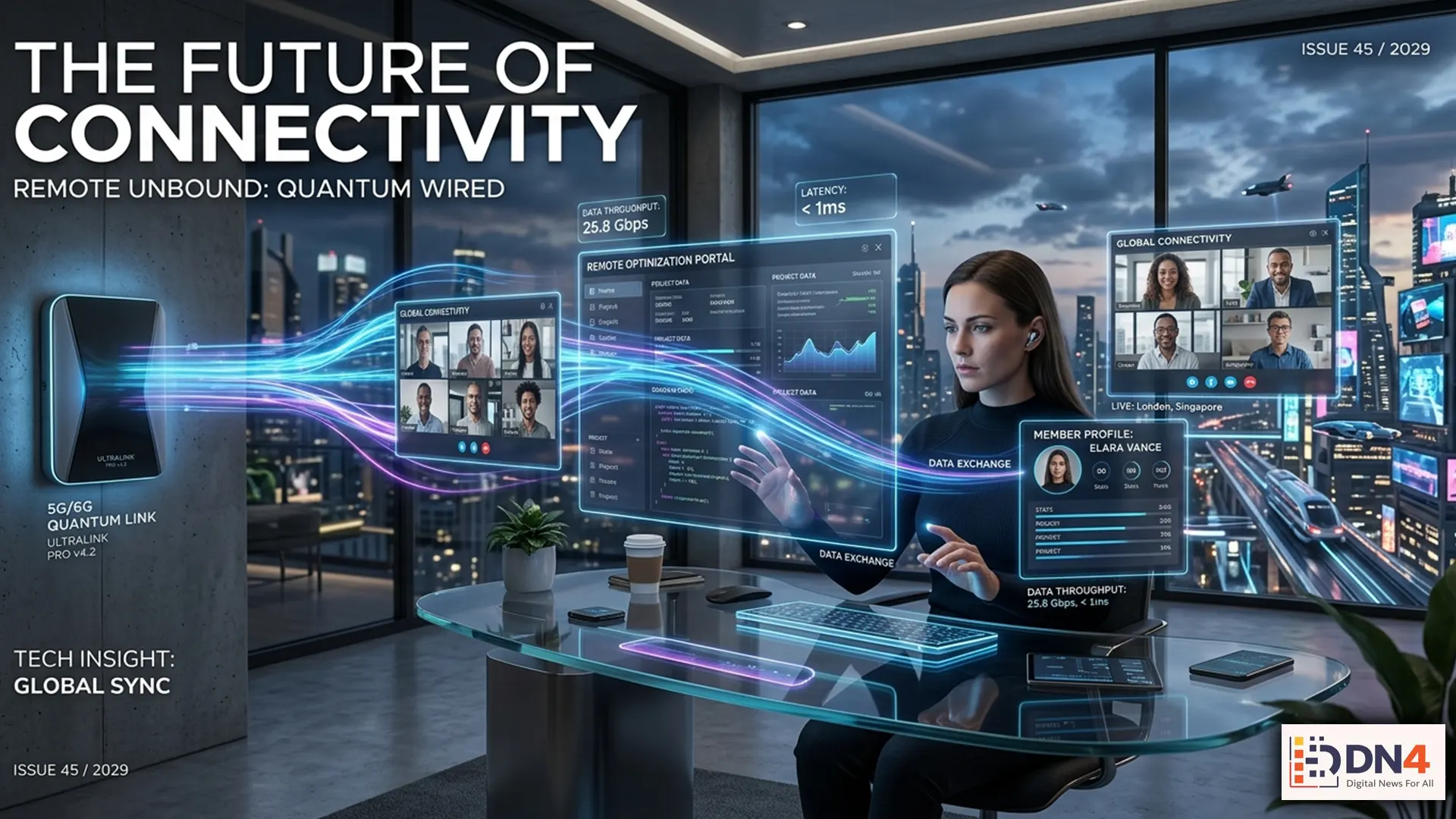
Remote work changed where we work. 6G may change what work itself feels like.
For years, the remote work conversation has focused on flexibility, hybrid schedules, and whether video calls have permanently replaced conference rooms. But the next real shift is not about Zoom fatigue or office culture. It is about infrastructure.
And if 5G helped untether work from fixed locations, 6G could completely redesign the digital workplace.
Though still in development, 6G research initiatives, telecom innovation roadmaps, and next-generation network forecasts all point to the same thing: the jump after 5G is not just about “faster internet.” It is about building a more intelligent, immersive, low-friction digital environment for how people communicate, collaborate, and create.
And that could have enormous consequences for the future of remote work.
Why 6G Matters More Than “Faster Wi-Fi”
Most people hear “6G” and assume it just means a stronger signal and quicker downloads. That is true — but also wildly incomplete.
6G is expected to bring ultra-low latency, dramatically higher bandwidth, more responsive AI integration, and far more reliable device-to-device communication. Research summaries from the International Telecommunication Union and Qualcomm’s 6G development work suggest that future networks may support not just better mobile browsing, but a much more seamless layer of always-on intelligent computing.
That matters because today’s remote work tools still have limits. Lag exists. Bandwidth fails. Shared digital spaces still feel slightly fake. And even the best collaboration platforms still rely heavily on adapting old office habits into screens.
6G has the potential to make remote work feel less like a workaround — and more like a native operating environment.

1) Meetings Could Become More Immersive and Less Exhausting
One of the biggest remote work complaints is simple: digital communication still feels flat.
That may change dramatically in a 6G world.
With the kind of speed and responsiveness next-gen networks aim to support, augmented reality (AR), virtual workspaces, holographic collaboration, and spatial computing become much more realistic at scale. Instead of just seeing coworkers in rectangles, future teams may interact inside shared 3D work environments that feel closer to physical presence.
This is where the future of remote work starts to look less like video conferencing and more like persistent digital presence.
2) AI-Powered Workflows Will Feel More Instant and Invisible
The next phase of remote work is not just human-to-human communication. It is human-to-AI collaboration.
6G could accelerate that by enabling faster edge computing, smarter cloud responsiveness, and near-instant contextual automation across devices and work platforms.
That means future remote workers may experience AI less as “a tool you open” and more as a continuous intelligent layer helping with scheduling, transcription, document drafting, language translation, project coordination, and live workflow optimization.
In plain terms: work may start feeling less fragmented and more ambient.
3) Remote Jobs Could Become More Globally Competitive
There is also a bigger economic consequence here.
If connectivity becomes dramatically stronger, faster, and more reliable worldwide, then geographic friction continues to collapse. Teams can collaborate more effectively across borders, time zones, and bandwidth conditions — which means the global remote labor market could become even more competitive than it already is.
That creates opportunities, but also pressure.
The companies that adapt fastest to a 6G-enabled workplace may not just hire differently. They may organize work differently.
4) “Work From Anywhere” Might Finally Mean Anywhere
Today’s remote work promise often comes with an invisible asterisk: as long as your internet is good enough.
That is exactly the kind of limitation 6G aims to reduce.
Whether someone is working from a rural town, a transit hub, a smart vehicle, a temporary living setup, or a mobile creative environment, stronger network intelligence could make location less of a technical obstacle and more of a lifestyle decision.
If that happens, remote work stops being just a white-collar policy perk and starts becoming a much broader infrastructure-level shift in how labor moves.

5) The Biggest Change May Be Psychological
Here is the most underrated part of the 6G conversation: it may change not just the tools of work, but the expectation of digital presence.
As communication becomes more seamless, immersive, and persistent, the line between “online” and “available” may blur even further. That creates enormous productivity potential — but also new pressure around responsiveness, surveillance, burnout, and digital boundaries.
So yes, 6G could make remote work more powerful. But it may also force workers and employers to get more serious about what sustainable digital work should actually look like.
The future of remote work will not be shaped by policy alone. It will be shaped by bandwidth, latency, interface design, AI integration, and the invisible infrastructure underneath everyday collaboration.
That is why the 6G revolution matters.
It is not just about making work faster. It is about making digital work feel more real, more fluid, and potentially more demanding than ever before.
And if remote work was version 1.0 of the workplace shift, 6G may be the upgrade that makes it permanent.
#6G #RemoteWork #FutureOfWork #TechInnovation #DigitalWorkplace #WirelessTechnology #NextGenConnectivity #WorkFromAnywhere #FutureTech #AIatWork #TechNews