

 By Vinod Ram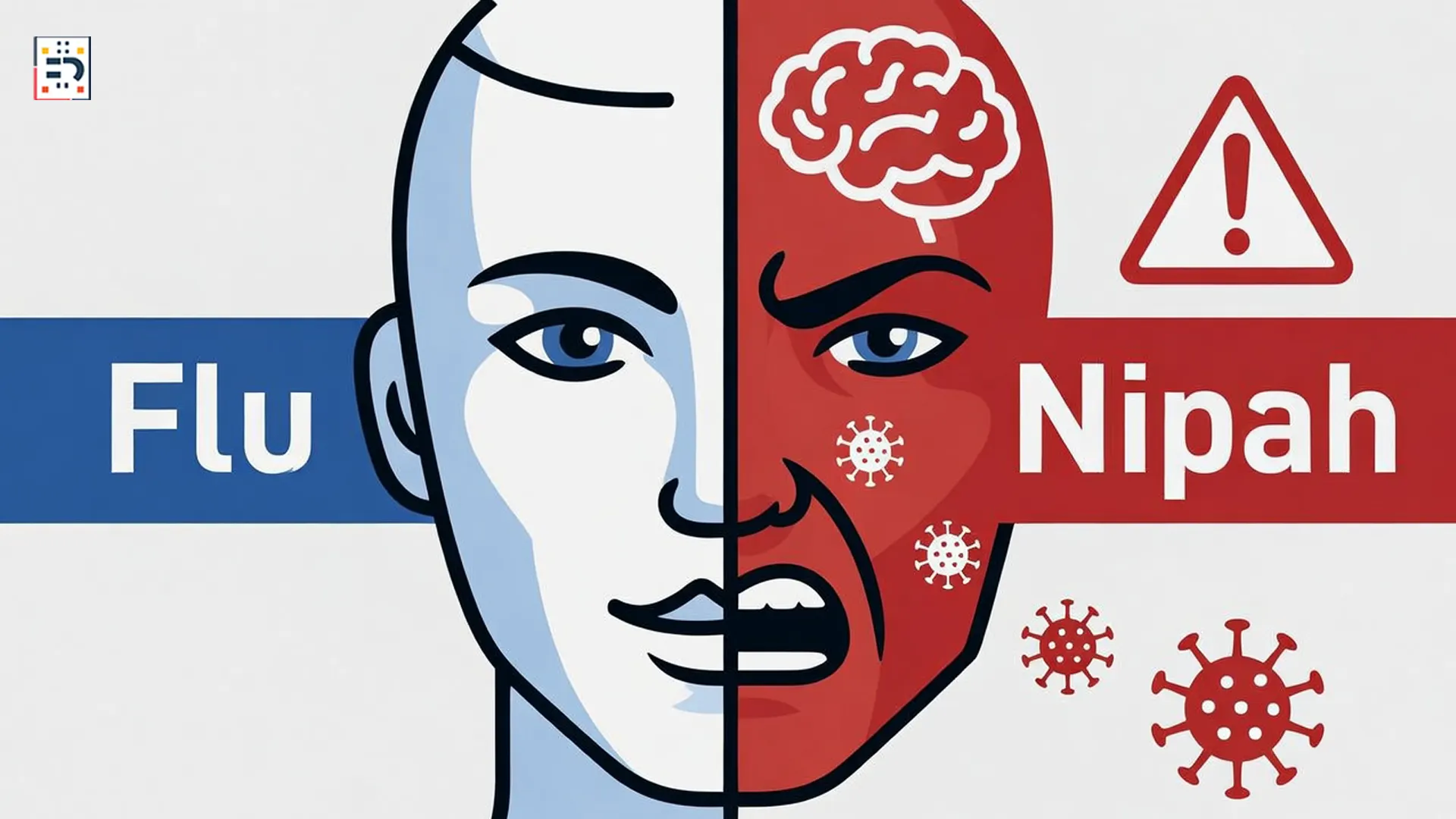
In 2026, infectious disease specialists are raising alarms about a dangerous pattern: early Nipah virus infections can look almost identical to the seasonal flu. What begins as a mild fever or sore throat can, in rare cases, rapidly progress into encephalitis—a potentially fatal inflammation of the brain.
That overlap is why doctors are urging the public to recognize the early red flags that distinguish a routine illness from something far more serious.
Why Nipah Is So Hard to Spot Early
Nipah is a zoonotic virus, meaning it spreads from animals—most commonly fruit bats—to humans. Early symptoms are often nonspecific, which makes early diagnosis difficult, especially during flu season.
Health authorities stress that while Nipah infections are rare, delayed recognition significantly increases the risk of severe neurological complications.

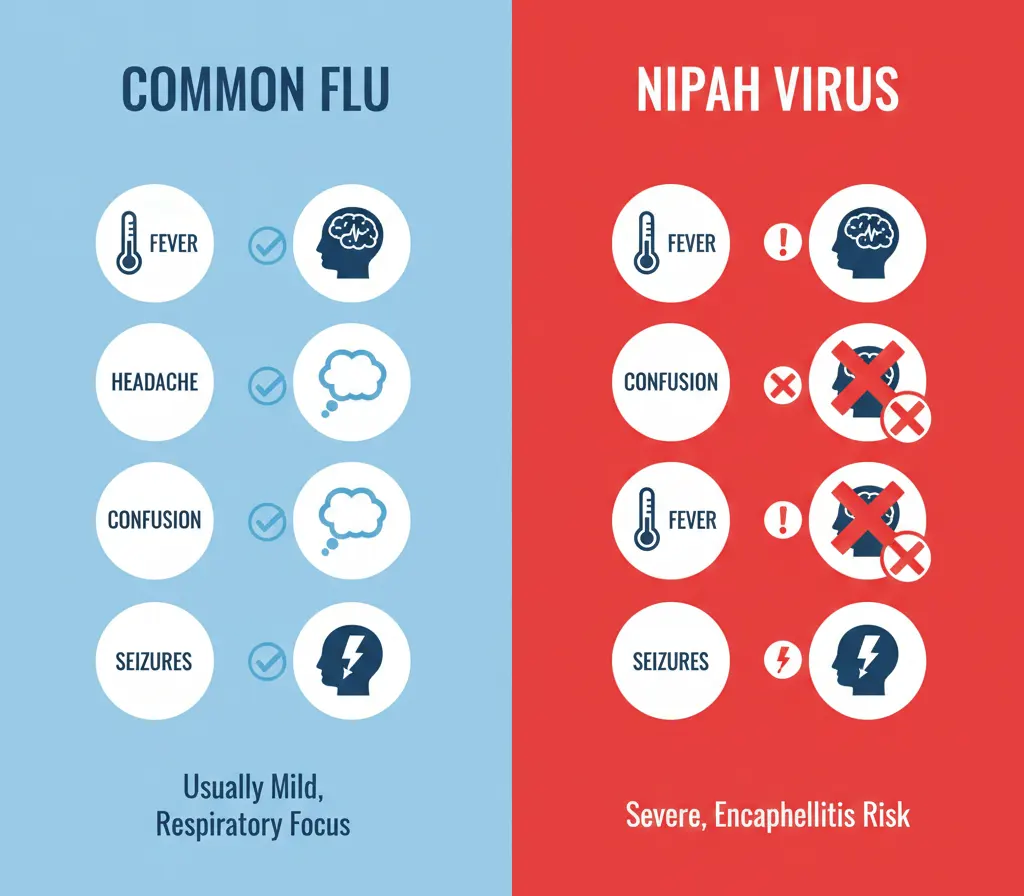
Seasonal Flu vs. Nipah: Symptom Checklist
Use the comparison below as a general awareness guide, not a diagnostic tool.
🟦 Typical Seasonal Flu Symptoms
- Fever and chills
- Sore throat
- Runny or stuffy nose
- Body aches
- Fatigue
- Headache that improves with rest
🟥 Nipah Virus Red Flags
- High fever that worsens rapidly
- Severe or persistent headache
- Dizziness or confusion
- Disorientation or unusual behavior
- Difficulty speaking or understanding speech
- Seizures
- Sudden drowsiness or loss of consciousness
When Flu Symptoms Become an Emergency
Doctors emphasize that neurological symptoms are the key differentiator. While the flu can make you miserable, it does not typically cause confusion, seizures, or altered consciousness.
If flu-like symptoms are followed by neurological changes, immediate medical evaluation is critical.
Why Awareness Matters in 2026
Global travel, climate shifts, and expanding human–wildlife contact have increased concern about zoonotic diseases worldwide. Public awareness is now considered a frontline defense—especially for illnesses that disguise themselves as common infections.
Early isolation and supportive care can dramatically improve outcomes and help prevent wider transmission.
What To Do If You’re Concerned
Health experts recommend seeking urgent medical care if flu-like symptoms escalate quickly or are accompanied by neurological signs. Informing healthcare providers about recent travel or potential animal exposure can also be critical.
Nipah’s danger lies not only in its severity, but in its subtlety. By understanding how it differs from seasonal flu, individuals can act faster—and potentially save lives.
#NipahVirus #PublicHealth #DiseaseAwareness #Encephalitis #FluSeason #GlobalHealth #HealthEducation #InfectiousDiseases