

 By Vinod Ram
The U.S. military is quietly experimenting with a new kind of artificial intelligence. Not from Silicon Valley’s usual vendors. But from Elon Musk.
Reports that xAI’s Grok model is being evaluated for national security use have sparked a heated debate. Supporters see speed, realism, and strategic clarity. Critics see risk, bias, and instability.
At the center of the controversy lies one phrase: “non-woke AI.”
What Is Grok — and Why the Pentagon Cares
Grok is an AI system developed by Musk’s xAI. Unlike many mainstream models, it markets itself as less filtered and more direct.
Musk has argued that overly constrained AI systems produce sanitized outputs. In his view, that weakens decision-making in high-stakes environments.
For military planners, realism matters. Threat assessments require uncomfortable answers. Speed also matters. According to defense analysts at Defense News, AI tools that process intelligence faster than adversaries offer a strategic edge.

What “Non-Woke AI” Means in This Context
The phrase does not refer to politics in a traditional sense. In defense terms, it refers to fewer content filters and reduced ideological guardrails.
Standard AI systems often avoid sensitive topics or hedge conclusions. That approach reduces public risk. It can also reduce operational clarity.
Supporters argue that in military planning, ambiguity kills time. Time kills advantage.
The Case FOR Using Grok in National Security
✔ Faster Decision Cycles
Modern warfare moves quickly. AI systems that hesitate or refuse queries slow commanders down. Grok’s design favors direct responses.
✔ Fewer Content Restrictions
Military analysts need worst-case scenarios. They need unfiltered simulations of adversary behavior. Grok may provide more realistic modeling than heavily restricted systems.
✔ Strategic Competition With China
The U.S. views AI dominance as a core security issue. Officials cited by the Center for a New American Security warn that overregulation could leave the U.S. behind more aggressive rivals.
The Case AGAINST Using Grok
✖ Risk of Bias and Hallucinations
Less filtering can mean more errors. In a military context, false assumptions carry real consequences.
AI hallucinations remain a known problem. Unchecked outputs could influence life-or-death decisions.
✖ Civil-Military Oversight Concerns
The Pentagon operates under strict civilian control. Deploying an AI shaped by one private individual’s worldview raises governance questions.
Experts at the Brookings Institution warn that accountability matters as much as speed.
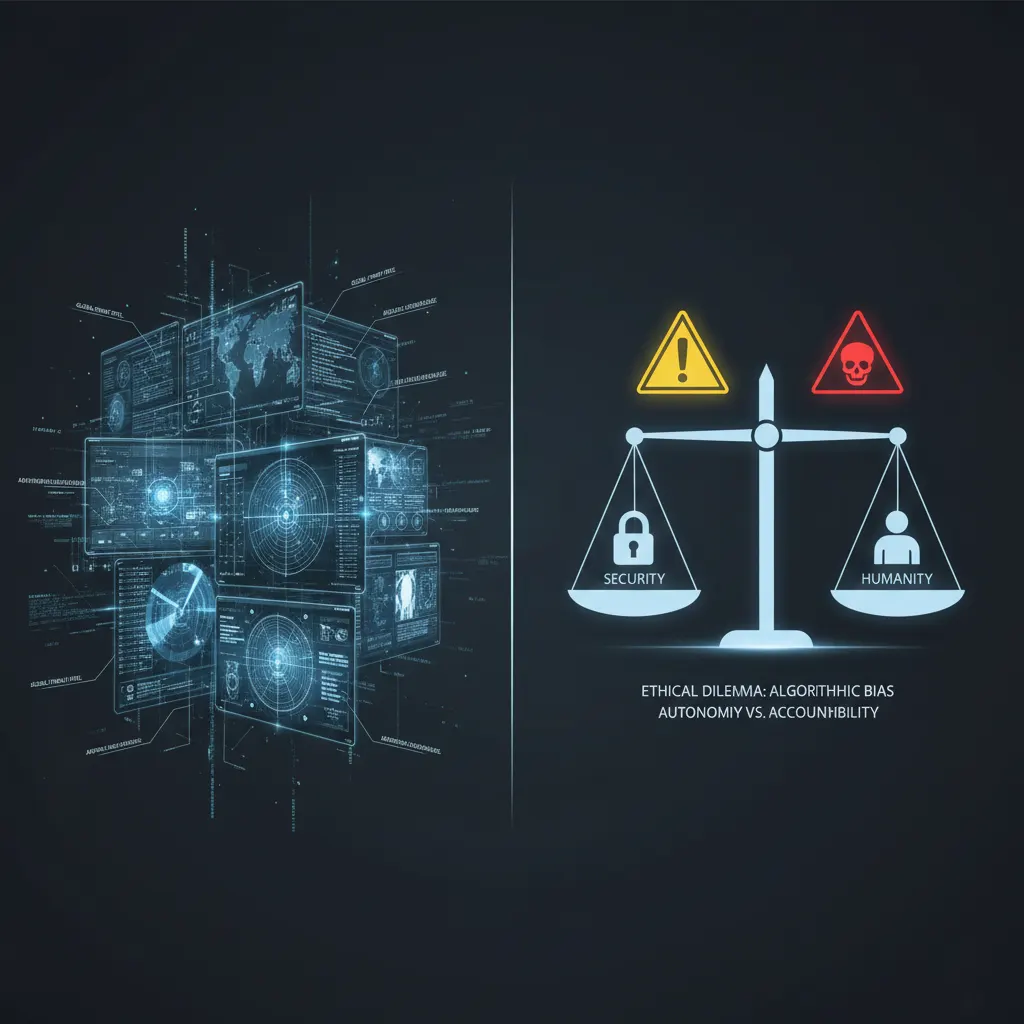
✖ Escalation and Ethics Risks
An AI that speaks plainly may also escalate scenarios. Diplomacy relies on nuance. Machines struggle with restraint.
Military ethicists caution that removing guardrails does not remove responsibility. It transfers it.
Why the Military Is Willing to Take the Risk
The Pentagon does not adopt tools lightly. It tests them, limits scope & runs parallel systems.
Officials reportedly view Grok as an analytical aid—not an autonomous commander. Humans remain in control.
In an era of AI arms competition, experimentation itself becomes a defense strategy. Standing still is also a risk.
What This Signals About the Future of AI Warfare
This moment reflects a broader shift. The debate is no longer whether AI belongs in defense. It is about which kind of AI belongs there.
Expect future systems to split into categories:
- Highly constrained public-facing AI
- More permissive strategic AI for closed environments
That divide will define military technology for decades.
Grok in the Pentagon is not about politics. It is about trade-offs.
Speed versus safety. Realism versus restraint. Innovation versus control.
Whether this move proves visionary or reckless will depend less on the model itself—and more on how carefully humans choose to use it.
#GrokAI #DefenseTechnology #ArtificialIntelligence #NationalSecurity #FutureOfWar