

 By Vinod Ram
As artificial intelligence becomes embedded in daily life — from writing emails to curating feeds and automating decisions — a counter-movement is gaining momentum: digital detoxing and the emerging “No AI” challenge.
What started as occasional screen breaks has evolved into a broader cultural question explored by outlets like The Atlantic’s technology section: How much technology is too much? And more specifically, what happens when people intentionally step away from AI-powered tools?
This movement isn’t anti-technology — it’s about regaining agency in a hyper-automated world, a theme echoed in MIT Technology Review coverage of AI adoption.
What Is the “No AI” Challenge?
The “No AI” challenge encourages people to temporarily stop using AI-assisted tools such as:
- AI writing and design platforms
- Recommendation algorithms
- Smart assistants and automation apps
- AI-powered productivity software
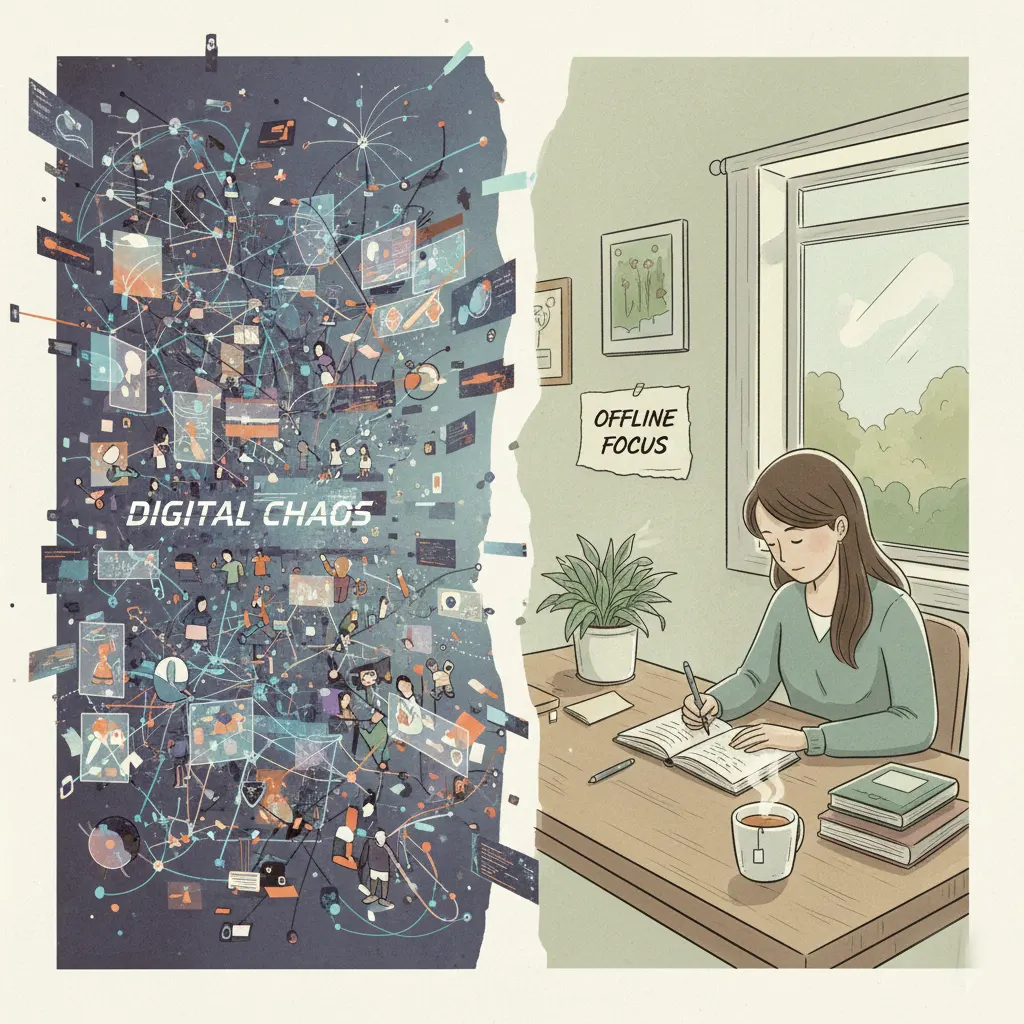
Participants aim to complete work or daily tasks without algorithmic assistance for a set period — often 24 hours, a week, or longer.
The challenge mirrors broader digital minimalism principles popularized by thinkers like Cal Newport.
Why Digital Detox Is Trending Again
Digital detox isn’t new — but its resurgence is tied directly to AI’s rapid normalization.
Key drivers include:
- Cognitive overload, linked to constant notifications and automation, studied by Harvard Health Publishing
- Creative anxiety around originality and authorship
- Burnout, increasingly associated with always-on tools, according to World Health Organization
- Loss of skill confidence as AI fills gaps once handled manually
For many, detoxing feels like reclaiming mental space in the attention economy described by NPR’s coverage of digital well-being.
The Psychology of Tech Dependency
AI doesn’t just save time — it shapes behavior.
Research summarized by American Psychological Association shows that reliance on automated tools can:
- Reduce memory effort
- Lower tolerance for difficulty
- Increase discomfort with slow thinking
The “No AI” challenge surfaces this friction, making dependency visible rather than invisible.
Creativity Without Algorithms
Creativity is one of the strongest motivators behind the movement.
Artists, writers, and students report experiences similar to those documented in The New York Times’ culture coverage:
- Slower but more intentional work
- Less polish, more personality
- Initial frustration followed by deeper clarity
Without AI smoothing edges, creativity becomes messier — and for some, more meaningful.
Productivity vs. Presence
AI tools promise efficiency, but detox advocates argue that:
- Faster doesn’t always mean better
- Optimization can crowd out reflection
- Constant output reduces presence
Studies from University of California, Irvine show that constant digital interruptions significantly reduce sustained focus.

During detox periods, participants often report:
- Improved concentration
- Better memory retention
- Reduced performance anxiety
Is “No AI” Sustainable?
Most participants don’t abandon AI permanently.
Instead, the challenge often leads to:
- More intentional AI use
- Clearer boundaries between assisted and unassisted work
- Better understanding of when automation helps — and when it harms
This aligns with trends observed by Pew Research Center on public attitudes toward technology.
What This Trend Reveals About Digital Culture
The rise of digital detox and “No AI” challenges points to a deeper cultural shift:
- Technology is no longer neutral — it’s intimate
- Automation shapes identity, not just efficiency
- Users increasingly want control over invisible systems
As explored by Vox’s technology analysis, choosing to disconnect can itself become a form of power.
The “No AI” challenge isn’t about fear or rejection — it’s about balance.
As AI becomes unavoidable, moments of disconnection create clarity:
- What should be automated?
- What should remain human?
- And what parts of thinking deserve effort?
Digital detoxing isn’t stepping backward — it’s learning how to move forward deliberately.
#DigitalDetox #NoAI #TechWellness #MindfulTech #AIandCulture #DigitalBalance #WellnessTrends