

 By Vinod Ram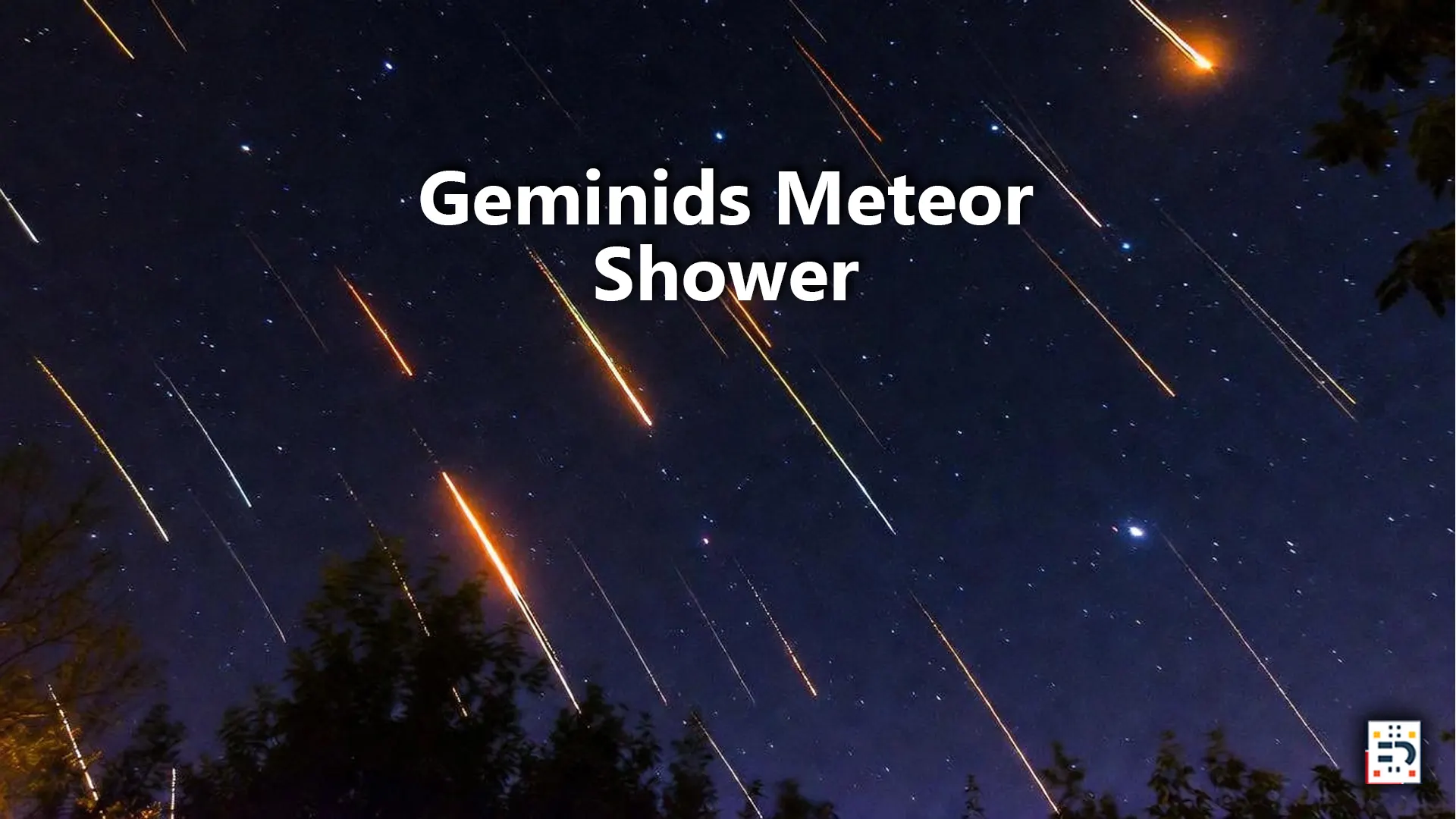
One of the brightest and most reliable meteor showers of the year — the Geminids — peaks tonight, offering skywatchers a brilliant celestial show. Astronomers expect strong activity with clear skies across many regions, making this one of the best viewing nights of the 2025 stargazing calendar.
NASA and the American Meteor Society note that the Geminids can produce up to 120 meteors per hour under ideal dark-sky conditions.
Best Time to Watch the Geminids Tonight
The Geminids peak late tonight, with activity strongest around 2 AM local time. However, you’ll start seeing meteors as early as 9 PM, with counts steadily increasing as the radiant — the constellation Gemini — climbs higher in the sky.
- Peak window: 1 AM – 3 AM
- Early viewing window: 9 PM – midnight
- Best direction to face: East to Southeast
For official meteor forecasts, visit NASA Watch the Skies.
Where to Watch for the Clearest View
To see the most meteors, choose a location with minimal light pollution and a wide-open sky view. Even if you live in a city, driving just 20–30 minutes toward darker skies can dramatically improve visibility.
Best viewing spots include:
- Open fields or farmlands
- Hilltops or elevated areas
- National parks or protected dark-sky reserves
- Suburban outskirts with low light
To check light pollution levels in your area, see Light Pollution Map.
How to Photograph the Geminids
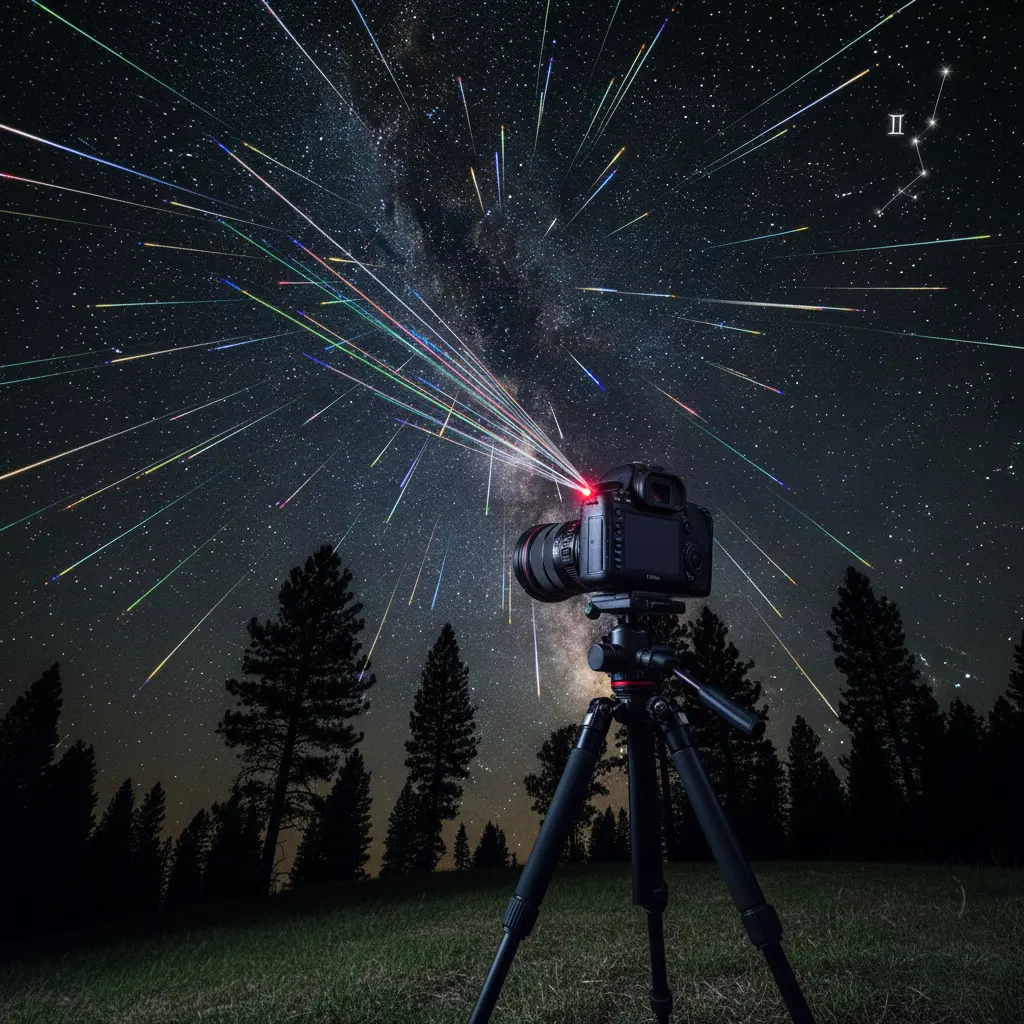
Meteor photography is easier than most beginners expect. With the right settings, even a smartphone can capture bright streaks during peak activity.
Recommended camera settings:
- Shutter speed: 10–25 seconds
- ISO: 800–3200
- Aperture: f/1.4 – f/2.8 (wide open)
- Lens: Wide-angle (14–24 mm)
- Focus: Manual, set to infinity
- Mount: Tripod to avoid blur
Tips for better results:
- Use a remote shutter or timer to prevent shake.
- Capture continuous exposures for the best chance of catching multiple meteors.
- Include landscape elements for more dramatic photos.
- Face 30–60 degrees away from the radiant for longer streaks.
Why the Geminids Are So Bright
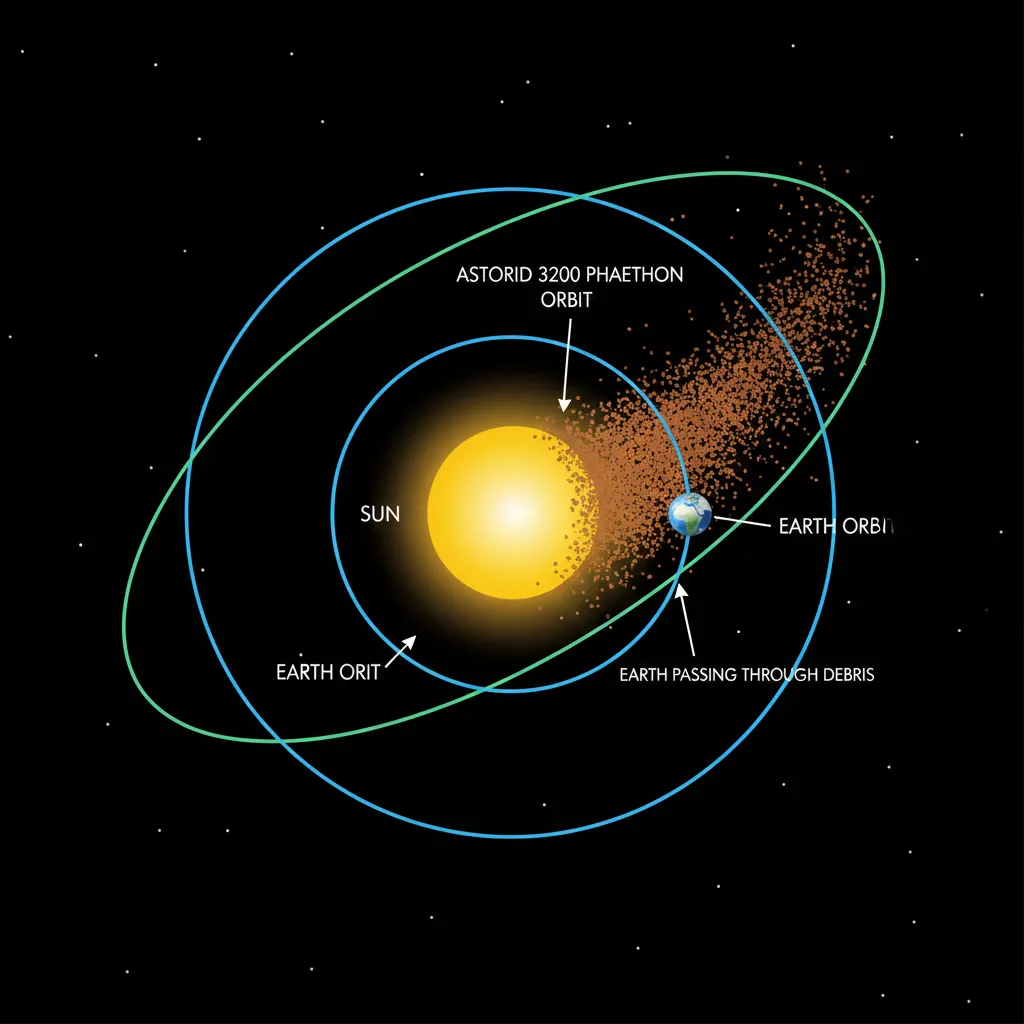
Unlike most meteor showers that originate from comets, the Geminids come from an asteroid — 3200 Phaethon. This unusual origin means the meteoroids are denser, causing them to burn brighter and create vivid yellow, green, and white streaks.
For more on the science behind the shower, see NASA’s meteor science page.
The Geminids meteor shower offers a rare chance to witness one of the night sky’s most dazzling displays. Whether you’re stargazing casually or capturing long-exposure photos, tonight promises fantastic views — provided the skies stay clear. Step outside, let your eyes adjust, and enjoy one of nature’s greatest shows.
#Geminids #MeteorShower #Astronomy #Stargazing #NightSky #SpaceNews #Astrophotography #SkyWatching #Cosmos #Geminids2025